Framekit templates
Start from a designer-made template
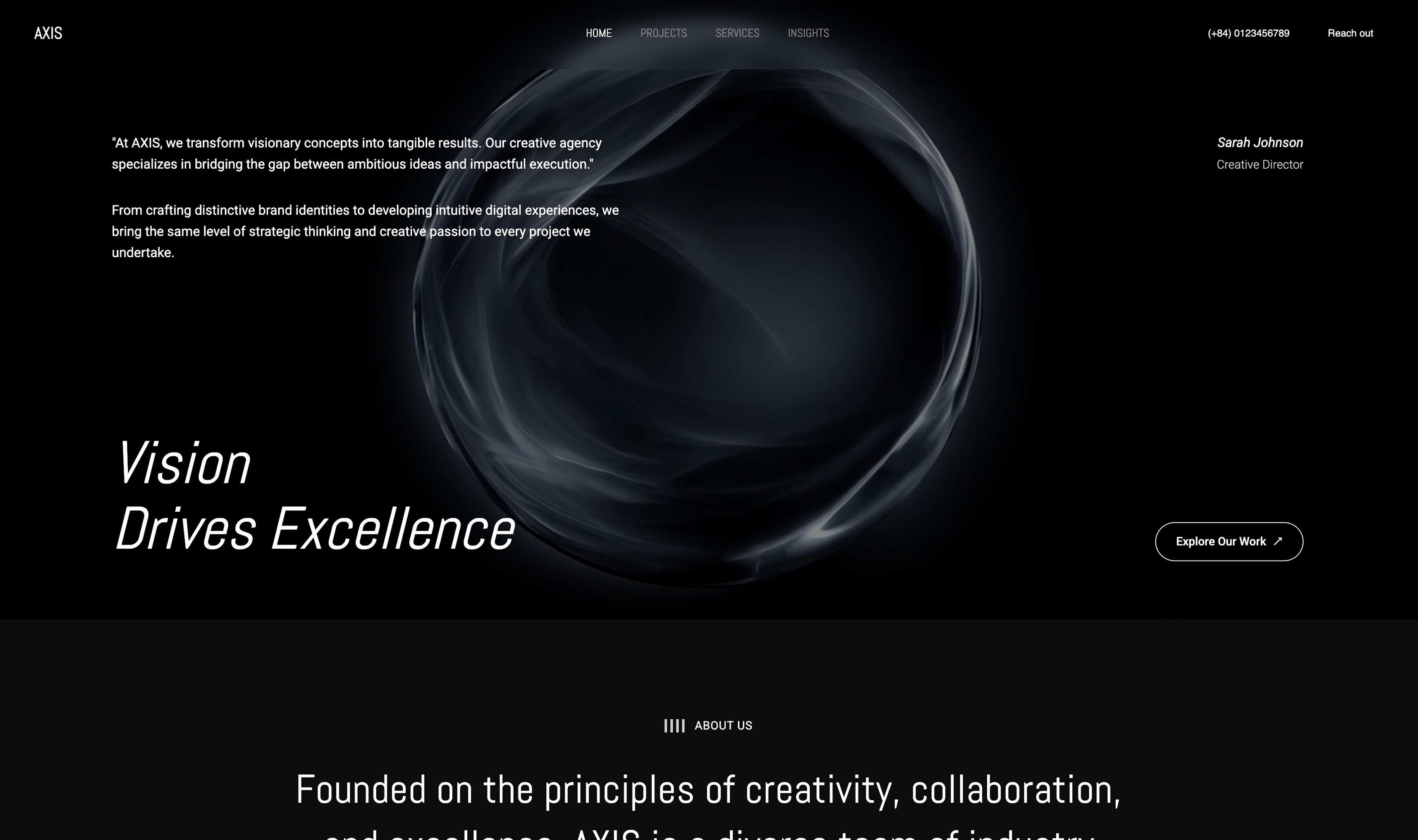 Use template
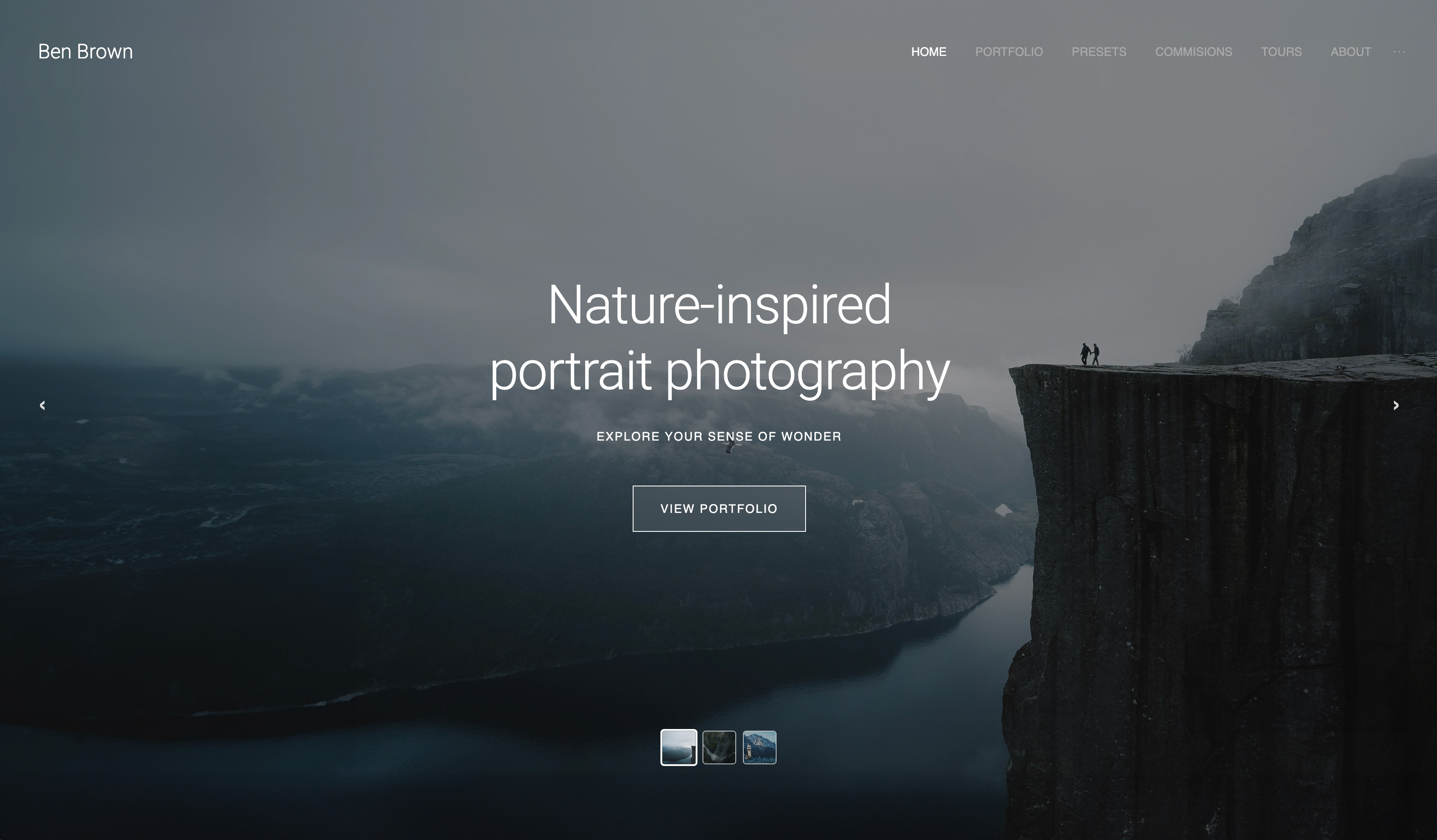 Use template
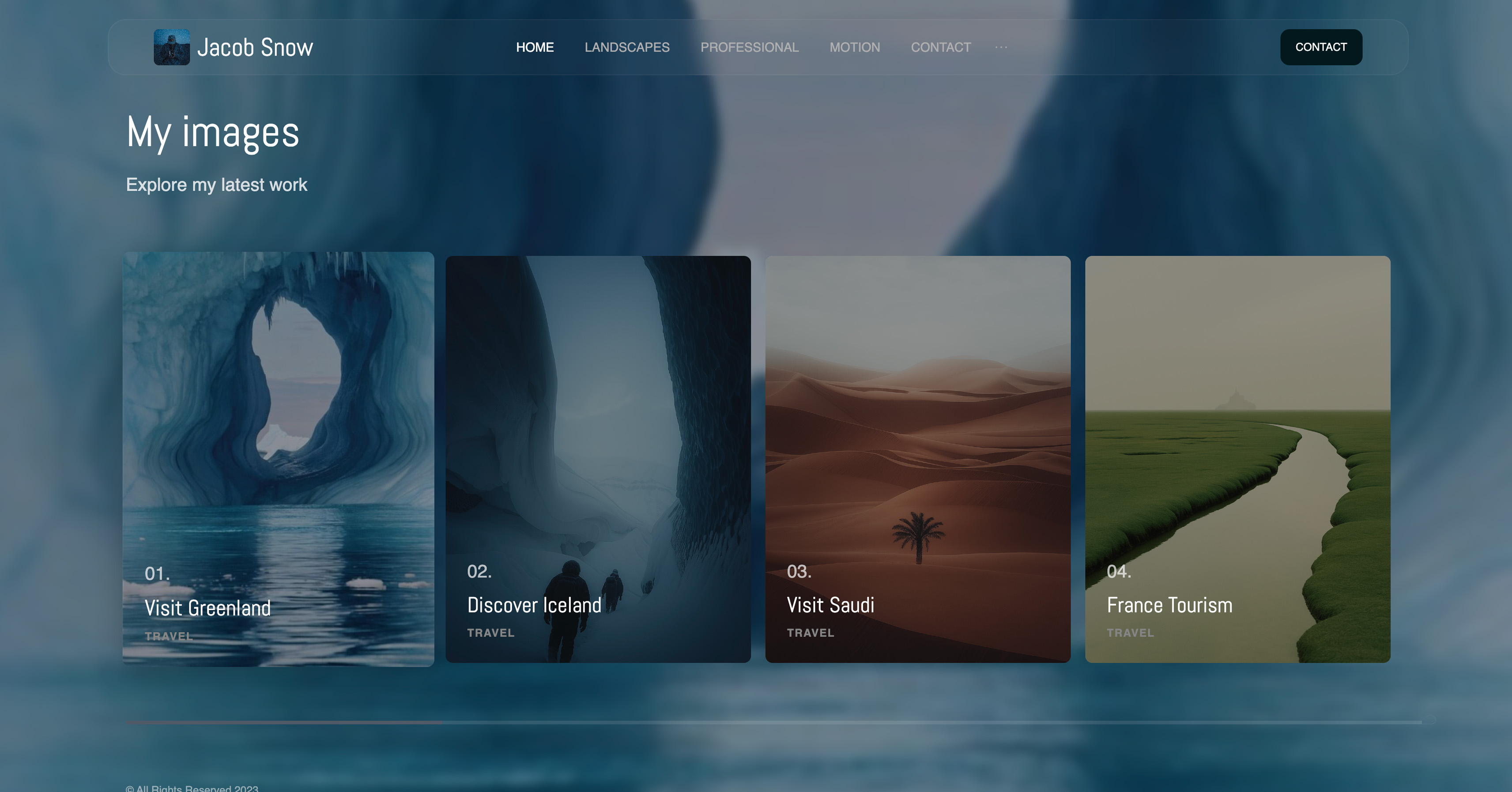 Use template
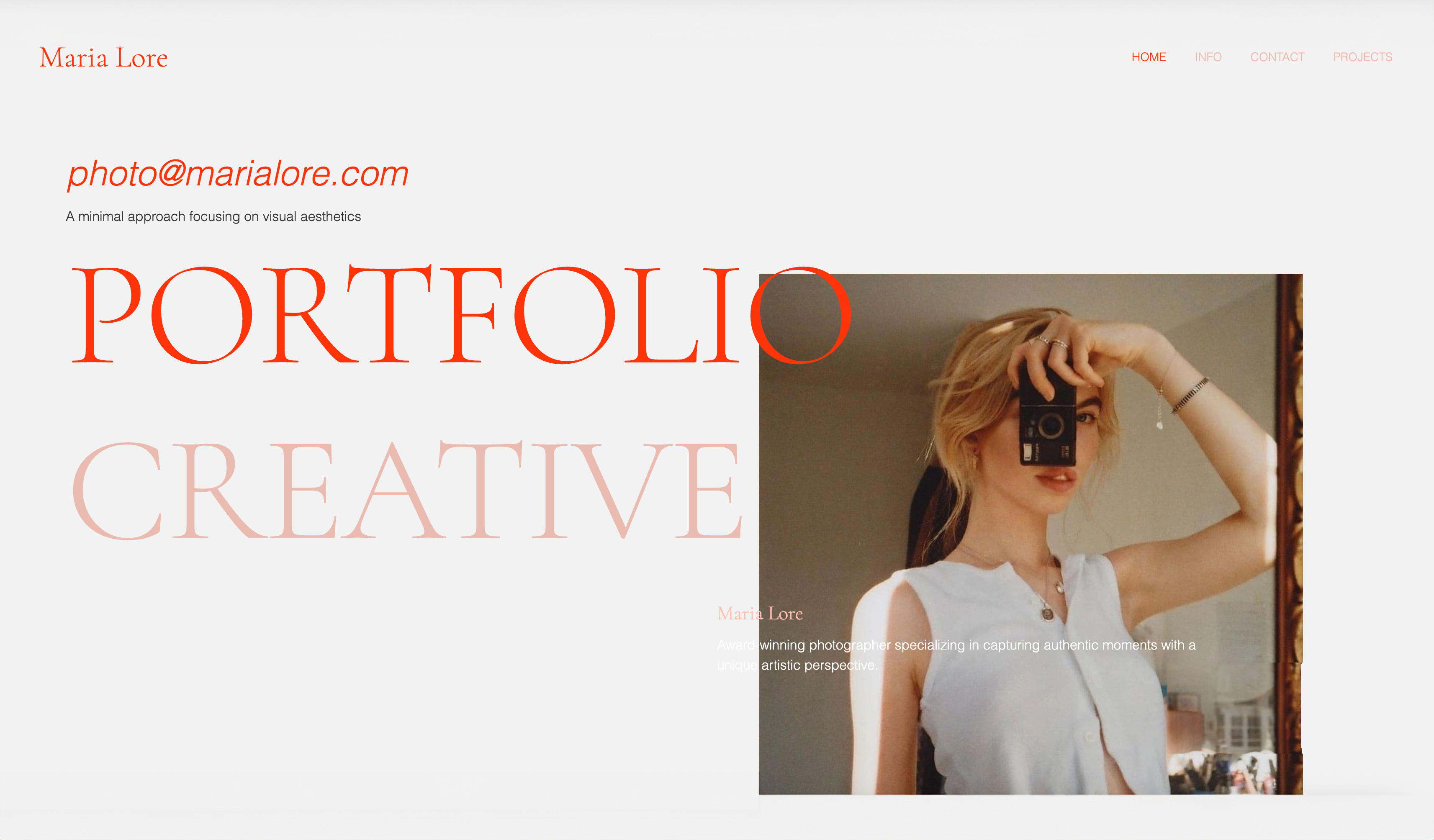 Use template
 Use template
 Use template
 Use template
 Use template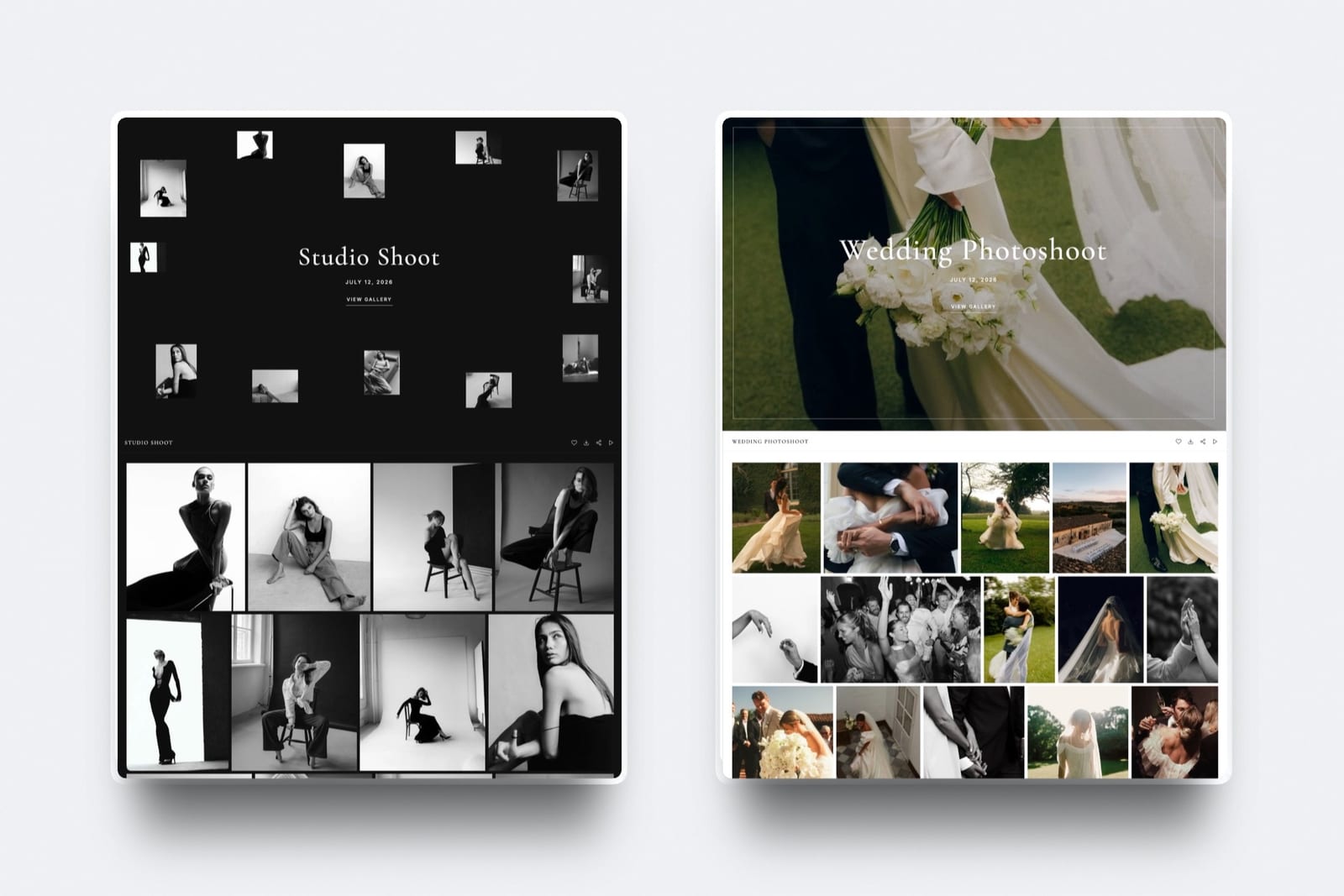
Framekit vs Dropbox is a comparison that sounds unfair until you look at what photographers actually use Dropbox for. Not backup. Not sync. Client delivery, because the folder was already there and sharing it took eight seconds.
Eight seconds is a good price. The question is what the folder costs at the other end.
Dropbox is superb infrastructure and genuinely cheaper per gigabyte than any gallery platform, ours included. What it is not is a client-facing product, and the gap shows in the places clients notice.
Framekit is an AI website builder that carries client galleries on the same account as the portfolio, which is the half of delivery cloud storage was never built for.
Cloud storage is a service that syncs and stores files of any type, which is a different job from presenting finished work to the person who paid for it.
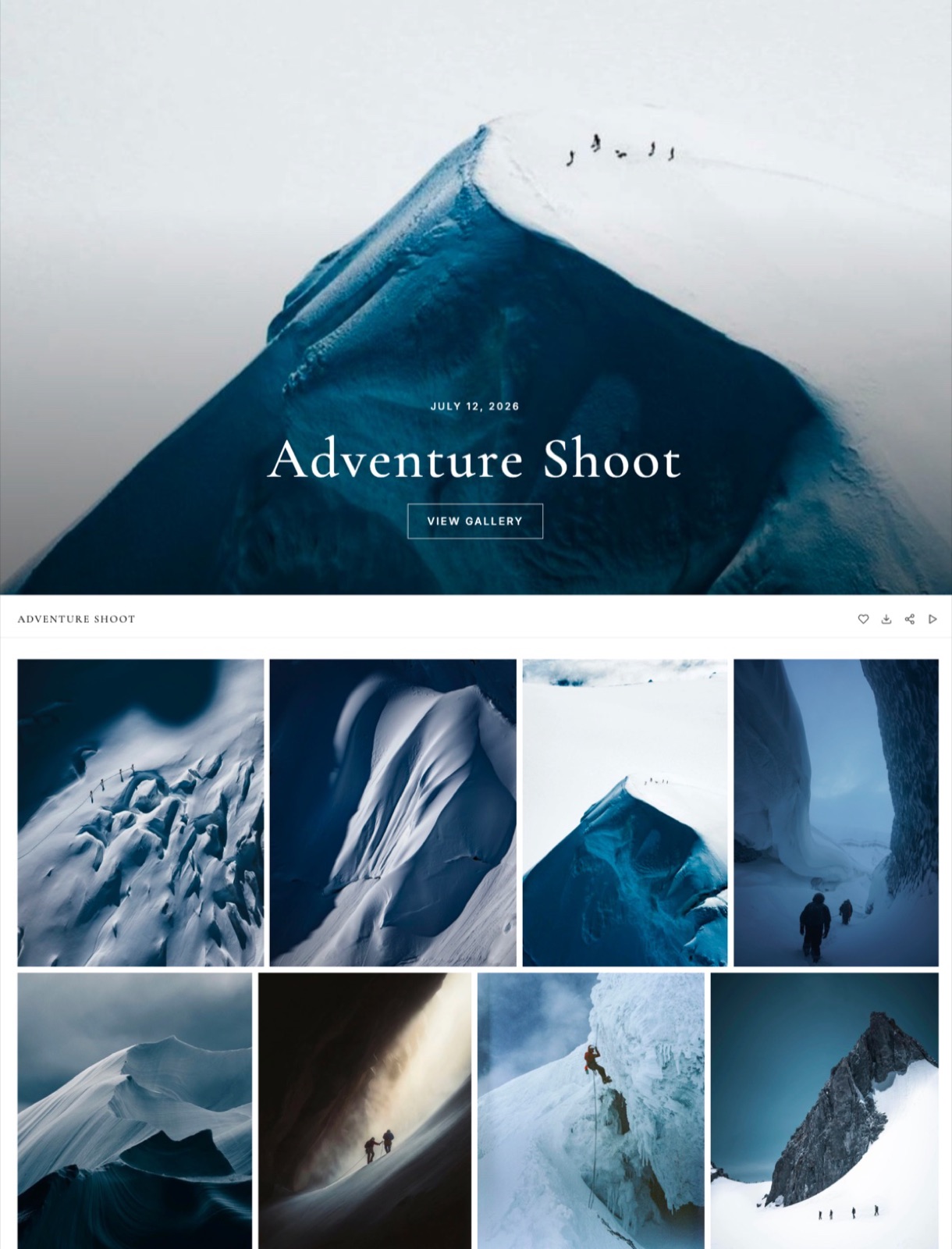
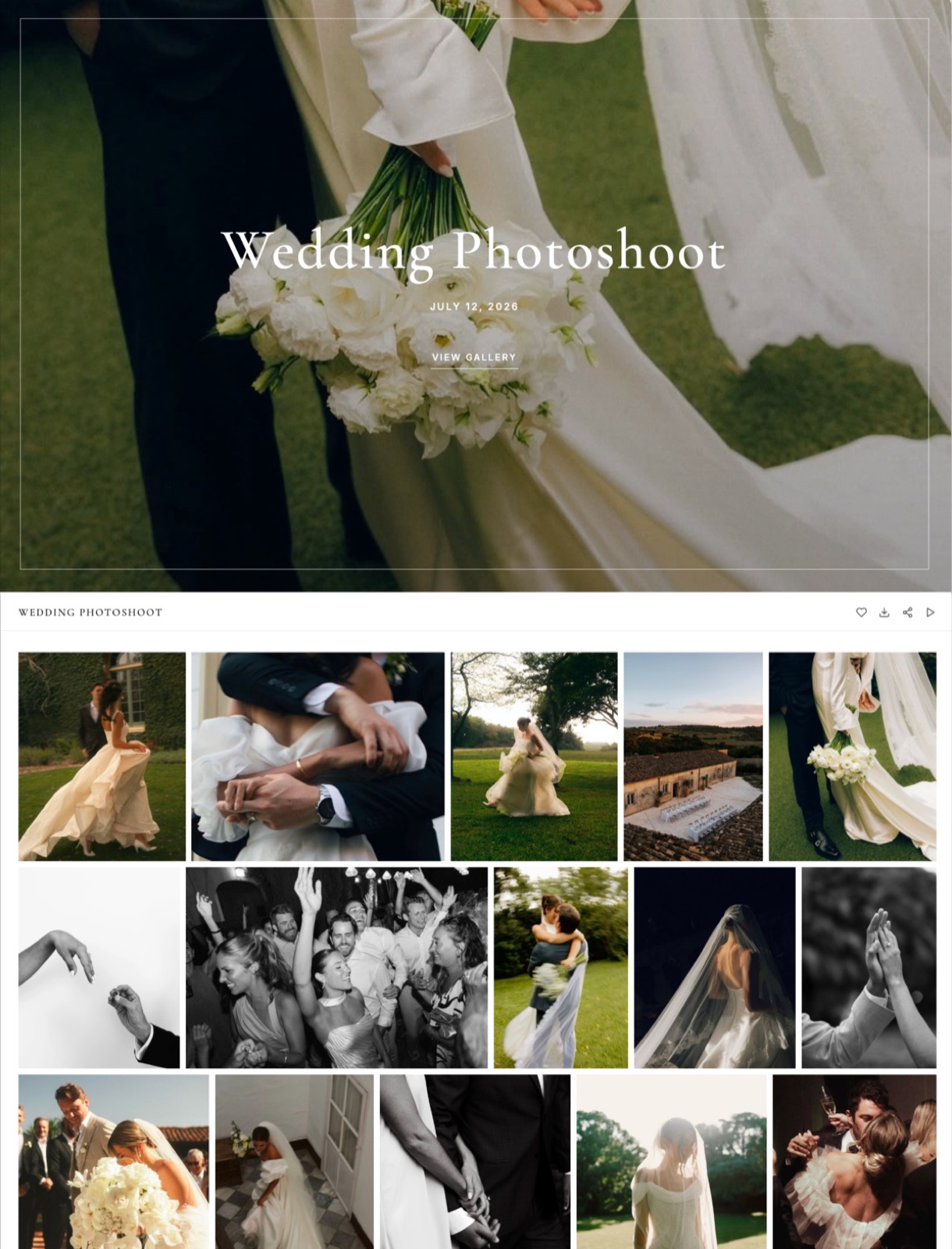
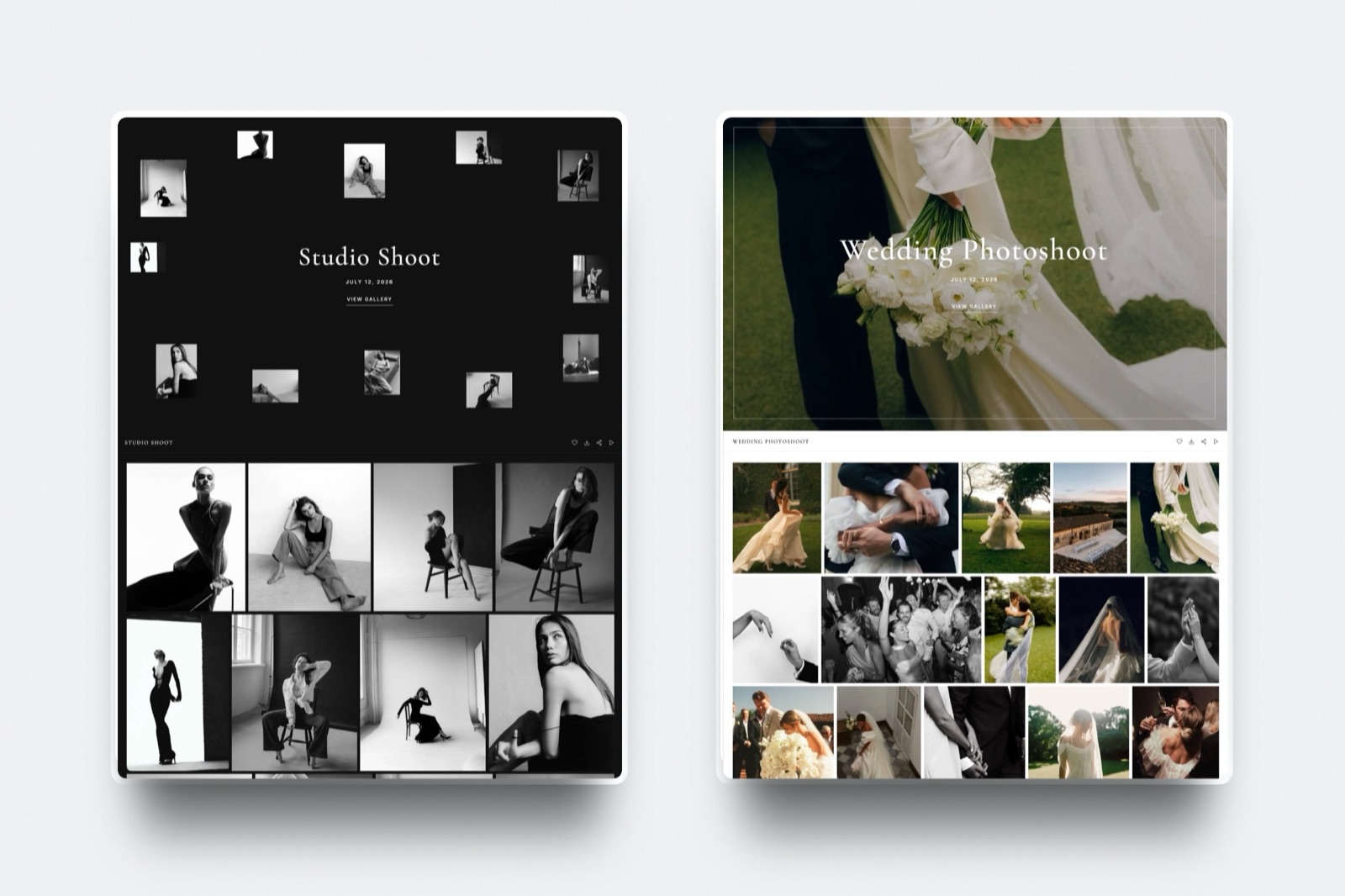
Framekit wins on everything the client sees: galleries on your own domain that do not expire, favourites, a password and a separate download PIN, and no folder structure to explain.
Dropbox wins outright on raw storage economics and file types, at 2TB for about $144 a year, any format including RAW and PSD, with sync and version history.
The honest recommendation for most photographers is both, because they solve different halves of the job, and the subscription worth examining is neither of these two.
Full disclosure: Framekit is our own product. This comparison concludes that you should probably keep paying Dropbox, and the section on where it beats us is first and specific. Pricing was checked in September 2026.
How We Compared Them
We delivered the same 900-image wedding and the same 40-image portrait session through both, then handed each link to a non-technical recipient and watched what they did with it. Then we tried to send a retoucher a folder of layered masters through each.
The honesty split:
- Measured hands-on: both deliveries, the recipient experience, the file types each tool accepts, and what happens to a shared folder when the client reorganises it.
- Verified from primary sources: Dropbox plan pricing and storage from Dropbox's plan comparison, read September 2026. Framekit's from the shipped plan configuration.
- Not tested: Dropbox Replay, Paper and its team admin features.
No transfer or sync speed figures appear for either tool.
Framekit vs Dropbox at a Glance
The weighting: the storage row favours Dropbox decisively and the four client-facing rows favour us. Which set matters depends entirely on who is opening the link.
| Framekit | Dropbox | |
|---|---|---|
| Cost per terabyte | 2TB on Business, $372 a year | 2TB for about $144 a year |
| File types | JPEG, PNG, WebP, GIF in galleries | Any file |
| Desktop sync and version history | No | Yes |
| Delivery is on your own domain | Yes | No |
| Client sees a designed gallery | Yes | A file list |
| Favourites and selects | Yes | No |
| Password and separate download PIN | Yes, every plan | Password on paid tiers |
| Link expires | No, unless you set one | No, unless you set one |
| Client can accidentally move or delete files | No | Yes, in a shared folder |
| Portfolio site, review links, store included | Yes | No |
| Free tier | 10GB pooled, unlimited galleries | 2GB |
In one lineDropbox is the cheapest place to keep files and the wrong place to present them.
Where Dropbox Wins, and It Is Not Close
Dropbox wins in three areas, and the first of them is the reason almost every photographer reading this will keep their subscription no matter what else they decide. These are not close calls, and two of the three are things Framekit does not attempt at all.
Storage economics. Two terabytes for about $144 a year is cheaper than any gallery platform's storage, including ours at $372 a year for the same 2TB on Business. If raw capacity is your binding constraint, cloud storage wins and the argument ends there.
Any file type, and the working half of the job. RAW, DNG, PSD, TIFF, ProRes, project folders.
Framekit galleries accept JPEG, PNG, WebP and GIF and refuse the rest at upload, so everything you exchange with a retoucher, a colourist or a second shooter stays on Dropbox regardless of what you use for delivery.
Sync and version history. A folder that mirrors to your desktop, with previous versions recoverable, is a working tool rather than a delivery one. We do not attempt any of this.
Where a Gallery Wins
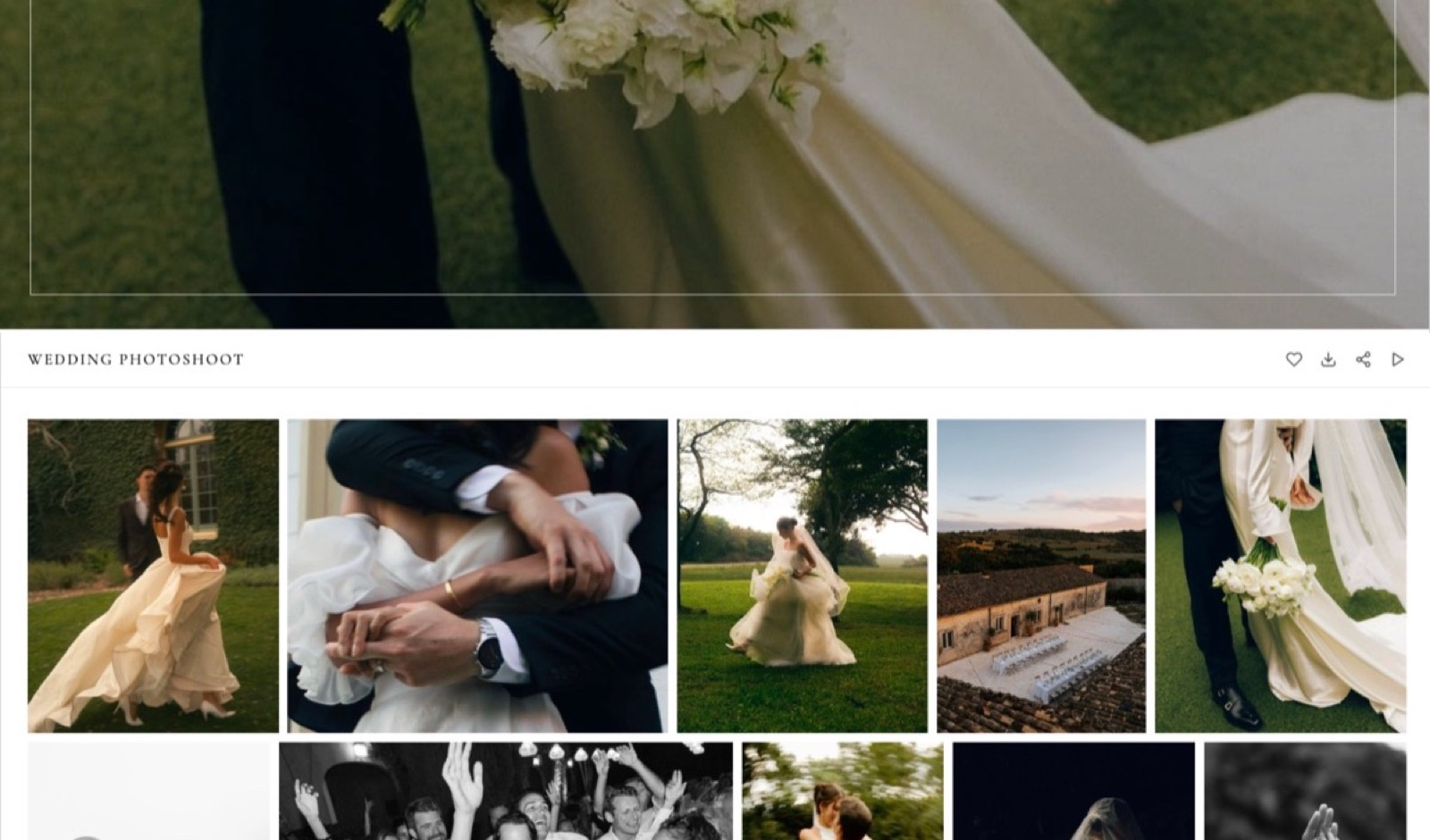
A gallery wins on four counts, and every one of them is something the client experiences rather than something you do. That is why the difference is invisible while you are uploading and obvious the moment somebody else opens the link.
It looks like the work. A gallery presents images at a size and rhythm that flatters them, on your domain, with your name on it.
A shared folder presents a file list with names like DSC_4471.jpg, which is the least flattering possible frame for work you spent two weeks editing.
Favourites and selects. Clients mark images inside the gallery. In a Dropbox folder the selection comes back as a list of filenames in an email, which is the single largest source of avoidable back-and-forth in a delivery.
Two gates, not one. A gallery password controls who gets in, a separate download PIN controls who can take files out, and both are available on every plan including free. A shared folder is one permission: in or out.
The client cannot break it. A client with edit access to a shared folder can rename, move or delete your files, and people do. A gallery is read-only by construction, so the delivery you sent is the delivery that exists in six months.
In one lineeverything a gallery adds is about the person receiving the work, which is exactly the part cloud storage was never designed for.
What This Actually Costs, Four Ways
The comparison most photographers actually need is not one of these tools against the other, because almost everyone needs both halves of the job.
The useful question is which combination of subscriptions costs least for the same outcome, so here are the four realistic setups priced out.
| Setup | A year | What it covers |
|---|---|---|
| Dropbox 2TB alone | About $144 | Working files and storage, no gallery, no site |
| Dropbox 2TB plus a website | $320 to $360 | Storage and a portfolio, still no gallery |
| Dropbox 2TB plus a gallery plus a website | $520 to $620 | Everything, three subscriptions |
| Framekit free plus Dropbox 2TB | About $144 | Everything, capped at 10GB of pooled gallery and site storage |
| Framekit Pro plus Dropbox 2TB | About $372 | Galleries, site, review, store, plus working files |
The row worth staring at is the fourth. A photographer already paying for Dropbox can add unlimited client galleries, a portfolio site and a store for nothing, at a 10GB ceiling, which is about ten live deliveries.
In one linethe expensive setup is not Dropbox plus a gallery, it is Dropbox plus a gallery plus a separate website.
Use Both, With a Clear Line Between Them
Here is the division of labour we would recommend to a photographer who pays us nothing, because these two products were built for different halves of the week and neither is trying to do the other one's job:
- Dropbox for everything that is not finished: camera originals, layered files, project folders, the exchange with your retoucher, your archive and your backup.
- Framekit galleries for everything the client sees: the delivered set, on your domain, gated by a password and a PIN, with favourites turned on.
Then check the third subscription. If you are paying for a website separately, that is the one this product is designed to absorb, and it is where the actual saving lives.
How to Choose: A Decision Guide
Read down and act on the first question you can answer yes to. The first two are about file type and audience rather than preference, which means they settle the matter outright rather than counting as one factor among several.
- Are the files RAW, PSD, TIFF or a project folder? Yes: Dropbox. Our galleries refuse those formats.
- Is the recipient the paying client receiving finished work? Yes: a gallery, on your own domain.
- Do you need the client to pick favourites? Yes: a gallery. A folder cannot do it.
- Is your binding constraint raw terabytes? Yes: Dropbox, which is cheaper per terabyte than we are.
- Do you pay for a website separately? Yes: look at Framekit, which covers the site and the galleries on one plan.
- Most working photographers: both, with Framekit's free plan costing nothing to try alongside the Dropbox you already have.
Frequently Asked Questions
Can I use Dropbox as a client gallery?
You can, and many photographers do for years.
What you give up is presentation, favourites, a second download gate and safety: a shared folder shows file names rather than images, the client sends selects back as a list in an email, and a client with edit access can rename or delete your files.
For a technical recipient it is fine. For the paying client it is the least flattering way to hand over work you spent two weeks on.
Is Dropbox cheaper than a client gallery platform?
For storage, decisively. About $144 a year for 2TB beats every gallery platform on price per gigabyte, including Framekit at $372 a year for the same 2TB on Business.
The comparison changes when you count what else you are paying for: if a separate website subscription is on the card, one Framekit plan covering the site and unlimited galleries usually costs less than the gallery-plus-website pair.
Can I deliver RAW files through a Framekit gallery?
No. Galleries accept JPEG, PNG, WebP and GIF, and RAW, DNG, TIFF, PSD and HEIC are refused at upload.
Anything involving camera originals or layered files stays on cloud storage whichever gallery platform you pick, so the realistic setup for most photographers is a gallery for client delivery and Dropbox or similar for the working exchange.
Does a Dropbox link expire?
Not by default on paid plans, though you can set an expiry, so persistence is not the difference between these two.
The differences that do bite are that a shared folder is editable by anyone with access, that it presents files rather than images, and that it carries Dropbox's interface rather than your brand at the moment your client is showing the work to someone else.
How much storage do I actually need for galleries?
Budget about 1GB per delivered job of 40 images and 1GB to 2GB per wedding. That is roughly ten live deliveries on Framekit's free 10GB, fifty on Starter's 50GB and three hundred on Pro's 300GB.
Because galleries are for finished work rather than archives, the pool goes much further than people expect once you clear delivered galleries a fortnight after the client downloads.
Will clients find a gallery easier than a Dropbox folder?
Almost always, and it is the least controversial finding in this comparison. A gallery is a web page that opens in a tap and shows pictures.
A shared folder asks a non-technical client to understand folders, sometimes prompts them to install an app or sign in, and presents file names. The friction is small each time and compounds across every client you have.
Can I password-protect a Dropbox link?
Yes, on paid tiers. What Dropbox does not have is a second independent gate, so viewing and downloading are the same permission.
Framekit separates the gallery password from the download PIN on every plan including free, which is what makes it practical to forward a wedding gallery to guests who can look but not download while the couple holds the PIN.
Should I keep Dropbox if I move delivery to Framekit?
Yes, and we would not suggest otherwise. Dropbox stays for the working half of the job: camera originals, layered files, archives, backups and anything going to a collaborator. Framekit galleries take the client-facing half.
The subscription worth re-examining is a separate website builder, because that is the one a Framekit plan actually replaces.
Does Framekit back up my photos?
No, and this is an important distinction rather than a technicality.
Galleries are for delivery, not archival storage, and you should keep your own masters on your own drives with an offsite copy, exactly as you would alongside any gallery platform.
If backup is the job you are shopping for, cloud storage or a dedicated backup service is the right category and a gallery platform is not.
What is the cheapest professional delivery setup?
Framekit's free plan alongside the Dropbox subscription you probably already have, which is about $144 a year total.
That gets you unlimited client galleries on a framekit.ai address with password and PIN protection, a ten-page portfolio site, a store, and 2TB for working files.
The upgrade when you need it is Starter at $84 a year, which moves the galleries and site onto your own domain.
Final Verdict
Dropbox is the cheaper place to keep files and it should keep your files. It wins on price per terabyte, on accepting every format a photographer works with, and on sync and version history, none of which we attempt.
If raw storage is what you are shopping for, stop here and buy it.
Who should not use Framekit galleries. Anyone whose delivery involves RAW, PSD or project folders, which we refuse. Anyone whose binding constraint is terabytes, where our pricing is worse than Dropbox's and we will say so.
Anyone looking for backup, which galleries are not.
Who should. Photographers whose clients currently receive a folder of file names.
The delivery is the last thing a client experiences from you and the thing they forward to other people, and a branded gallery that does not expire, collects favourites and cannot be accidentally reorganised is a better version of that moment.
The free plan costs nothing to run beside the Dropbox you already pay for.
Related readingclient gallery vs Dropbox in detail, the best client galleries for large file delivery, and how to deliver photos to clients.
Dropbox plan pricing read from its published plan comparison in September 2026. Our storage pools and accepted file types were read from the shipped plan configuration in the same month.