Framekit templates
Start from a designer-made template
 Use template
 Use template
 Use template
 Use template
 Use template
 Use template
 Use template
 Use template
Do photographers need a website in 2026? Honestly, not all of them.
A wedding photographer booked 18 months out by referrals, who posts on Instagram and delivers every wedding through a gallery tool, can run a real, profitable business without a single page of their own, and plenty do.
So can a second shooter paid by other studios, and a hobbyist who shoots for the joy of it.
The website starts paying when you need people who do not already know you: clients searching Google for a photographer in your city, couples comparing three names side by side, brands checking whether you are a business before they send a budget.
It also pays when you want to raise rates, sell presets or prints, or stop depending on one app's algorithm. The rest of this guide is the honest version of "it depends", with the numbers on each side.
A photography website is a site on an address you control that holds your portfolio, an enquiry form and the facts a client needs before hiring you, such as packages, process and location, without a social platform deciding who sees it or how it is laid out.
Some photographers do not need a website in 2026: referral-booked photographers who post on Instagram and deliver through a gallery tool such as Pixieset's free plan or Framekit's free galleries, second shooters, and hobbyists can skip one.
A website pays once you need strangers to find you on Google, want to charge more, sell presets or prints, or want an audience no algorithm can take away.
Framekit puts the site, client galleries, video review and a preset store in one account from $0, Pixieset suits print-led photographers who want galleries first, and Squarespace suits photographers who sell physical products.
Updated for October 2026: every price and storage figure below was re-verified on the vendor's own page on the 12th, a statistic linked in the earlier version was removed because its source no longer showed that figure, and so were an untested build time and a mention of a one-time payment plan Framekit does not sell.
Full disclosure: Framekit is our product. This guide starts with the photographers who can skip a website, prices the Instagram-plus-gallery setup fairly, and says plainly where Pixieset, Zenfolio and SmugMug beat Framekit.
The Honest Answer by Situation
Whether a photographer needs a website depends far more on where their clients come from than on how good their work is, so the table below sorts the common situations by where bookings come from today and what each photographer can use instead of, or alongside, a site.
| Your situation | Website now? | Why | What works without one |
|---|---|---|---|
| Hobbyist, no plans to sell | No | Nobody needs to find or hire you | Instagram, a free gallery for family |
| Second shooter or assistant paid by studios | Not yet | The studio owns the client relationship | A tight folder or PDF of your best 20 frames |
| Referral-booked, full calendar, happy at this size | Optional | Referrals arrive already trusting you | Instagram plus a gallery tool for delivery |
| Stock or marketplace seller | Optional | The marketplace brings the buyers | The marketplace profile |
| Portrait, family or wedding photographer who wants to grow | Yes | Couples and parents search by city and compare | Nothing replaces search visibility |
| Photographer raising rates | Yes | Higher prices need a credible, owned presentation | Nothing replaces it |
| Photographer selling presets, prints or guides | Yes | A site keeps more of each sale than a marketplace | A link-in-bio store, at a higher fee |
In one lineif every booking you want comes from people who already know you, a website is optional; the moment you want one booking from someone who does not, it is the cheapest marketing asset you will own.
Photographers Who Do Fine Without a Website
Some working photographers genuinely do fine without a website, and pretending otherwise wastes their time, so it is worth being specific about who they are and the setup that makes it work, which is almost always Instagram for being seen plus a gallery tool for delivering.
The referral-full photographer. A wedding or family photographer whose calendar fills from past clients and planners does not need search traffic. Their clients arrive pre-sold.
What they do need is a professional delivery, because that is what past clients forward to the next couple, and a gallery tool covers it.
The second shooter. If your income comes from working under other photographers, the studio owns the client. A strong set of 20 frames you can send directly matters more than a site nobody is searching for.
The marketplace seller. A stock photographer or a seller on a print-on-demand marketplace gets buyers from the platform. A site helps later, but the platform is the channel today.
The hobbyist. If you shoot for yourself, with no plan to sell or book, a website is optional. Discovery is the main job a site does, and a hobby does not need to be discovered.
These cases share one trait: none of them needs a stranger to find and trust them. The honest caveat is that most are temporary.
Referral-full photographers hit slow seasons, second shooters want their own clients, and hobbyists start selling. Building the site calmly in advance beats building it in a panic.
The Instagram-Plus-Gallery Setup, Priced Honestly
The no-website setup is cheaper than most photographers assume and more limited than most admit, so the table below prices it against the smallest website setups at October 2026 yearly-billing rates, with what each one leaves out.
| Setup | Year-one cost | Storage for client work | What it leaves out |
|---|---|---|---|
| Instagram plus Pixieset free galleries | $0 | 3GB | Search visibility, an owned address; 15% commission on store sales |
| Instagram plus Pixieset Basic galleries | $96 | 10GB | Search visibility, an owned address |
| Framekit Free: site plus galleries | $0 | 10GB pooled | Your own domain; a small Framekit badge stays on |
| Framekit Starter: site on your domain plus galleries | $84 | 50GB pooled | Print sales and lab fulfilment |
| Squarespace Basic plus Pixieset Plus | $228 + $192 = $420 | 100GB of galleries | Nothing structural; two bills, two logins |
Pixieset's prices come from its pricing page, which lists the free Client Gallery plan at 3GB with 15 percent commission on store sales, Basic at $8 a month billed yearly for 10GB and Plus at $16 for 100GB; Squarespace Basic is $19 a month billed yearly on its pricing page.
A wedding of 800 edited frames at about 10MB each is roughly 8GB, so a 3GB free gallery plan holds none of them whole, and a 10GB plan holds one.
The trade is visible in the last column. Instagram plus a gallery tool handles being seen by followers and delivering to clients; it does not handle being found by strangers.
If you are happy with the clients you have, that is a reasonable trade. Website vs Instagram for creatives covers the split in more detail.
Five Signals That a Website Will Pay for Itself
A website pays for itself the first time it brings in one booking you would not otherwise have had, and five signals tell you that moment is close, each tied to a number you can check against your own business this week.
1. People search for your service where you work. Couples search "wedding photographer" plus a city; parents search "newborn photographer near me". Social posts rarely appear for those searches, and web pages do.
If people search for what you shoot where you shoot it, a site is how you get in front of them.
2. You want to raise your prices. A client paying $3,000 compares more carefully than one paying $300, and a clean site with packages, process and a real about page is what makes a higher price feel safe.
3.
You sell, or want to sell, presets, guides or prints. A link-in-bio store such as Linktree's free plan takes 12 percent of digital-product sales, according to its pricing table; Framekit's store takes 5 percent on Free and Starter, 3 percent on Pro and 0 percent on Business.
4. One platform holds your whole business. If losing your Instagram login would end your bookings, the site plus an email list is insurance you own.
5. Clients ask "do you have a website?" When that question comes up more than once a month, the answer costs you work every time it is no.
Run it yourselfdivide the yearly cost of the site by your average booking value. At $84 a year and a $1,500 average booking, one extra booking pays for the site for more than 17 years; at $420 a year it still pays for more than 3.
If you cannot imagine the site bringing one extra booking in a year, you are in the "optional" rows of the first table.
What a Website Does That Instagram Cannot
A website does four jobs that a social profile structurally cannot: it ranks in search, it presents your work in the order you choose, it carries your prices and process on your terms, and it captures enquiries through a form you own, which is why the two work best together rather than as rivals.
| Job | Your own website | An Instagram profile | A link-in-bio page |
|---|---|---|---|
| Found by strangers on Google | Yes, page by page | Rarely for service searches | Rarely |
| Address you own | Yes, with a custom domain | No | No; Linktree offers no custom domain on any plan |
| Order and layout of your work | You decide | The feed decides | A list of links |
| Packages, process and pricing | As much as you need | A bio and highlights | A few lines |
| Enquiry form with fields you choose | Yes | Direct messages | Sometimes, a sign-up form |
| Client delivery | With a built-in or linked gallery | No | No |
None of this means abandoning Instagram. It is excellent for being seen while people scroll, for showing personality and for staying in front of past clients.
The site is where that attention turns into a booked job, because it is the only place with a clear enquiry form, packages and the proof a hesitant client needs.
For the move itself, how to move from Instagram to your own website walks through it.
What Happens to a Photographer Who Only Has Instagram
The risk of running a photography business on one platform is not that the platform is bad but that you do not control it, and four ordinary events, none of them rare, can cut a social-only photographer off from new clients overnight.
A locked or hacked account. If your bookings arrive by direct message and the account is locked, there is no backup channel until it is restored.
A reach change. Platforms change how posts are distributed, and a format that reached your audience last year may reach fewer of them this year. You cannot appeal an algorithm.
A client who will not message. Some clients, especially corporate ones and older couples' parents, will not send a direct message to a business. They look for a website and an email address, and if neither exists they move on.
A search you are not in. A client who asks Google or an AI assistant for a photographer in your area gets web pages back. A profile inside an app is rarely in that answer.
A website plus an email list does not stop any of these happening, but it means none of them ends your business.
The Smallest Website That Works for a Photographer
The smallest photography website that does the job has five pages, a curated gallery of 15 to 25 images per genre, a short about page, visible package pricing and an enquiry form, and it can go live on a free plan before you spend anything on a domain.
- Home: one line saying what you shoot, for whom and where, then 8 to 12 of your strongest images and a button to enquire.
- Portfolio: one gallery per genre you want to be booked for, 15 to 25 images each, ordered by strength rather than date.
- About: 150 to 300 words, a real photo of you, and how a session or wedding day runs with you.
- Packages or pricing: at least a "sessions from" figure or a typical wedding investment range.
- Contact: a form of 5 fields or fewer, name, email, date, type of shoot and budget, plus your city and the areas you travel to.
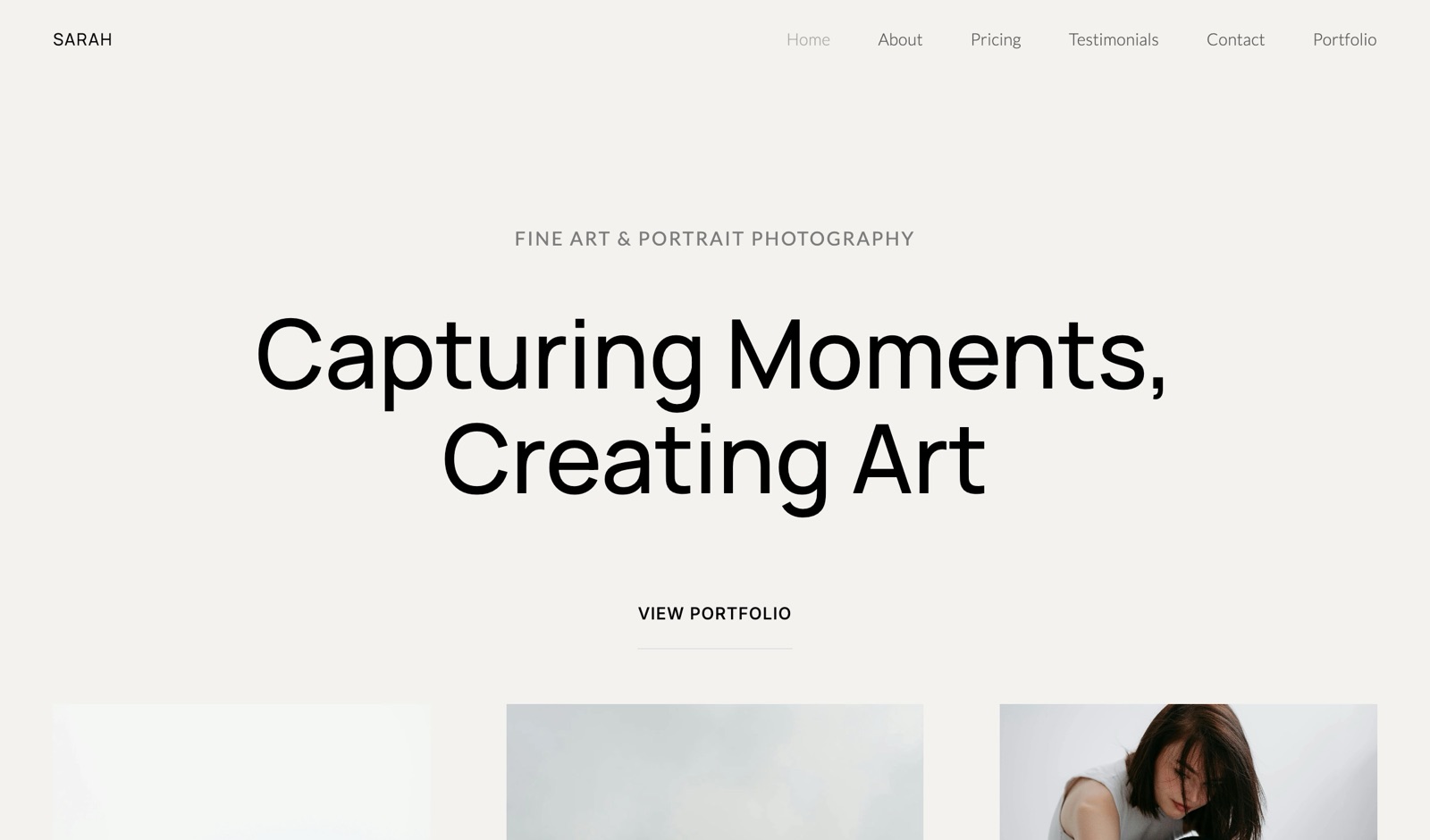
Export web images at about 2,000 to 2,500 pixels on the long edge so pages stay light on a phone, and give each page a unique title that names the genre and the city.
That five-page site fits inside a free plan on most builders that have one; on Framekit, the free plan allows 10 pages and 10GB, with per-page titles, a sitemap and contact forms included.
The full build is in how to build a photography website, and what makes a good photography portfolio covers the curation.
A 90-Day Plan If You Decide to Build One
A photography website pays back fastest when it goes live small and improves on a schedule, so this plan spreads the work over 90 days with one measurable target per stage, starting on a free plan and spending money only when the site has earned it.
Days 1 to 7: publish the five pages. Build the five-page site above on a free plan, with one gallery per genre and the enquiry form tested from your phone. Target: live, linked from your Instagram bio, and one test enquiry received.
Days 8 to 30: put it where clients look. Connect your own domain when you start sending the link in quotes, verify the site in Google Search Console and submit the sitemap, set up a free Google Business Profile that links to it, and add the address to your email signature.
Target: the site appears when you search your own name.
Days 31 to 60: add the pages that rank. Write one page per service and city you want to be found for, such as "family photographer in Leeds", with 15 to 25 images and a "from" price on each. Target: every page has a unique title naming the genre and the city.
Days 61 to 90: measure and decide. Count the enquiries that arrived through the site, check which pages visitors land on in your analytics, and compare the result with the site's yearly cost.
Target: one enquiry you can trace to the site, which on most photographers' prices already covers several years of it.
If day 90 shows no enquiries at all, the site is still worth keeping as your owned address, but check the homepage line and the form before adding anything else, because those two are where most photography sites lose the visitor.
Where Framekit Fits

Framekit is an AI website builder that also delivers client galleries for photos and video, runs video review for hybrid shooters, builds pricing guides in Slides and sells presets from a download store, so a photographer who decides they need a website gets the site and the delivery in one account rather than two.
What it feels like. Describe what you shoot, or upload a screenshot of a photographer's site whose structure you like, and the AI drafts the pages and first-pass copy in one theme; every block stays editable by hand.
When a client books, the same dashboard opens a gallery at /client/ on your site.
The client taps a heart on favourites and is asked only for an email, can build named lists such as "Album" with a note on each photo and send the list back to you, and every download is the full-resolution original, behind an optional download PIN.
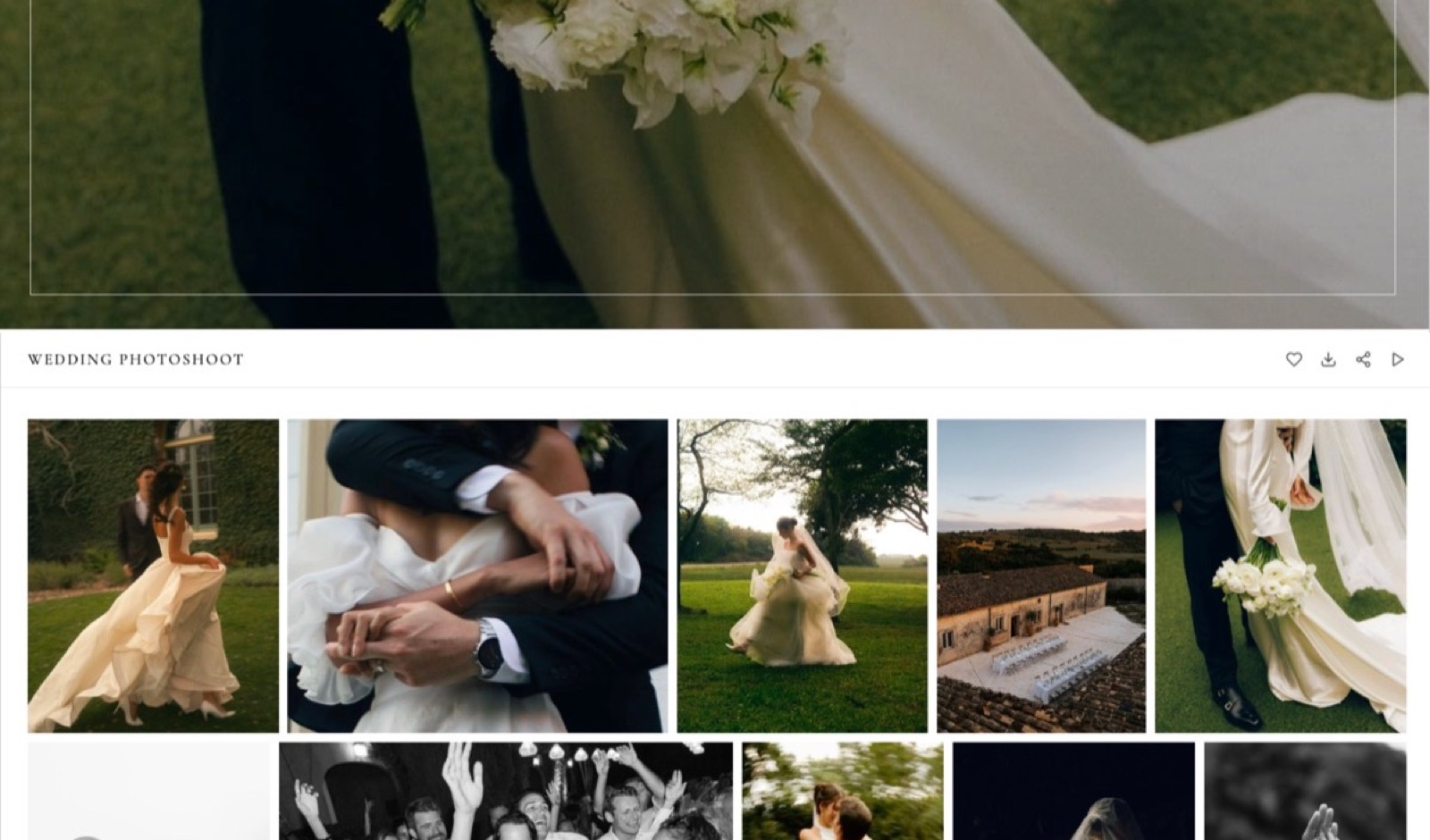
The number that matters. $0 on the permanent free plan for the site and unlimited galleries in 10GB of pooled storage on a framekit.ai address; $7 a month billed yearly on Starter for your own domain, no website badge and 50GB; $15 a month billed yearly on Pro for 300GB.
On every plan, paid included, the gallery pages keep a small Made with Framekit line in their footer.
The standout detail. Every gallery feature is on every plan, Free included, so a photographer who is not sure they need a website can start with the galleries they already need and switch the site on when the time comes.
The honest gotcha. There is no print ordering, no lab fulfilment, no native mobile gallery app and no client uploads into a gallery. Storage is capped at 2TB on Business.
On the site side, there is no redirect manager, robots.txt is not editable and there is no RSS feed.
Skip it if prints and albums are a real share of your income, which Pixieset, Zenfolio and SmugMug handle with lab fulfilment, or if you need an unlimited archive of every frame, which SmugMug offers.
Verdict: for a photographer paid for the session who delivers digitally, Framekit is the cheapest way to add a website without adding a second bill for galleries; for a print-led studio, a print-selling gallery is the better first purchase.
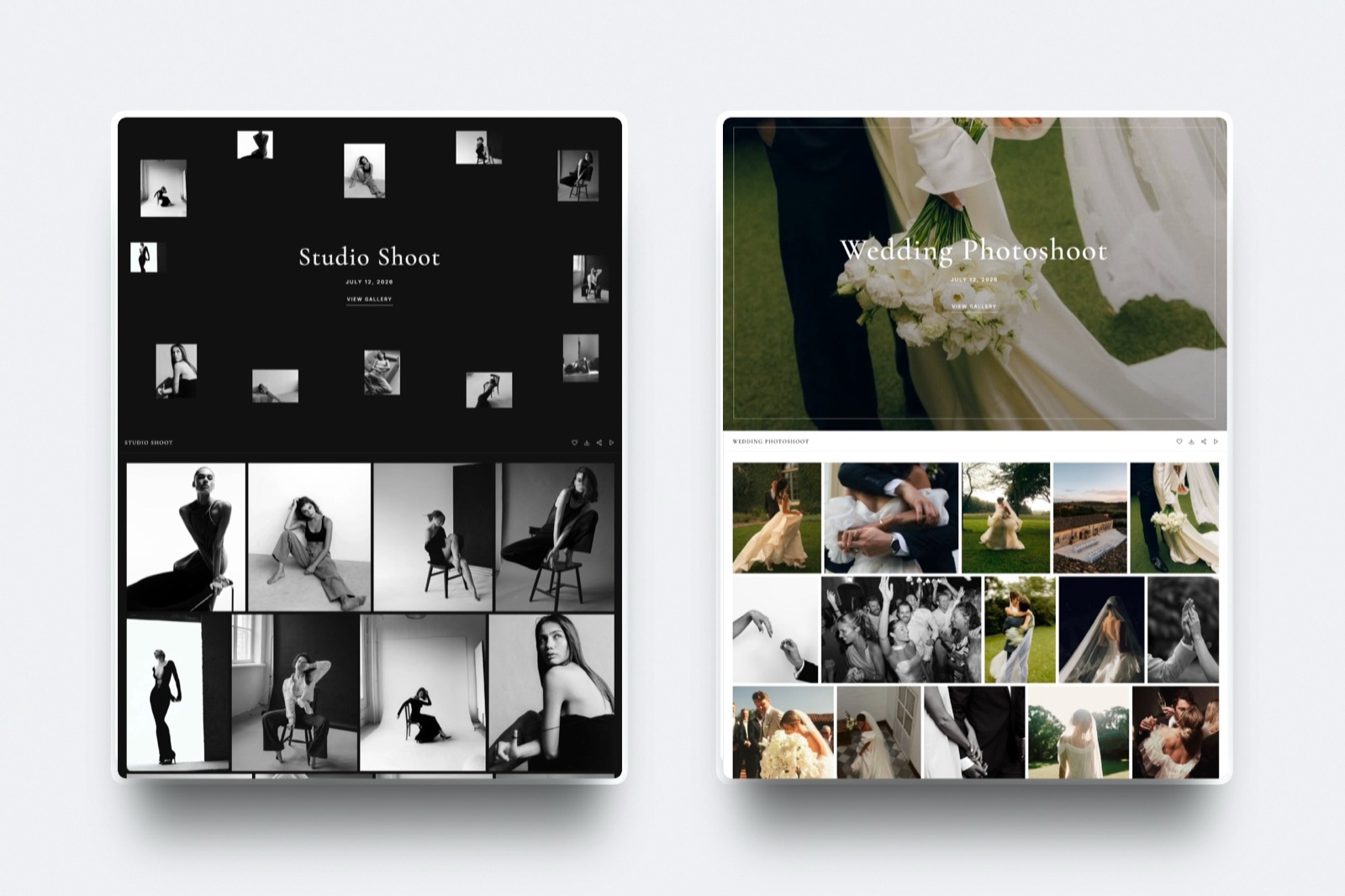
Which Platform Fits If You Decide You Do Need One
If the answer for you is yes, the platform choice turns on how you make money, prints, sessions or products, and on whether galleries come with the site, so this short comparison uses the October 2026 figures from our full ranking.
| Platform | Galleries with the site | Prints with lab fulfilment | Free plan | Your own domain from |
|---|---|---|---|---|
| Framekit | Yes, unlimited, every plan | No | Yes, 10GB | $7 a month billed yearly |
| Pixieset | Yes; website through Suite | Yes, 0% commission on paid plans | Galleries only, 3GB | Suite from $28 a month billed yearly |
| Zenfolio | Yes | Yes, flat 7% commerce fee | No | $7 a month billed yearly (Basic cannot sell) |
| SmugMug | Yes, favouriting on Pro | Yes | No, 14-day trial | $20 a month billed yearly |
| Squarespace | No | Physical products you ship | No, 14-day trial | $19 a month billed yearly |
The full ranking with three-year costs is in the best website builders for photographers, and the head-to-heads include Framekit vs Squarespace for photographers and Framekit vs Pixieset.
How to Decide: A Decision Tree
Work down these questions in order and stop at the first one that settles it, because the question that decides whether a photographer needs a website is where the next booking comes from, and everything else is a detail once that is answered.
1. Do you want any client who does not already know you? If no, you can skip a website for now; use Instagram for visibility and a gallery tool for delivery. If yes, go to question 2.
2. Do people search for your kind of photography in your area? If yes, you need a website with a page per genre and a city in the titles. If you are unsure, go to question 3.
3. Do you want to raise your rates or sell presets, prints or guides? If yes, you need a website. If no, go to question 4.
4. Would losing your Instagram account stop your bookings? If yes, build the site and start an email list. If no, a website is still worth it, but it can wait for a quiet month.
5. If you are building one: are prints a real share of income? If yes, start with Pixieset, Zenfolio or SmugMug. If no, Framekit covers the site and galleries in one account from $0.
Frequently Asked Questions
Do photographers need a website in 2026 if they already have Instagram?
Most photographers who want new clients need a website as well as Instagram, because Instagram rarely appears when someone searches Google for a photographer in a city, and the account is not something you own.
Referral-booked photographers with a full calendar can skip one for now, using Instagram for visibility and a gallery tool for delivery.
Can a photographer get clients without a website?
A photographer can get clients without a website through referrals, planners, second-shooting and marketplaces, and many do.
The limit is discovery: without a site you are nearly invisible to people outside your network, so growth past your current circle depends entirely on word of mouth and one app's reach.
Is Instagram plus Pixieset enough for a photography business?
Instagram plus Pixieset is enough for a referral-booked photographer, since Pixieset handles delivery and print sales while Instagram handles visibility.
Its free gallery plan has 3GB and takes 15% on store sales, and its website is a separate Suite purchase from $28 a month billed yearly. What it lacks is search visibility on a site you own.
How much does a photography website cost in 2026?
A photography website costs $0 to start on a free plan and about $84 to $420 a year once you add your own domain and galleries.
Framekit's free plan publishes a site with galleries on a framekit.ai address, Starter is $84 a year billed yearly with your domain, and Squarespace Basic plus Pixieset Plus is $420 a year. Add $10 to $20 a year for the domain itself.
Framekit vs Pixieset: which should a photographer start with?
Framekit is the better start for a photographer paid for the session who delivers digitally, because the website and unlimited galleries are in one account with every gallery feature on the free plan.
Pixieset is the better start for a photographer whose income includes prints and albums, because its paid plans sell through a pro lab at 0% commission and include native mobile gallery apps.
Do I need a website if I am fully booked by referrals?
You do not need a website while you are fully booked by referrals and happy at that size, but building one in a quiet month is cheaper than building one during a slow season. A five-page site on a free plan costs nothing to keep online while you decide.
Can I sell presets or prints without a website?
You can sell presets without a website through a link-in-bio store or a buy link, and prints through a print-selling gallery such as Pixieset, Zenfolio or SmugMug.
Framekit's store also works without a site, through a buy link to a checkout hosted by Framekit, with a 5% fee on Free and Starter and 0% on Business. Framekit does not sell prints.
What should a photographer's website include at minimum?
A photographer's website should include a homepage line saying what you shoot and where, one gallery of 15 to 25 images per genre you want booked, a 150 to 300 word about page with a real photo, at least a "from" price, and an enquiry form of 5 fields or fewer.
Does a photography website help with Google if I am a local photographer?
A photography website helps local search when each page has a title naming the genre and the city, the site is submitted in Google Search Console, and your city and travel area are written on the page.
Pair it with a free Google Business Profile, which shows in map results, and link the two together.
What happens to my client galleries if I stop paying for Framekit?
The account falls back to the permanent free plan with 10GB of pooled storage, a framekit.ai address and a site badge, so galleries that fit within 10GB stay available on that address, while links you sent on your own domain stop working.
Download or archive larger galleries before downgrading, because anything over the limit will not fit the free plan.
Is a link-in-bio page good enough instead of a website?
A link-in-bio page is good enough for routing Instagram followers to a few destinations, but not as a portfolio: it does not rank for service searches, it is one page, and Linktree does not offer a custom domain on any plan.
Keep the link page if you like and point its first link at a real site.
Do hobbyist photographers need a website?
Hobbyist photographers do not need a website unless they want to sell, book clients or build an audience outside social apps. If that changes, a free plan lets you publish a portfolio at $0 and add a domain only when the site starts sending enquiries.
The Bottom Line
Do photographers need a website in 2026? Not all of them: referral-booked photographers, second shooters and hobbyists can run on Instagram plus a gallery tool, and that is a legitimate setup.
Every photographer who wants clients from outside their network, higher rates or product sales needs one, and at $0 to $84 a year it pays for itself with a single extra booking.
Where Framekit loses: a print-led studio is better served by Pixieset, Zenfolio or SmugMug, which sell through labs; a photographer who needs an unlimited archive is a better fit for SmugMug; and a photographer happy with referrals does not need any of it yet.
For a photographer paid for the session who delivers digitally, Framekit puts the website and the galleries in one free account, so the decision costs nothing to test.
Related readinghow much a photography website costs, the best free website builders for photographers, do you need a client gallery with a website and how to SEO a photography website.