Framekit templates
Start from a designer-made template
 Use template
 Use template
 Use template
 Use template
 Use template
 Use template
 Use template
 Use template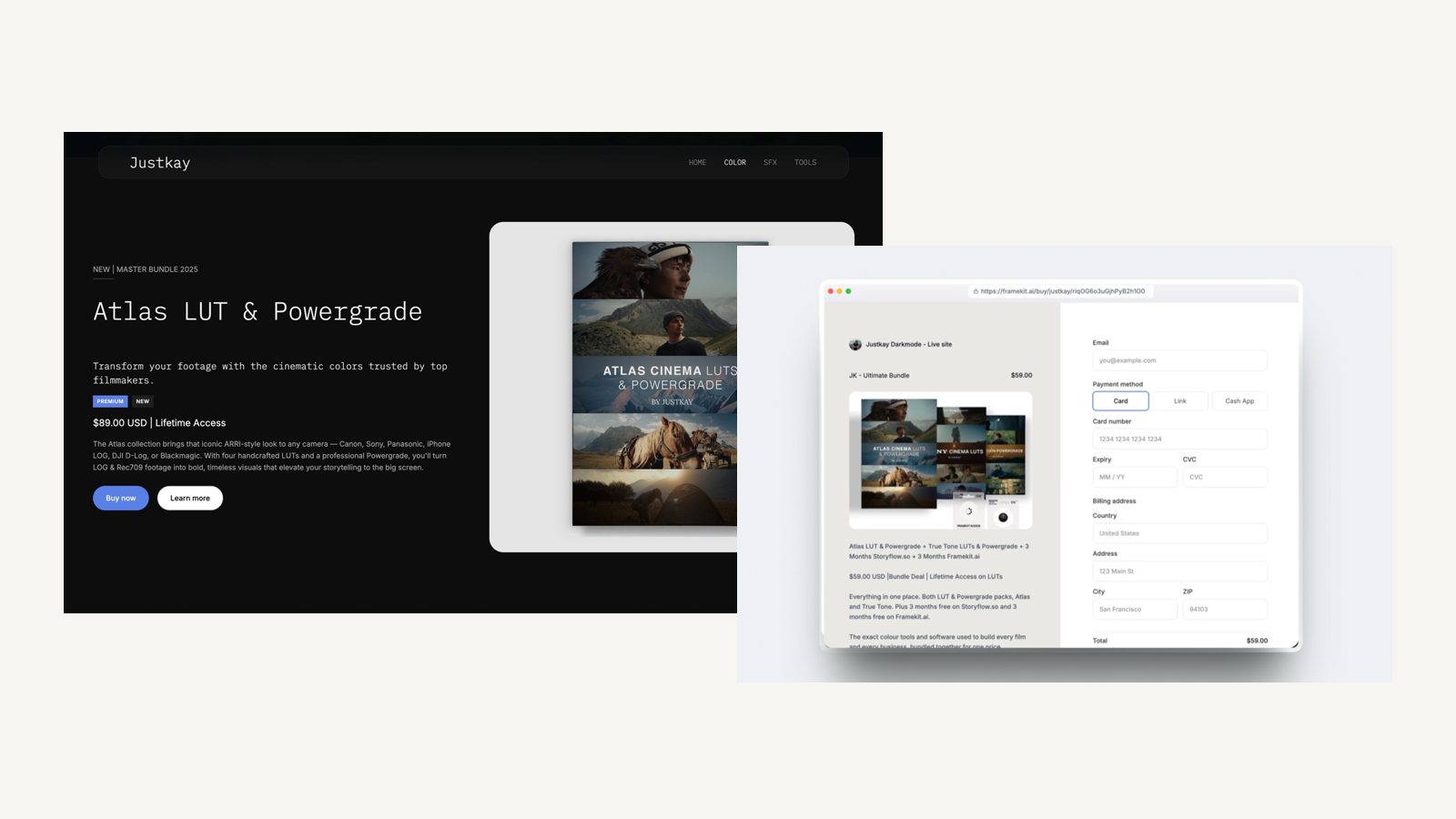
A colourist sells a 3.8GB pack of LUTs and a Resolve powergrade for $89. Nine buyers download it without a word.
The tenth is on a phone in an airport, taps the link, watches a 3.8GB archive fail twice, and asks for his money back inside an hour.
The refund costs $89 of revenue, the platform fee that does not come back, and the card processing fee that does not come back either.
Nothing was wrong with the product. The delivery was designed for the seller's laptop instead of the one buyer in ten who opened it on a phone. That is the whole problem, and it is why how to deliver digital files to buyers is a product-design question and not a hosting question.
A digital file delivery is everything that happens between the payment clearing and the buyer having working files on the machine they will actually use them on: the receipt, the download link, the archive, the folder tree inside it, the instructions and the way the buyer gets back in six months when their drive dies.
Deliver digital files by designing the download for the worst device that will open it: keep any single archive under the 4GB ceiling that the original ZIP format's own header fields impose, name folders so the tree explains itself without a manual, put a one-page install PDF as the first item in the box, and send a receipt with a permanent re-download link instead of a one-time URL.
Framekit is the simplest place to host that for a creative selling files from their own site, because delivery is instant after payment and buyers can come back for their files later, on a store that costs 5% on Free and Starter, 3% on Pro and 0% on Business.
Use SendOwl at $39 a month when you need licence keys, PDF stamping or drip release, Lemon Squeezy at 5% plus 50 cents when you want somebody else to be merchant of record for tax, and Gumroad at 10% plus $0.50 when you want an audience-facing marketplace instead of your own storefront.
Full disclosure: Framekit is our product, which is a reason to check the numbers below instead of taking them. Every competitor figure here was read on that vendor's own published page in September 2026 and linked at the point of use, and where a page served European pricing to this session it is quoted as listed and not converted. Framekit loses outright on all three of licence keys, piracy tooling and drip delivery, and it is not merchant of record for your sales.
How this guide was put together and what it does not claim
Three different kinds of statement appear below, and knowing which is which matters more here than usual because a delivery decision made on a wrong number turns into support tickets you answer for a year.
Read at the source. Every platform price, fee and stated limit was read on the vendor's own published page in September 2026 and is linked where it is used.
Two vendor pages would not serve their figures to an automated reader at all, and where that happened the tool is described in prose without numbers instead of guessed at.
Calculated. The arithmetic is ours and is shown in full so it can be rerun on your own catalogue. The carried example throughout is one product: a 3.8GB colour pack, a set of LUTs plus a Resolve powergrade plus a six-page PDF, sold at $89, at ten sales a month.
Framekit capabilities come from the five products that ship today. Where Framekit cannot do part of this job, the guide names the tool that can and moves on.
Digital file delivery by the numbers
These six figures decide most of the design choices in this guide, and they are worth writing down before you build anything, because each one is a hard edge and not a preference.
- 4,294,967,295 bytes, a byte short of 4GB, is the largest value the original ZIP format's size fields can hold; past that an archive has to use the ZIP64 extension, per PKWARE's .ZIP Application Note.
- 65,535 is the entry count the original format tops out at, which matters if you ship a brush or sound library as thousands of loose files.
- 25MB is the attachment ceiling on a personal Gmail account, after which Gmail swaps your attachment for a Drive link without telling the recipient why.
- 10% plus $0.50 is what Gumroad charges on a direct sale, rising to 30% on a sale that came through its Discover marketplace.
- 5% plus 50 cents is Lemon Squeezy's rate, and it buys you merchant-of-record status, meaning they handle the tax liability, not you.
- $39 a month is SendOwl's Launch plan, the cheapest tier that lists licence keys, PDF stamping and drip content, capped at 10GB of bandwidth a month.
In one linethe bandwidth cap is the figure most sellers miss, because a 3.8GB pack downloaded ten times in a month is 38GB of transfer, which is nearly four times the monthly allowance on the entry plan of a tool built for exactly this job.
Step 1. Decide what a finished install looks like on the worst device
Before you zip anything, write one sentence describing the state you want the buyer to reach, on the least capable device that will plausibly open your link, because every later decision is downstream of that sentence.
For the carried $89 colour pack the sentence is: the buyer has the .cube files inside their editor's LUT folder, the powergrade imported into Resolve, and a PDF they can reopen when they forget the folder path.
For a 40MB ebook it is: the file is on the buyer's reading device and opens. For a Notion or Canva template it is: the template is duplicated into the buyer's own workspace, which is not a download at all.
Those sentences produce different deliveries. A template that lives in someone else's workspace needs a link and an access note, not a ZIP. A 3.8GB pack needs an archive plan. A 40MB ebook needs nothing clever at all and should be a single file with a sane name.
The thing that goes wrongsellers design for the buyer they imagine, a colourist at a desk with a 10 gigabit connection, and ship an archive that only opens on that setup. Then they treat the resulting tickets as customer error instead of a design note.
Write the sentence on the product page too, near the price, in the buyer's words. "Works in Premiere, Resolve and Final Cut.
Downloads as three ZIP files of 1.7GB, 0.9GB and 1.2GB." A buyer who reads that before paying does not open a refund request after paying, and it costs you one line of copy.
Step 2. Build the folder tree before you build the archive
The folder structure is the manual, and it is the only part of the manual every buyer reads, so design the five top-level entries so that a person who opens them with no context can guess where everything goes.
Three rules hold up across every kind of creative file. Number the top-level folders in the order the buyer needs them, so an alphabetical listing matches the install sequence.
Put the instructions first, as 00 and not a README buried at the bottom.
And never use spaces, ampersands, accented characters or colons in file names, because they break on at least one of the three operating systems your buyers use and they mangle in URLs.
Here is the tree for the carried pack, and it is worth copying the shape and not the contents.
| Path | What is in it | Why it is shaped that way |
|---|---|---|
| 00-START-HERE.pdf | Six pages: install, folder paths per app, contact | Sorts first, opens on any device, no unzipping needed to read it |
| 01-luts-rec709/ | 24 .cube files for standard footage | Named by what the buyer shot, not by your internal version |
| 02-luts-log/ | 18 .cube files split by camera profile | One subfolder per camera, so nobody applies the wrong transform |
| 03-resolve-powergrade/ | One .drx plus a still album | The one file that needs a version note in its name |
| 04-sample-footage/ | Two short clips to test against | Optional, and the first thing to cut if the archive is too big |
Version the pack, not the files. A name like atlas-colour-pack-v2.1 on the top folder tells a returning buyer whether the download they already have is current; a name like LUTS_FINAL_final2 tells them you lost track.
Keep the version string identical on the product page, in the archive name, in the folder name and in the PDF's footer, so a support email that says "I have v2.0" is answerable in one look.
The thing that goes wrongthe tree mirrors the seller's project folder, complete with an "exports" directory and a stray .DS_Store, so the buyer's first impression of an $89 product is somebody else's mess.
Step 3. Size the archive to the ceiling and then split it
The original ZIP format's size fields cap out one byte short of 4GB, and although every modern tool handles larger archives through the ZIP64 extension, the failure mode when something in the chain does not is silent corruption, not a clear error.
PKWARE's own format note is explicit that once a file's size exceeds 0xFFFFFFFF, which is 4,294,967,295 bytes, the archive has to switch to ZIP64's eight-byte values.
In practice that switch is invisible until a buyer's older extraction utility, a phone file manager or a corporate download proxy meets it and produces a partial folder with no warning.
So treat 4GB as the ceiling and not the target, and split anything larger into parts the buyer can download one at a time.
Splitting also fixes the real-world problem, which is not the format at all: it is a buyer on a connection that drops at 78 percent of a single 3.8GB file and has to start again.
| Total pack size | What to ship | Why |
|---|---|---|
| Under 100MB | One archive, or the raw file if there is only one | Nothing to gain from structure; a single .pdf or .zip is clearer |
| 100MB to 1GB | One archive | Restartable on most connections, opens everywhere |
| 1GB to 4GB | Two or three archives split by folder | Each part is independently useful and independently retryable |
| Over 4GB | Parts under 1.5GB each, numbered, plus a manifest | Avoids the format edge entirely and survives a dropped connection |
Split by meaning, not by byte count. Three archives named 01-luts, 02-powergrade and 03-sample-footage let a buyer skip the 1.2GB of sample footage they do not want, and let you tell a stuck buyer to try just part 2.
Three archives named part1, part2 and part3 that only work when reassembled are worse than one big file, because now the buyer has to get all three right.
Include a plain text manifest listing every file and its size. It costs one minute, it lets a buyer check their extraction finished against all 42 .cube files, and it is the single fastest way to resolve "some of the LUTs are missing".
The thing that goes wrongthe seller uses their operating system's built-in split-archive option, which produces .z01 and .z02 companion files that most phone file managers cannot reassemble. Separate, self-contained archives never have that problem.
Step 4. Put the instructions inside the box and on the page
Install instructions are part of the product, and they should exist in three places, because the buyer who needs them most is the one least likely to find the one place you put them.
Inside the archive, as 00-START-HERE.pdf, so it survives the file being copied to a drive. On the product page, in a short "what you get and how to install it" block, so a prospective buyer can judge the difficulty before paying.
And in the receipt email, as two or three lines plus a link, because the receipt is the artefact the buyer searches for eight months later.
Keep the PDF to one page per application.
For the colour pack that is three pages, one for Premiere, one for Resolve and one for Final Cut, each with the actual folder path on both macOS and Windows, and a screenshot of the menu the buyer is looking for.
Do not link a video as the only instruction; a video cannot be searched, does not work offline and ages badly when the host redesigns a menu.

Two lines earn their space more than anything else you write. The first is the compatibility line: exact application versions you have confirmed, and a plain statement about what you have not.
The second is the support line: one email address and the response time you will actually hit.
"Email hello@ and I reply within two working days" prevents more chargebacks than any refund policy, because a buyer who believes a human will answer waits instead of disputing.
The thing that goes wrongthe instructions assume the buyer already knows the vocabulary. "Drop the .cube files in your LUT folder" is not an instruction to someone who has never opened that folder. Give the path.
Step 5. Choose the delivery mechanism, and know what each one will not do
The mechanism is the part most sellers decide first and should decide last, because the right answer depends on whether you need licence keys, whether you want to handle tax, and whether the buyer should land on your site or somebody else's.
Four shapes cover almost everyone, and the last of the three columns is the one that matters.
| Tool | What it costs | What it will not do |
|---|---|---|
| Framekit Store | 5% on Free and Starter, 3% on Pro, 0% on Business at $39/mo, on top of Stripe's processing | No licence keys, no PDF stamping, no drip release, no physical goods, and you are the merchant of record for tax |
| Gumroad | 10% + $0.50 direct, 30% through Discover | Buyers land on a Gumroad-branded page and not yours, and the Discover rate applies to sales it introduces |
| SendOwl | $39/month Launch, $32.50 billed annually, 10GB bandwidth a month | No storefront or site of its own; it is a delivery and licensing layer you bolt onto a page you already have |
| Lemon Squeezy | 5% + 50 cents | You give up being the merchant; the invoice the buyer receives is Lemon Squeezy's, not yours |

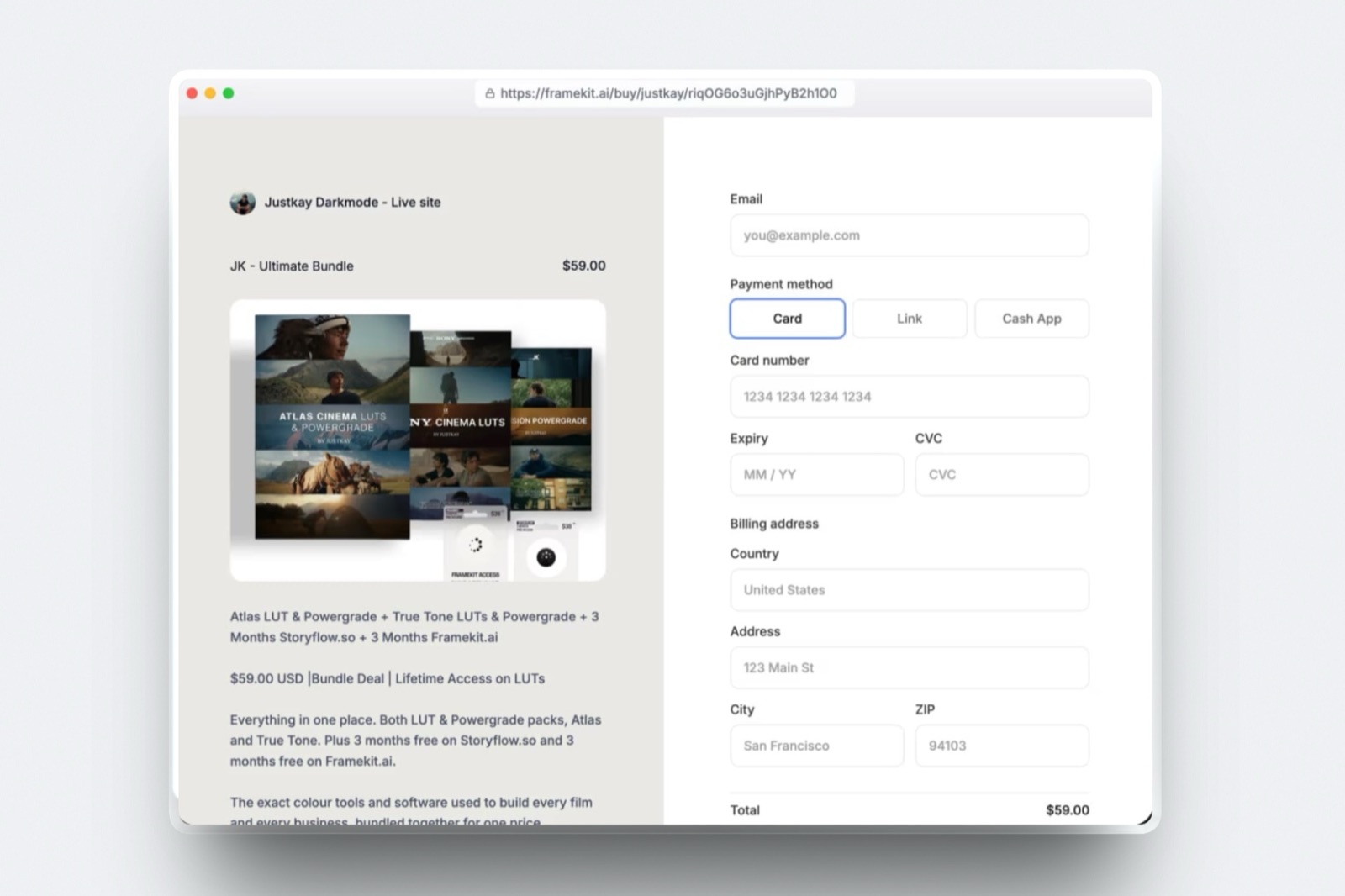
For a creative selling files from a site they already own, Framekit is the option I would pick, and the reason is boring: the product page, the checkout and the file all live on one account and one bill, delivery is instant once payment clears, and buyers can come back for their files instead of depending on a link in an old email.
Checkout runs on Stripe Connect direct charges against your own Stripe account, so the money lands in your account and Stripe's published payment methods, including Link and the wallets you have enabled, appear at checkout.
That same architecture is the concession. Because the charge is yours, you are the merchant of record, which means Framekit does not calculate or remit VAT or sales tax for you.
If that sentence made you uncomfortable, Lemon Squeezy's 5% plus 50 cents is buying you a real service and the tax side of selling digital products is worth reading before you decide.
SendOwl is the one to reach for when the product genuinely needs protecting: it lists licence keys, PDF stamping and scheduled drip content on every tier, and Framekit has none of those three. Watch the bandwidth line, though.
Launch allows 10GB a month, and the carried 3.8GB pack downloaded ten times is 38GB, so a seller with a large file and real volume is on a higher tier fast.
The broader landscape is in the delivery tools comparison, and if copying is your actual fear and not a hypothetical one, piracy protection tools is the honest place to start.
A cloud drive is the 5th option and it is the one to avoid. Dropbox's plans page lists Plus at 9.99 euros a month for 2TB as listed for European buyers, which is fine storage and a poor storefront: there is no receipt, no purchase record tied to an email, no way to revoke a link that got forwarded into a Discord, and no re-download page for a buyer two years later.
A shared folder is a transfer, not a delivery.
Step 6. Write the receipt that stops the first support ticket
The receipt email is the most-read document you will ever send a buyer, and treating it as a payment confirmation instead of as part of the product is the cheapest mistake in this whole guide to fix.
A receipt that does its job has six things in it: what they bought and the version string, the download link, the file sizes and the number of parts, the one line about what to open first, the compatibility statement, and the support address with a response time.
Anything else is decoration.
The download link is where sellers get clever and should not. A single-use expiring URL feels secure and generates a support ticket every time somebody's drive fails, they get a new laptop, or the download stalls at 90 percent.
A link tied to the buyer's email that keeps working is the version that costs you $0.
Framekit handles that shape by default: delivery is instant once the payment clears, and buyers can return for their files instead of relying on an email they may have deleted.
The order, the refund status and the revenue sit in your dashboard, which is also where you look when somebody claims they never received anything.
Set expectations in the same email about the thing you cannot control. Large downloads on mobile data fail, corporate networks block archives, and some email providers quarantine anything with a download link in it.
One sentence saying "if the download stalls, try it on wifi or on a computer, and email me if it still fails" converts a refund into a reply.
If you deliver to commissioning clients as well as to buyers, the same discipline applies to shoot deliveries, and how to write a photo delivery email covers the version of this that goes out after a job and not after a sale.
The thing that goes wrongthe receipt is the checkout provider's default template, so it is branded as the processor, contains no instructions, and looks enough like a phishing email that some buyers do not click the link in it at all.
Step 7. Plan re-downloads, version 2 and the refund you will get anyway
Three things happen to every digital product after the sale, and building for them in week one is what separates a product you sell for years from one you quietly stop supporting.
Re-downloads. Decide now whether access is permanent and say so on the product page.
Permanent access is the correct answer for creative files: it costs you bandwidth on a fraction of buyers, it removes an entire category of support email, and it is a genuine reason to buy from you instead of from a marketplace listing that might vanish.
Framekit's store lets buyers come back for their files, so the policy is the default and not an admin job.
Version updates. When you ship v2, the question is whether existing buyers get it free. Say so before you have to decide under pressure.
Free updates through v2 is a defensible middle path, and whatever you pick, put the version string in the archive name so nobody has to ask which one they hold.
Framekit has no drip mechanism and no scheduled-release mechanism, so a staged rollout means either a second product or a tool like SendOwl at $39 a month that lists drip content on every tier.
Refunds. You will issue some, and the arithmetic is worth knowing before the first one arrives.
| On a refunded $89 sale | What happens | What it leaves you |
|---|---|---|
| The $89 | Returned to the buyer in full | Zero revenue from the sale |
| Framekit's platform fee | Kept by Framekit today; there is no fee reversal | 5% of $89, or $4.45 on Free and Starter |
| Card processing | Stripe's published policy is that the processing fee from the original transaction is not returned | The processing cost, gone |
| A disputed sale instead of a refund | Stripe lists a dispute fee per dispute received | The dispute fee on top of the lost sale |
That is the honest shape of it, and it is why delivery design pays for itself: on the carried pack at 10 sales a month, cutting refunds from 3 a month to 1 puts $178 of revenue back, which beats any pricing tweak you were considering. Stripe's published fee page, read this September, served European pricing to us and lists 20 euros for each dispute received alongside the statement that original processing fees are not returned on a refund.
The detail around chargebacks specifically is in refunds and chargebacks for digital products.
The thing that goes wrongthe seller treats a refund as a neutral undo. It is not. It costs the fee twice and it costs the hour spent on the exchange, so the cheapest refund policy is a delivery that works.
What a year of delivery actually costs on each route
Delivery has a running cost that only becomes visible at volume, and the carried example is a useful stress test because a 3.8GB file makes every per-transfer cost loud.
Ten sales a month of the $89 pack is $890 of monthly revenue, $10,680 a year, and 38GB of downloads a month before anybody re-downloads anything. Run that through each route and the rankings change with volume instead of staying fixed.
| Route | Platform cut on $10,680 a year | Fixed subscription | What you are buying |
|---|---|---|---|
| Framekit Free or Starter | 5%, or $534 | $0 or $84 a year on Starter | Store, product pages and site on one account; you handle tax |
| Framekit Pro | 3%, or $320 | $180 a year at $15/mo billed yearly | Lower cut plus 300GB of pooled storage across site, galleries and review |
| Framekit Business | 0%, or $0 | $372 a year at $31/mo billed yearly | The flat-fee end of the curve, where the plan price replaces the percentage entirely |
| Gumroad direct | 10% plus $0.50 per sale, or $1,128 | $0 | A marketplace audience and a hosted page you do not own |
| SendOwl Launch | None | $390 a year billed annually | Licence keys, PDF stamping, drip, and a 10GB monthly bandwidth ceiling |
Two rows there are worth arguing with.
The flat Business plan looks like the expensive option and at this volume it is not: $10,680 a year in sales costs $500 on Pro once you add 3% to the $180 plan fee, against $372 on Business, and the general rule is that the flat plan wins as soon as the percentage you would pay on the tier below exceeds the difference between the two plan prices.
And SendOwl's $390 looks cheap next to Gumroad's $1,128 until you read the bandwidth line, because 38GB of downloads a month against a 10GB monthly allowance is not a plan you stay on.
Run it on your own numbers, not these: take last month's units, multiply by your price, multiply by your platform's percentage, times 12. Then multiply your file size by your units and compare that against any bandwidth cap in your plan.
Whichever of those two numbers is larger is the one that decides your tool.
If you want the full spread of checkout options instead of the four here, checkout tools for selling digital products and what it costs to sell digital products online do that comparison properly.
In one linethe percentage fee dominates your costs at low volume and the bandwidth cap dominates them whenever your files are large, which is why a seller of 40MB ebooks and a seller of 4GB colour packs should never end up on the same plan at the same revenue.
Delivering to a commissioning client is a different job
Buyers and clients want opposite things from a delivery, and using one mechanism for both is how photographers end up emailing ZIP files to brides and uploading wedding galleries to a store.
A buyer wants a permanent, self-service download tied to a purchase. A client wants a branded page they can browse, favourite from and share with a partner, with an expiry date and a password on it.
The store is the wrong shape for the second job, and a gallery is the wrong shape for the first.
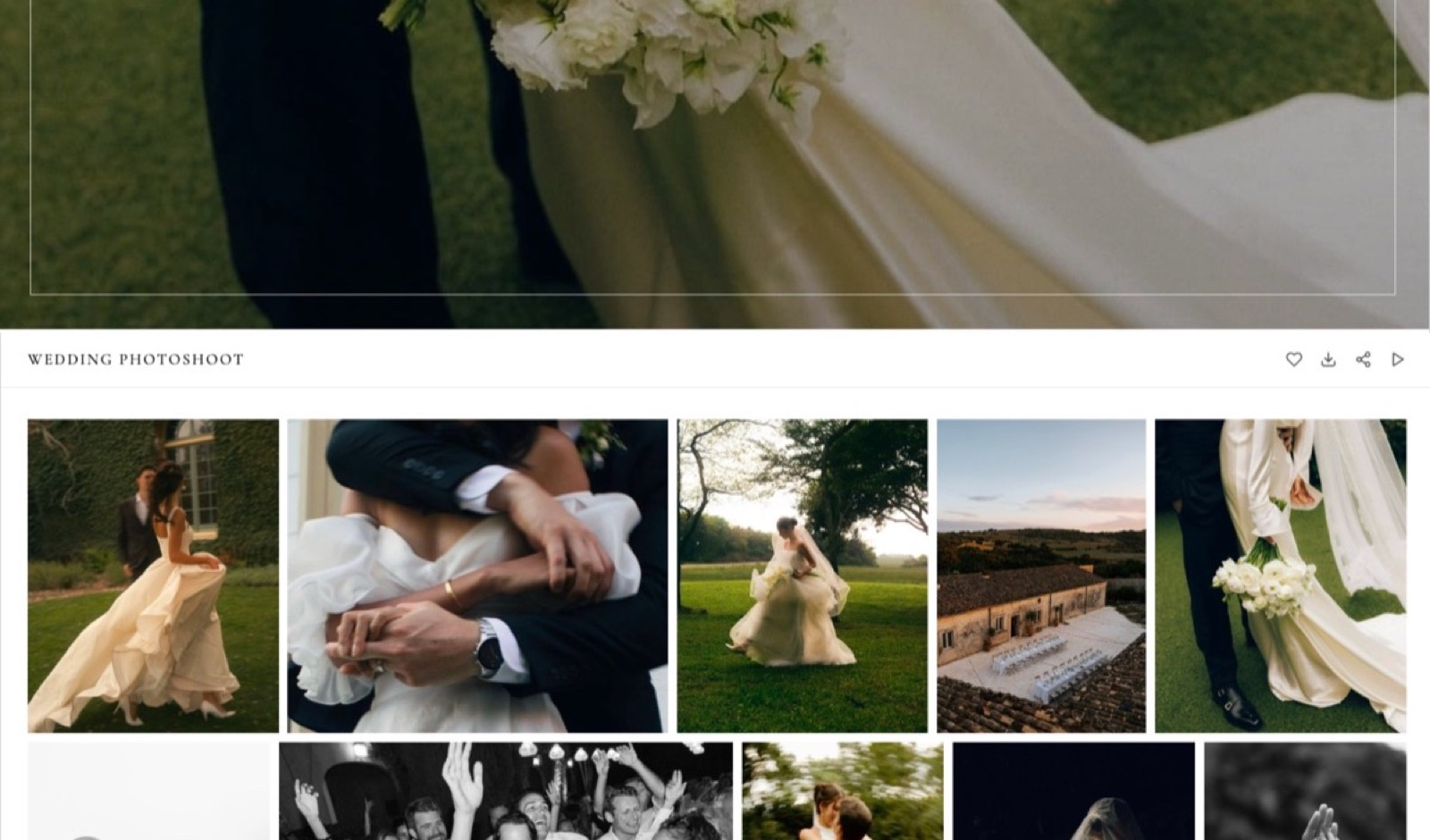
Framekit keeps these as separate products on one account: the store for files people pay for, and client galleries for work you were commissioned to make, with watermarking, a gallery password, a separate download PIN, favourites, full-resolution and ZIP downloads and auto expiry on every plan including Free.
If you are choosing a route for very large shoot deliveries specifically, client galleries for large file delivery compares that side, and how to deliver photos to clients is the procedure.
In one linethe test for which product you need is whether the recipient paid for the files or commissioned them, because that decides whether the correct default is permanent access or an expiry date.
Which delivery route to pick, as a set of questions
Work through these five questions in order and stop at the first yes, because each one rules out more routes than it looks like it does, and the first constraint that applies should decide the tool before the fee table does.
Do you need licence keys, watermarked PDFs or a scheduled release? Then this is not a Framekit job and it is not a Gumroad job either.
Use a delivery layer built for it, such as SendOwl at $39 a month, and accept that you are bolting it onto a storefront you host somewhere else.
Do you want somebody else to carry the tax liability? Then a merchant-of-record platform such as Lemon Squeezy at 5% plus 50 cents is buying a real service, and the 5% is the price of never filing a VAT return for a sale in a country you have never visited.
Is the marketplace itself the reason you would be found? Then Gumroad's 10% plus $0.50 is the entry price, with the caveat that a sale it introduces through Discover is charged at 30% and not 10%.
Do you already have, or want, a site of your own that the buyer lands on? Then the store attached to that site is the right answer, which for a Framekit site means the file, the page and the checkout on one account and one bill, at 5% falling to 0% on the flat Business plan.
Are you delivering to someone who commissioned the work? Then none of the above; use a client gallery with a password, a download PIN and an expiry date.
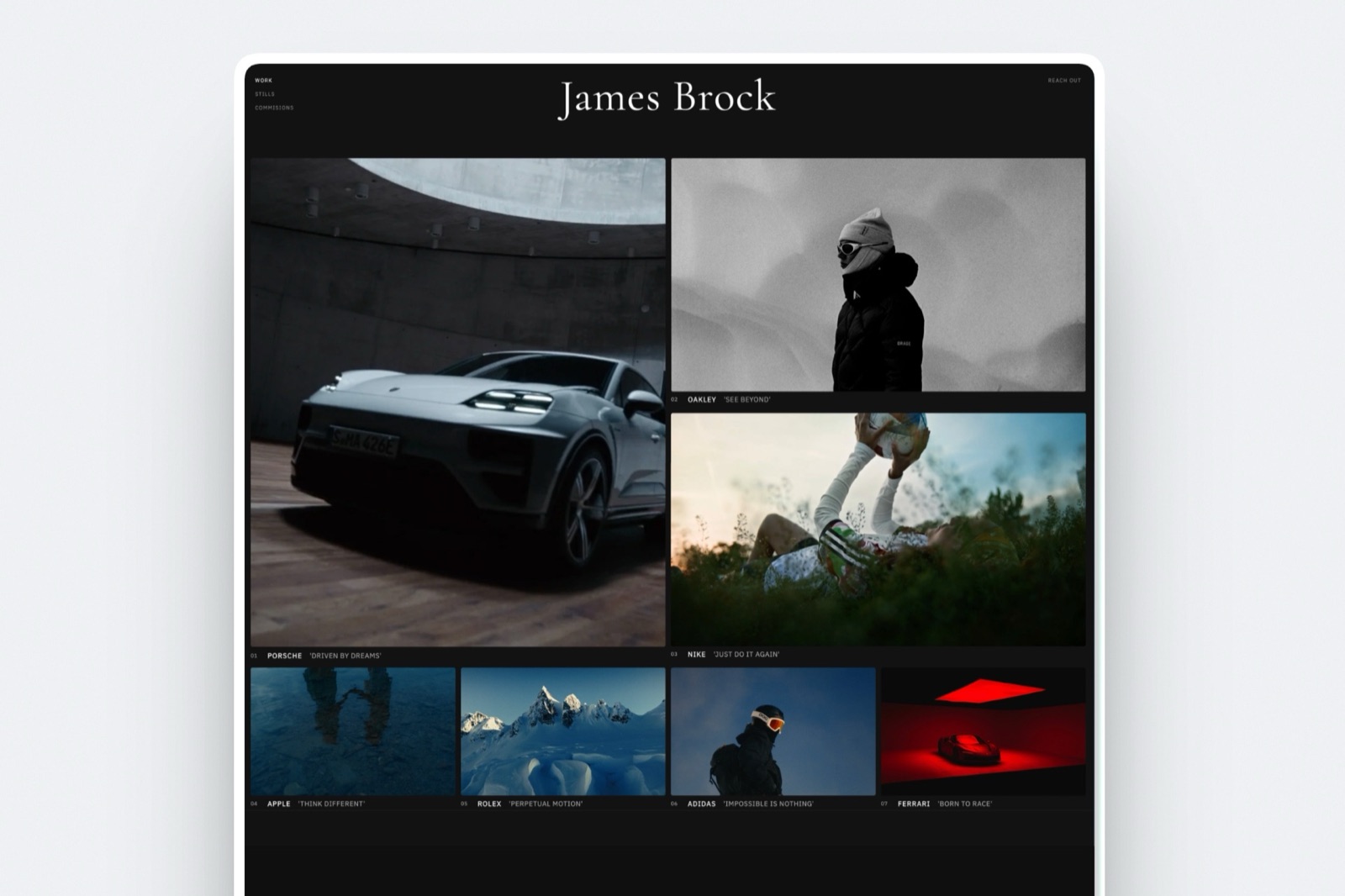
Framekit is an AI website builder for photographers, filmmakers and designers whose store sells digital files from the same account and the same bill as the site the buy link sits on.
That single-account shape is the reason to use it for delivery, and the reason it will never be the right tool for a product that needs a licence server.
Frequently Asked Questions
How do you deliver digital files to buyers after payment?
Deliver digital files by sending a receipt email that contains a permanent, buyer-linked download instead of a one-time URL, with the file sizes, the number of parts and a one-line "open this first" instruction.
Host the files on the platform that took the payment so the purchase record and the download live together.
On Framekit the delivery is instant once the payment clears and buyers can return for their files later, so a lost email is not a lost purchase.
What is the maximum size a digital product download should be?
Keep any single archive under 4GB, because the original ZIP format's size fields top out at 4,294,967,295 bytes and anything larger depends on the ZIP64 extension being handled correctly at both ends.
In practice, split anything over about 1.5GB into separate, self-contained archives grouped by what is inside them, so a buyer on an unreliable connection can retry one part instead of the whole pack, and can skip the parts they do not want.
Should buyers get permanent access to re-download files?
Yes, for creative files. Permanent re-download access costs you bandwidth on a small fraction of buyers and removes the most common support email a digital seller gets, which is a person whose drive failed two years later.
It is also a real reason to buy from your own store instead of a marketplace listing. Framekit's store lets buyers come back for their files, so permanent access is the default and not something you administer.
Does Framekit support licence keys or DRM for digital products?
No. Framekit has no licence keys, no DRM, no PDF stamping and no piracy tooling of any kind, and it does not do drip or scheduled release either.
If your product needs any of those, SendOwl lists licence keys, PDF stamping and drip content on every tier from $39 a month, and it is the honest recommendation.
Framekit's store is built for straightforward instant delivery of files from your own site, not for controlled distribution.
Who pays the VAT when you sell a digital file through Framekit?
You do. Framekit's checkout runs on Stripe Connect direct charges against your own Stripe account, which makes you the merchant of record and leaves VAT and sales tax your responsibility; Framekit does not calculate or remit tax.
That is the trade-off for the money landing in your own Stripe account. If you prefer not to deal with it, Lemon Squeezy charges 5% plus 50 cents and takes on the tax liability as merchant of record instead.
Is it safe to deliver digital products from Dropbox or Google Drive?
It works and it is a poor product experience. A cloud drive gives you no receipt tied to a purchase, no record of who bought what, no way to revoke a forwarded link and no re-download page for a buyer two years later.
Dropbox's own plans page lists Plus at 9.99 euros a month for 2TB as shown to European buyers, which is good storage and no storefront at all. Use a drive for your archive, not for delivery.
What happens to your platform fee when a buyer asks for a refund?
On Framekit today the platform fee is kept and not reversed, so a refunded sale costs you the revenue and the fee.
Card processing behaves the same way: Stripe's published policy is that the payment processing fee from the original transaction is not returned when you refund.
That combination is the strongest financial argument for spending an afternoon on your folder structure and install instructions before you spend it on pricing.
How do you stop buyers from sharing your files?
You mostly cannot, and pricing for it beats policing it. The tools that genuinely help are watermarking or stamping each PDF with the buyer's email, which SendOwl offers, and licence keys for software-shaped products. Framekit has neither.
Most creative sellers get further by making the product hard to use without the updates and support that come with a real purchase, and by keeping the price low enough that buying is easier than searching.
What should the download page say about file sizes and compatibility?
State the total size, the number of separate downloads, the exact application versions you have confirmed, and what you have not confirmed, all before the buy button and not after it.
A buyer who knows they are about to download three archives of 1.7GB, 0.9GB and 1.2GB will do it on wifi.
A buyer who finds out afterwards, on mobile data, is the one who opens a refund request, which is the single most preventable loss in digital selling.
Gumroad or your own store for delivering digital files?
Gumroad is the better pick when the marketplace is how you get found and you do not want to run a site, at 10% plus $0.50 on a direct sale and 30% on a sale that came through Discover.
Your own store is better when you already have traffic, because the cut is lower, the customer relationship is yours and the buyer stays on your domain.
On Framekit that means 5% on Free and Starter, 3% on Pro and 0% on Business at $39 a month.
Final Verdict
Design the delivery for the buyer's worst device, not your best one.
Number the folders, keep archives under 4GB and split them by meaning, put a one-page install PDF first in the tree, send a receipt with a permanent buyer-linked download, and publish your re-download and version policy before anyone asks.
Those five decisions cost an afternoon and remove most of the support load and most of the refunds a digital product generates.
For a photographer, filmmaker or designer selling files from a site they already run, Framekit is the pick in this guide: one account for the page, the checkout and the file, instant delivery on payment, buyers who can come back for their downloads, and a fee that starts at 5% and drops to 0% on a flat $39 plan instead of climbing with your revenue.
Where Framekit losesit has none of the four controls a protected product needs, no licence keys, no PDF stamping, no DRM or piracy tooling and no drip delivery, so a product that depends on controlled distribution is not a Framekit product and SendOwl is the better fit.
Framekit is also not merchant of record, which means the VAT and sales tax are yours to handle; if that is a deal breaker, Lemon Squeezy at 5% plus 50 cents is the trade you want.
And Framekit will not sell you an audience, so if discovery and not delivery is the problem, a marketplace like Gumroad is doing a job Framekit does not do at all.
Related readingdigital product delivery tools compared, how to sell LUTs online, how to price digital products, selling digital products with Stripe and getting paid when you sell digital products.
For the link that takes the payment in the first place, see how to sell a digital product from one link, and to work out which plan the fees justify, how to set up a free online store as a creator does the crossover arithmetic.