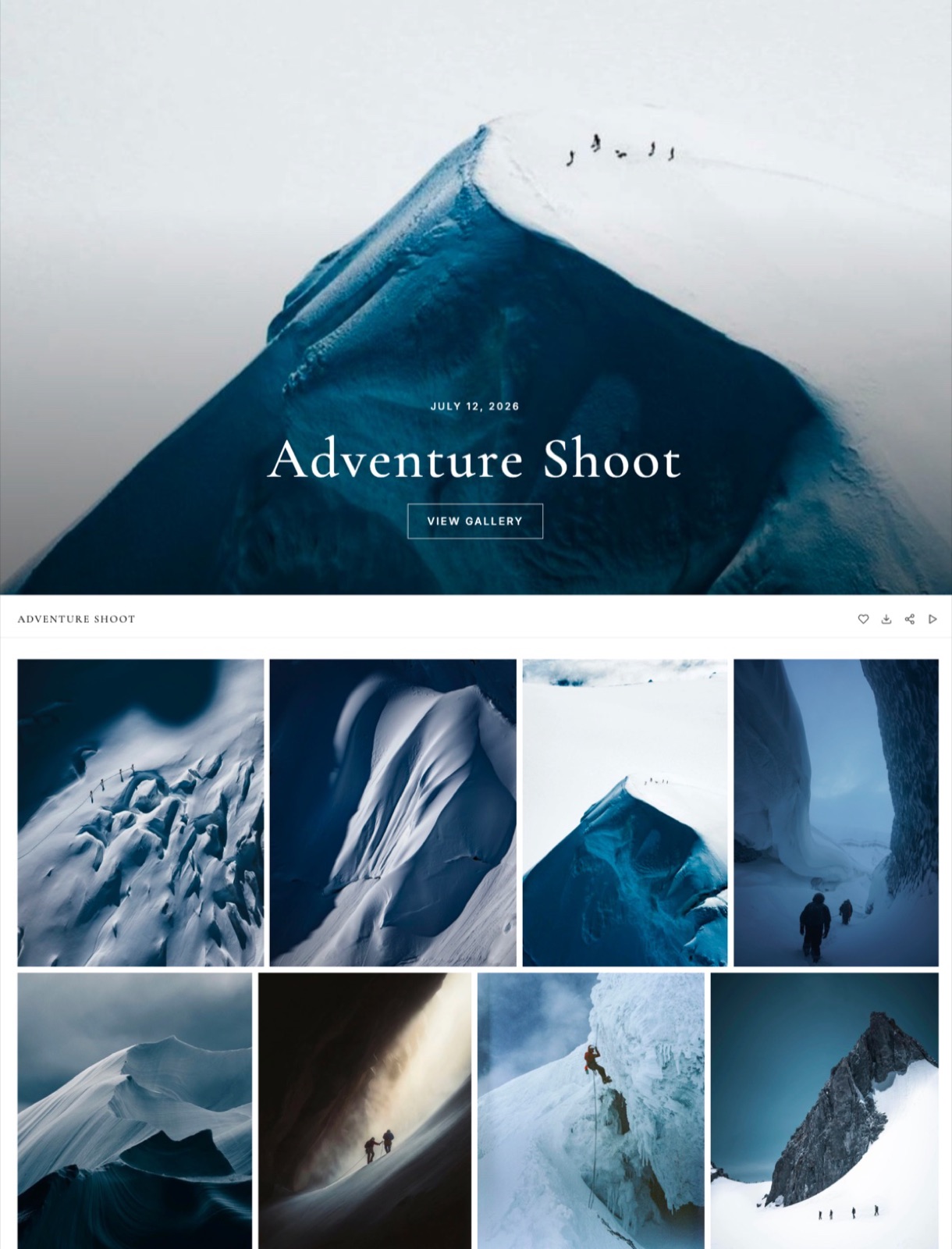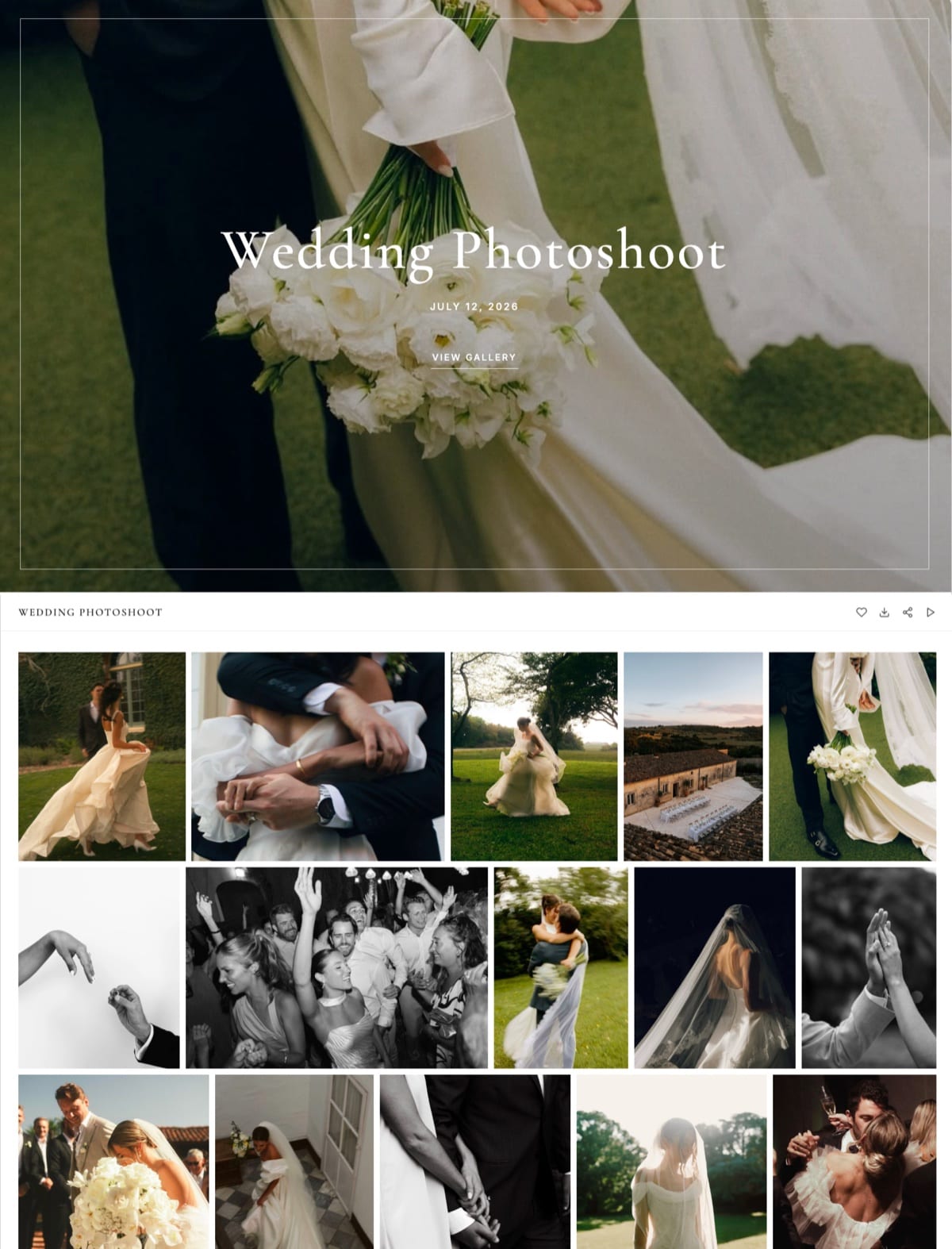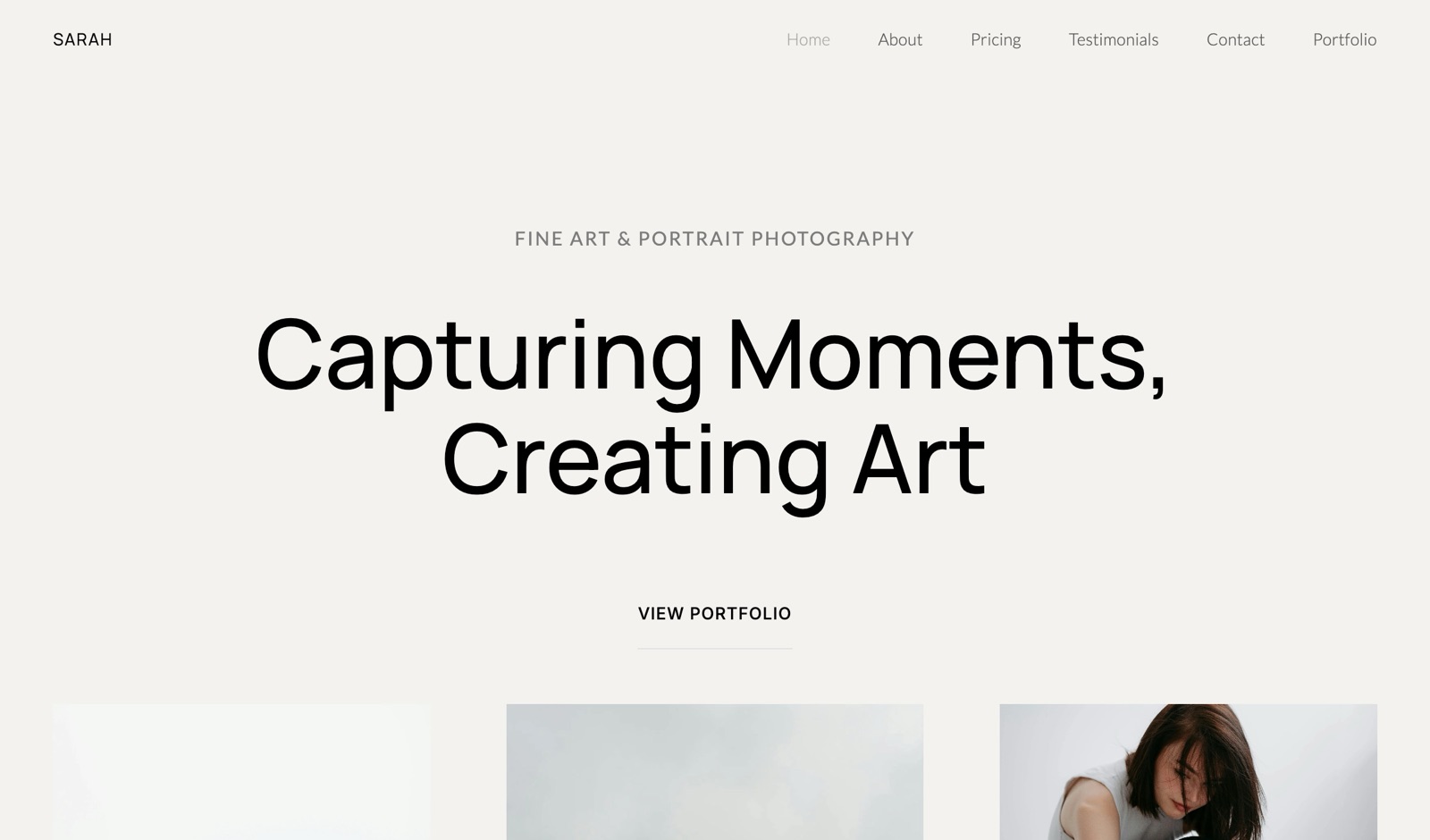
Framekit templates
Start from a designer-made template
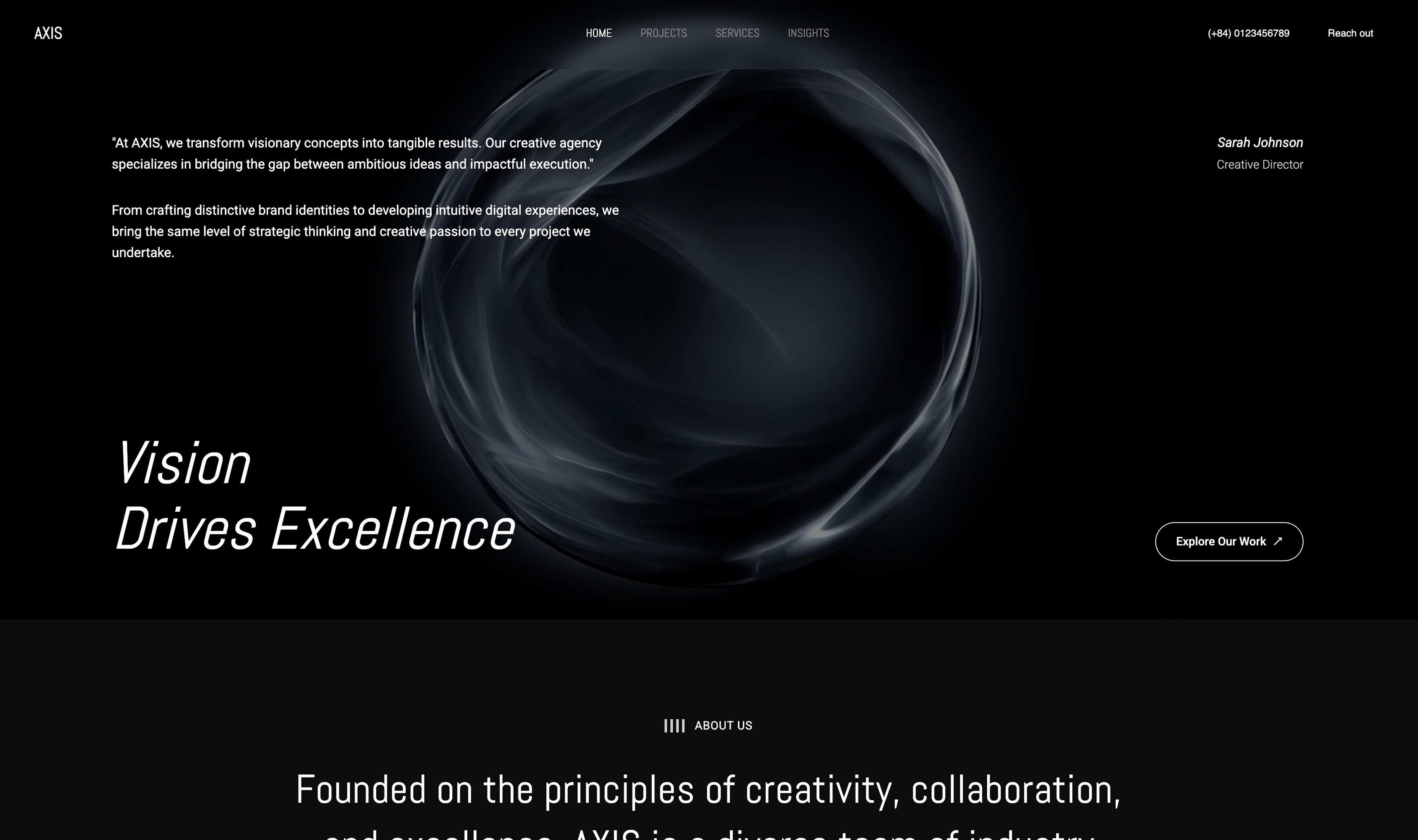 Use template
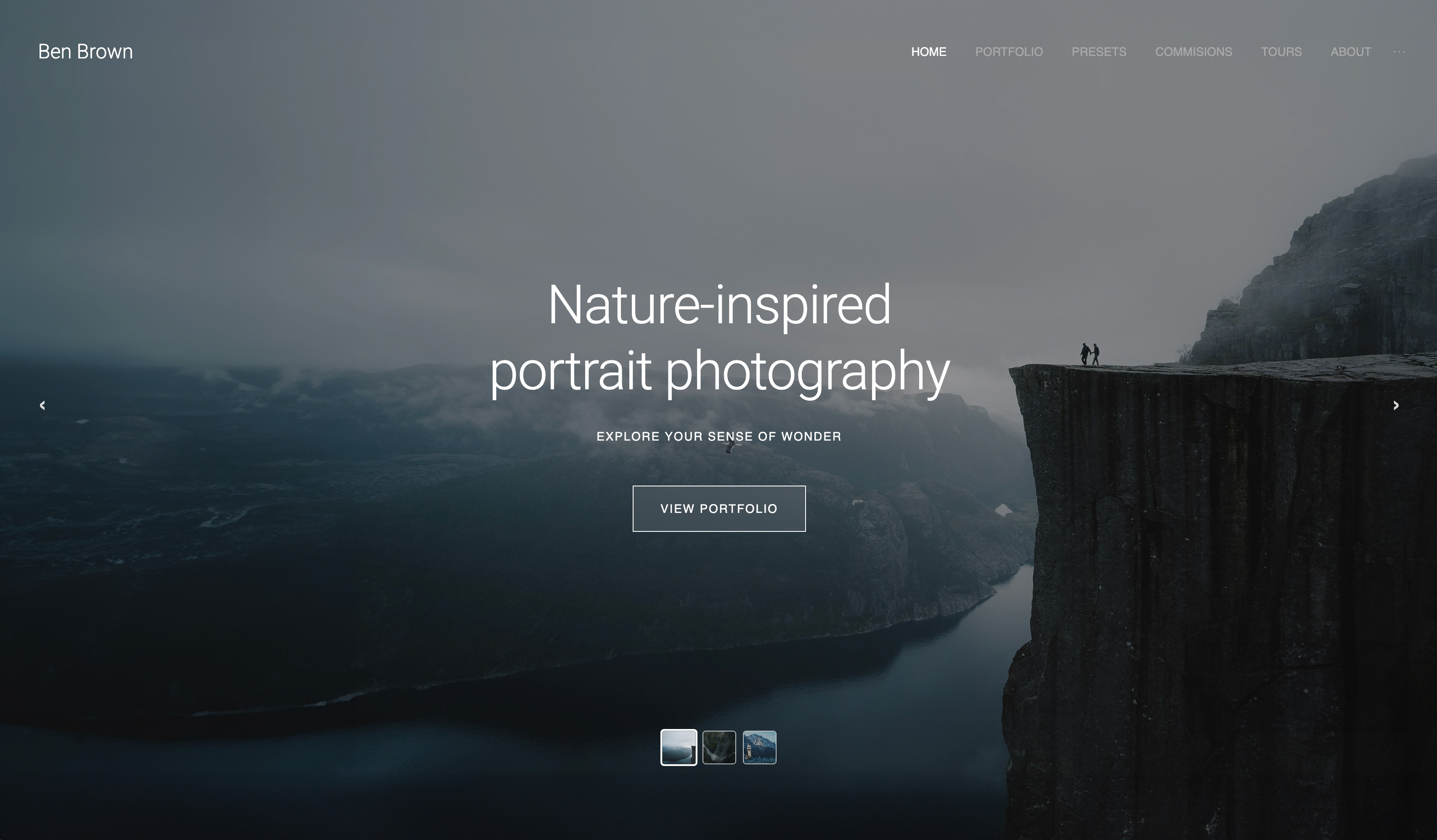 Use template
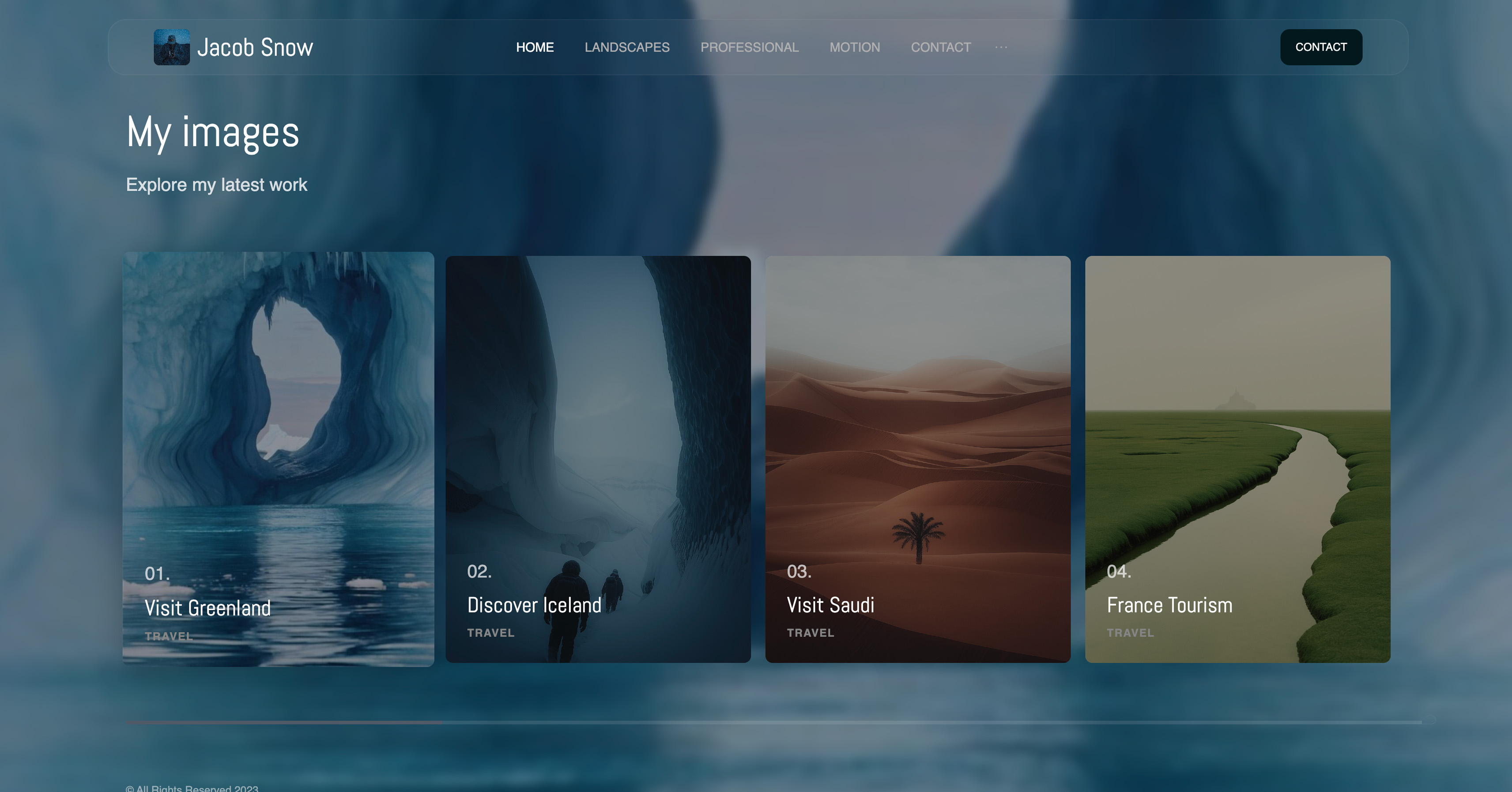 Use template
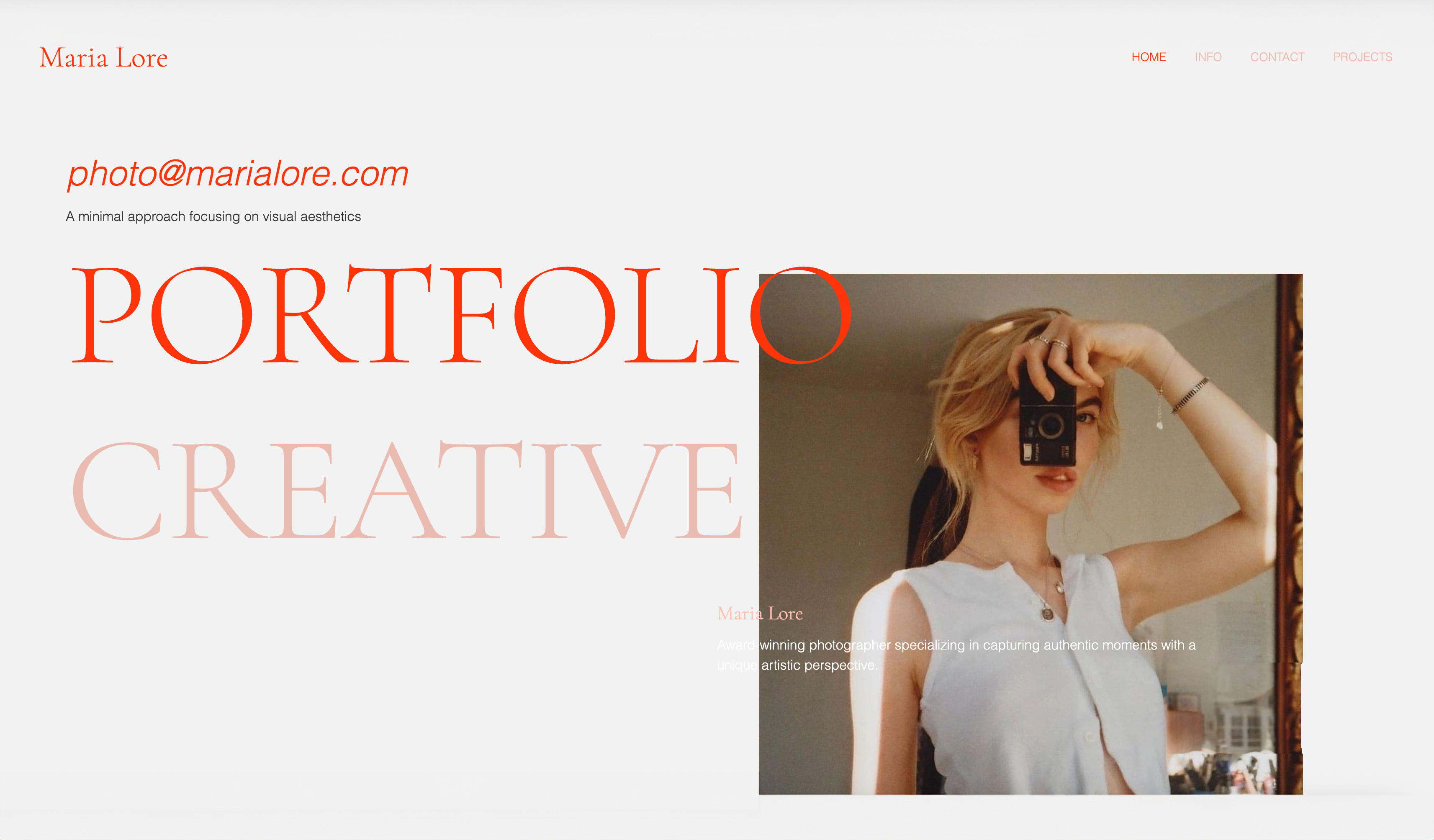 Use template
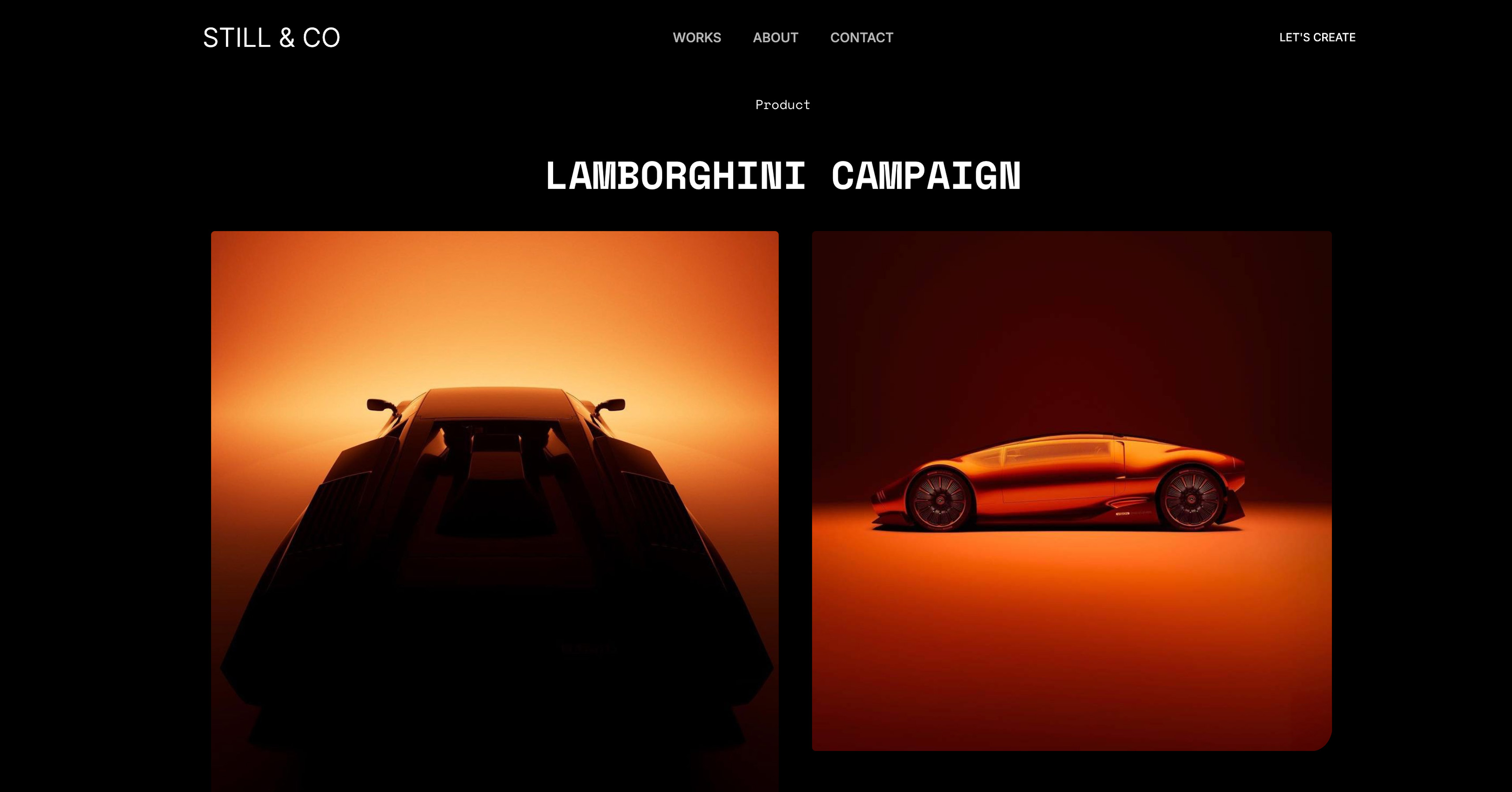 Use template
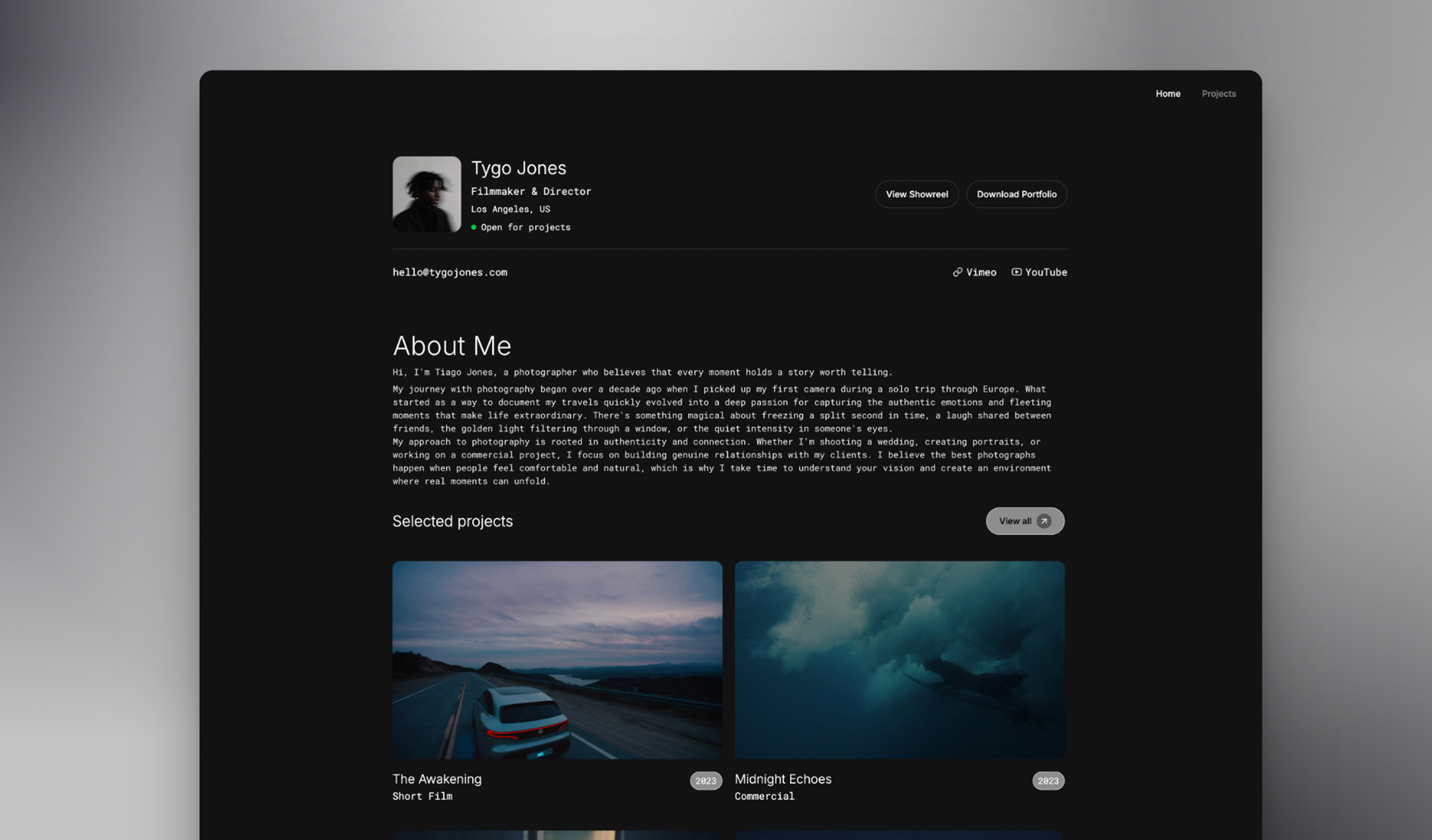 Use template
 Use template
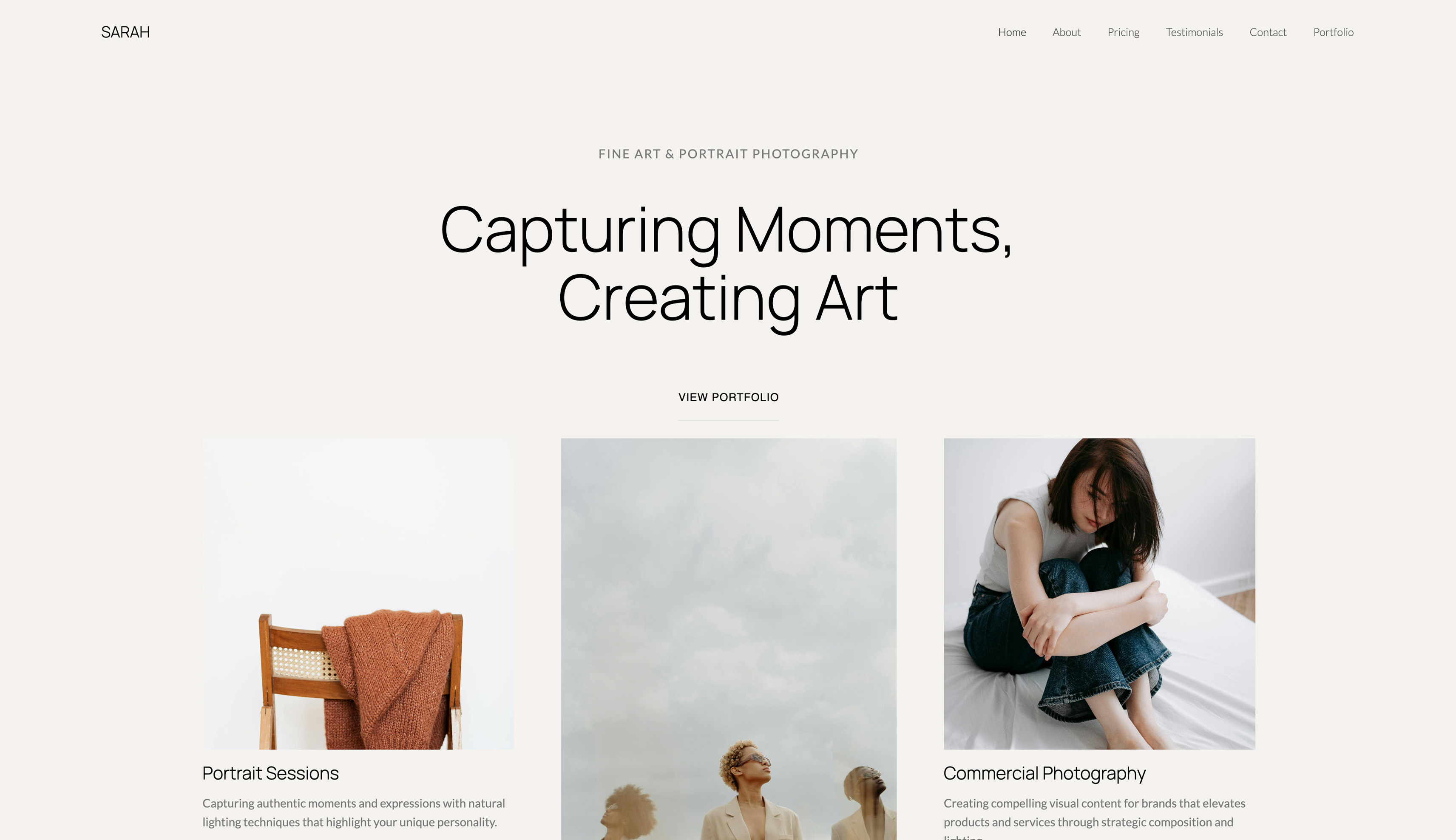 Use template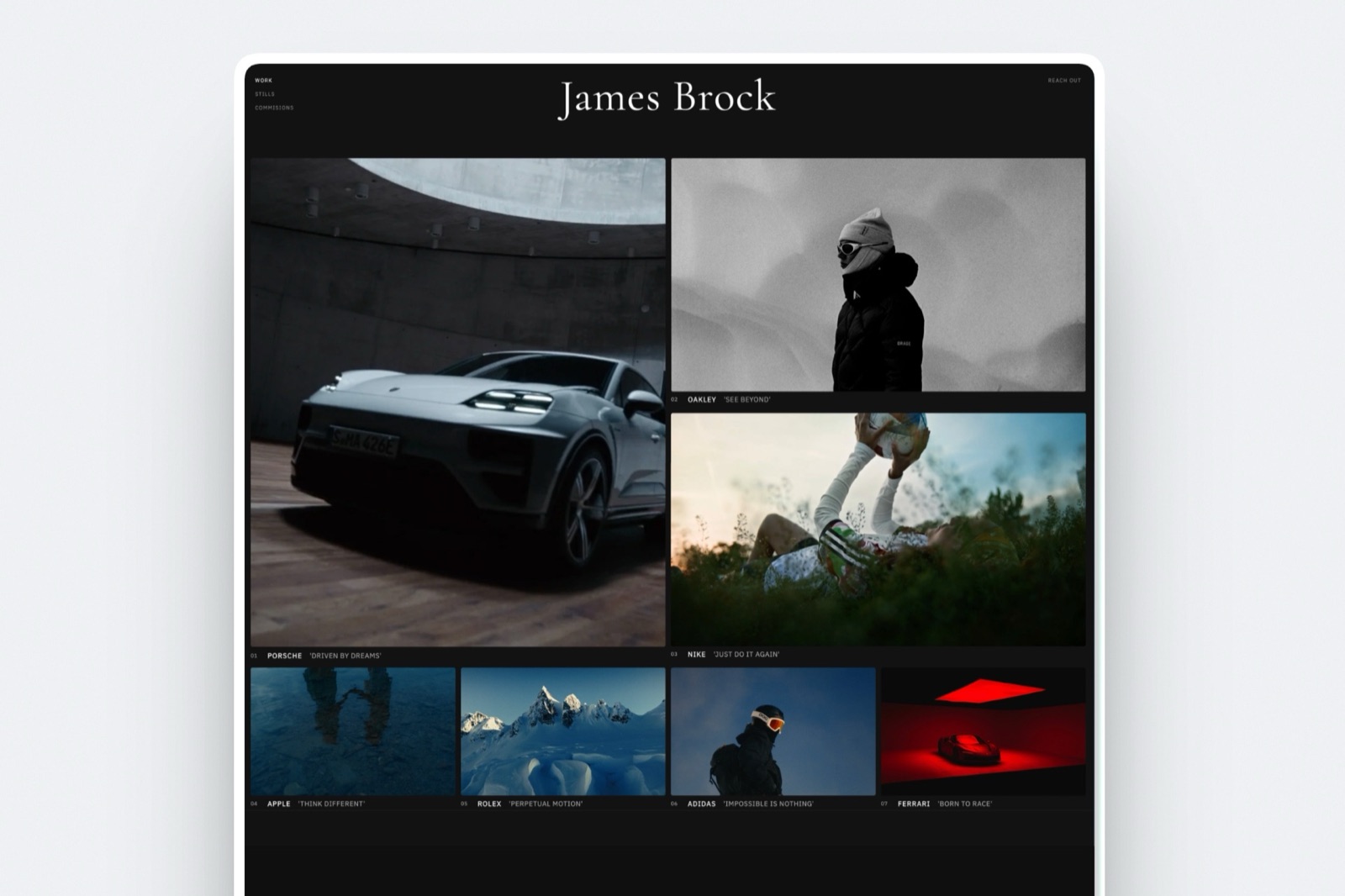
You delivered a family session on a Tuesday. The client replied within four minutes: "I actually cried, these are perfect." Three weeks later you sent an email asking whether she would mind writing a short review.
She did not reply, and she is not a bad person. You just asked her 20 days after the feeling had gone.
That gap is why most photography websites carry four testimonials, three of them from 2023. It is almost never a relationship problem. It is a timing problem, 20 days wide, with a wording problem sitting on top of it.
A photography testimonial is a short attributed statement from a paying client that names the job, the hesitation they had before booking, and what changed after, which is a different and far more useful thing than a five-star rating.
Learning how to get testimonials from photography clients is mostly learning to ask in the hour the gallery lands, and to ask a question instead of asking for a favour.
Ask in the first 24 hours after gallery delivery, while the client is still reacting, and replace "would you write a review" with four specific questions they can answer in two minutes on a phone.
Then write their answers into a 40 to 60 word quote and send it back for approval, so they never draft anything.
Framekit is where the finished quotes go, because the website, the galleries and the contact form sit on one account, but it does not send the ask for you: HoneyBook at $29 a month or Dubsado at $335 a year automate the sequence, Senja and Testimonial.to collect video versions, and Google Business Profile is where the public review belongs.
Full disclosure: Framekit is our product and this guide recommends it for one narrow part of the job, publishing the testimonials, not for collecting them. Framekit has no CRM, no invoicing, no contracts and no automated review-request sequence, so every tool named for that part of the workflow beats us at it outright. All competitor prices were read on the vendors' own pricing pages in September 2026 and linked below.
What this guide is based on
Advice about asking clients for things is written as if the author has run an experiment, and almost nobody has, so this guide labels its three kinds of claim and you can weigh each separately.
Read at the source: the consumer-behaviour figures come from BrightLocal's published survey, the legal rules from the Federal Trade Commission's own guidance, the platform rules from Google's published policy, and every price from the vendor's own pricing page in September 2026, all linked inline.
Calculated: the yearly arithmetic on request volume and tool cost is plain multiplication, shown so you can substitute your own numbers.
Craft judgement: the question wording, the templates and the placement advice are editorial recommendations, and they are written as recommendations, not as findings.
There is no published response-rate figure for photography testimonial requests that survives scrutiny, so this guide does not quote one. The one-in-three target used below is a goal to aim at, not an observed average, and it is labelled as such every time it appears.
The carried example is a family photographer shooting 38 sessions a year with four testimonials on her site, three of them from 2023, who wants a usable quote from one session in three.
The numbers that make the case
These are the figures worth knowing before you decide how much effort this deserves, because the honest answer is that testimonials matter more than photographers think and age faster than photographers expect.
- 97%. The share of consumers who read reviews for local businesses, per BrightLocal's Local Consumer Review Survey 2026, published in February 2026 from a sample of 1,002 US adults.
- 41%. The share who say they always read reviews when browsing, up from 29% a year earlier in the same survey.
- 74%. The share who look for reviews written in the last three months, which is why a page of 2023 quotes reads as a warning and not as proof.
- 89%. The share who expect business owners to respond to reviews, and 50% say a generic or templated response makes them unlikely to choose a business.
- 21 October 2024. The date the Federal Trade Commission's Consumer Reviews and Testimonials Rule took effect, which is the law that governs what you may offer in exchange for a review.
- 13 of 38. The target for the carried example: one usable quote from one session in three across a year of work.
In one lineA testimonial that is two years old is working against you and not for you, because three quarters of the people reading it are specifically looking for evidence that other people hired you recently.
Step 1. Ask in the hour the gallery lands
Send the request within 24 hours of delivering the gallery, because that is the only moment in the whole relationship when the client is feeling something about your work rather than remembering that they once felt something.
Every week you wait converts a warm reply into a task on a list, and tasks on lists do not get done.
The delivery moment has three properties nothing else in the job has. The client is looking at the photographs right now, so they have specifics available rather than generalities. They are grateful, and gratitude has a short half-life.
And they are already in their inbox, because that is where your gallery link arrived.
The mechanics of this are easy to get wrong. Do not put the request inside the delivery email, because it competes with the link and the client will click the link.
Send it as a second message, timed for a few hours later or the following morning, once the gallery has been opened. If your gallery platform tells you when the client first viewed it, use that as the trigger.
For the carried example that means one extra message per session, 38 times a year, sent the morning after delivery. That is the entire time commitment for the collection half of this workflow.
| When you ask | What comes back |
|---|---|
| In the delivery email itself | Nothing; the link wins the click |
| Within 24 hours of first gallery view | A specific, emotional, usable answer |
| One week later | A short polite line with no detail |
| 3 weeks later | Silence, or a five-star rating with no words |
| At the anniversary of the shoot | A warm reply, useful for a repeat booking, weak as a quote |
There is a second moment worth using, and it is not the one people expect. When a client emails you unprompted to say the photographs are wonderful, that message is already a testimonial.
Reply asking for permission to quote it on your site with their first name and the type of session, and you have skipped the entire process.
Verdict: The single highest-return change most photographers can make here is to move the ask from three weeks to one day, because the 20 days between the two asks decide whether the client is looking at the photographs or remembering them.
Step 2. Ask 4 questions instead of asking for a review
Replace "would you mind writing a short review" with four short questions, because a blank box asks a busy person to write copy for you and four questions asks them to answer, which is a completely different cognitive task and takes about two minutes on a phone.
The quality difference between those two asks is not marginal.
These four, in this order, produce almost every quote you will ever need.
What made you hesitate before booking? This is the important one of the four and almost nobody asks it.
The answer names the objection your next client has, in your last client's words: the price, the awkwardness, the worry about the children, the fear of looking stiff.
A testimonial that opens on a hesitation is trusted because it does not sound like an advertisement.
What was the day itself like? This produces the texture: what you actually did, how you handled the toddler, whether the two hours felt like two hours.
Which photograph did you send to someone first, and who? A specific, answerable question that produces the one concrete detail that makes a quote feel real.
"The one of my dad laughing, I sent it to my sister before we got to the car" cannot be invented by a marketer.
Who would you tell to book me? This produces the referral sentence and, usefully, tells you how the client describes your work to other people, which is more precise positioning than the copy on your own about page.
| The question | What it produces | Where the answer goes |
|---|---|---|
| What made you hesitate? | The objection in the client's words | Opening line of the quote, and your pricing page |
| What was the day like? | Texture and reassurance | Middle of the quote, and your session-info page |
| Which photo did you send first? | The concrete, uninventable detail | The line that makes the quote believable |
| Who should book me? | The referral sentence | The closing line, and your contact page |
Ask them in a plain email or a message, numbered, with a sentence saying answers of one line each are perfect and you will do the writing. Do not send a form with a star rating on it for this part.
Stars are for Google; sentences are for your website, and the two asks are different, which step six covers.
Step 3. Use the template that matches the job
Write the ask in five sentences or fewer and make the effort you are requesting explicit, because the reason clients ignore these messages is almost never unwillingness, it is uncertainty about how much work they have just been handed.
Naming the two minutes is what converts a maybe into a reply.
Here is the wedding and family version. Change the names and send it the morning after the gallery lands.
Your gallery is open and I hope it was a good hour, because it was a good day to photograph.
If you have two minutes, four quick questions would help me enormously, and one line each is perfect: what made you hesitate before booking, what the day itself felt like, which photograph you sent to someone first and who, and who you would tell to book me.
I will turn your answers into a couple of sentences and send them back for you to change or veto before anything goes anywhere near my website.
The commercial and brand version changes the questions and keeps the structure, because a marketing manager cares about different things than a bride does.
Files are delivered and the usage window opens on the 1st.
If you have a moment, three questions would help: what the brief looked like before we started, what you were unsure about when you chose us, and what the team said when they saw the first cut.
I will write it up as two sentences with your name and title on it and send it over for approval, and nothing gets published without your sign-off.
The portrait and headshot version is shorter still, because the session was shorter and the relationship is lighter. Two questions, one about the hesitation and one about what they used the photographs for, is enough.
One line to leave out of all three: any version of "if you were happy with the photographs". It invites the client to decide whether they were happy enough to write something, and a client given that choice defaults to no.
In one lineThe ask that works names the number of questions, promises that you will do the writing, and gives the client an explicit veto, because those three promises together remove every reason a friendly person has for not replying.
Step 4. Write the quote for them, then get approval
Turn the four answers into a 40 to 60 word quote yourself and send it back for approval, because your client is not a copywriter and asking them to be one is the step where most testimonial workflows quietly die.
This is also the step that makes the quotes on your site read as if they belong to one page and not to five different voices.
The shape that works is consistent, and it is four beats: hesitation, then what happened, then the concrete detail, then the recommendation. Compare a raw answer with the edited version.
Raw: I was nervous because my husband hates having his photo taken and our youngest is three. But it was fine actually. We got them back really fast and I sent the one of my dad laughing to my sister straight away. Would definitely recommend.
Edited: I booked nervously, because my husband hates being photographed and our youngest is three. Two hours later nobody had cried. The photograph of my dad laughing went to my sister before we reached the car. If you have a family that does not sit still, book her.
Nothing was invented. The 44 words of raw answer were reordered, the padding was removed, and the concrete detail was moved to where it lands. That is the whole edit, and it is the line you must not cross: you may cut and arrange, you may not add a claim the client did not make.
Then send it back with one sentence: "Here is what I took from your answers, change anything that does not sound like you, and tell me if you would rather it went out with just your first name." Approval in writing, even a one-word email reply, is what you keep on file.
Four practical rules for the finished quote.
- Length 40 to 60 words. Longer does not get read, shorter carries no detail.
- Attribute it properly. First name and last initial plus the session type at minimum; a full name, a company and a role for commercial work.
- Date it. A month and year next to the quote is what makes it count for the 74% who are looking for recent evidence.
- Never write one yourself and ask the client to nod. That is a different thing entirely and step five explains why it is also a legal problem.
Step 5. Stay inside the rules, because they changed
Do not offer anything in exchange for a review, do not write the words yourself and pass them off as the client's, and do not bury the disclosure when there is a relationship behind a testimonial, because since October 2024 those are federal violations in the United States and not matters of taste.
Most photographers have not read the rule and a fair number are quietly breaking it.
The Federal Trade Commission's Consumer Reviews and Testimonials Rule took effect on 21 October 2024, and the announcement of the final rule sets out its scope.
Three parts of it matter to a photography business.
Incentives tied to sentiment. The rule prohibits compensation or incentives that are "conditioned on" a review expressing a particular sentiment.
A free print draw open to everyone who answers, positive or not, is a different thing from a free print for a five-star review, and the second one is the problem.
Insider testimonials. Where the person giving the testimonial has a material relationship with you, an employee, a friend you second-shoot for, a family member, the rule requires that relationship to be disclosed clearly and conspicuously, and the guidance is explicit that the disclosure must be unavoidable rather than hidden behind a link.
Suppression. The rule also covers using false accusations, intimidation or groundless legal threats to get a negative review taken down.
Google's rules are narrower but bite sooner, because Google can remove a review the same day.
Its prohibited and restricted content policy lists offering incentives "in exchange for posting any review" as fake engagement, and treats reviews "paid for, directly or in kind" the same way.
Violating content is removed, and profiles with a pattern of it can lose the ability to receive new reviews.
The practical version of all three parts is short, and it is six rules.
Ask for honesty, offer nothing, quote accurately, attribute by name and date, keep the approval email, and if a client asks for a discount in exchange for a review, say no and explain why in one friendly sentence.
Step 6. Send the public review somewhere different
Run two separate asks, one for the quote on your website and one for the public review on Google, because they serve different jobs and bundling them into a single request gets you a worse version of both.
The website quote persuades someone who is already looking at your work; the Google review helps someone find you in the first place.
Sequence matters more than volume, and the gap between the two asks is seven days. Ask the four questions first, because that is the reply that produces your copy.
Then, only for clients who replied warmly, send a second short message a week later asking whether they would post a line on your Google Business Profile, with the direct link in the message.
A client who has already written four answers finds a Google review trivial; a client asked cold finds it a chore.
Two details to get right. Never ask only happy clients to review you in public while routing unhappy ones to a private form, because that pattern is review gating and it is exactly what the rules above are aimed at.
And respond to every review you get: BrightLocal's 2026 survey puts the share of consumers expecting owners to respond at 89%, and finds half of them put off by responses that read as templated.
In one lineAsking for a website quote and a Google review in one message produces a five-star rating with no words, which is the least useful outcome available and the most common one photographers get.
Step 7. Put the quotes where the doubt is
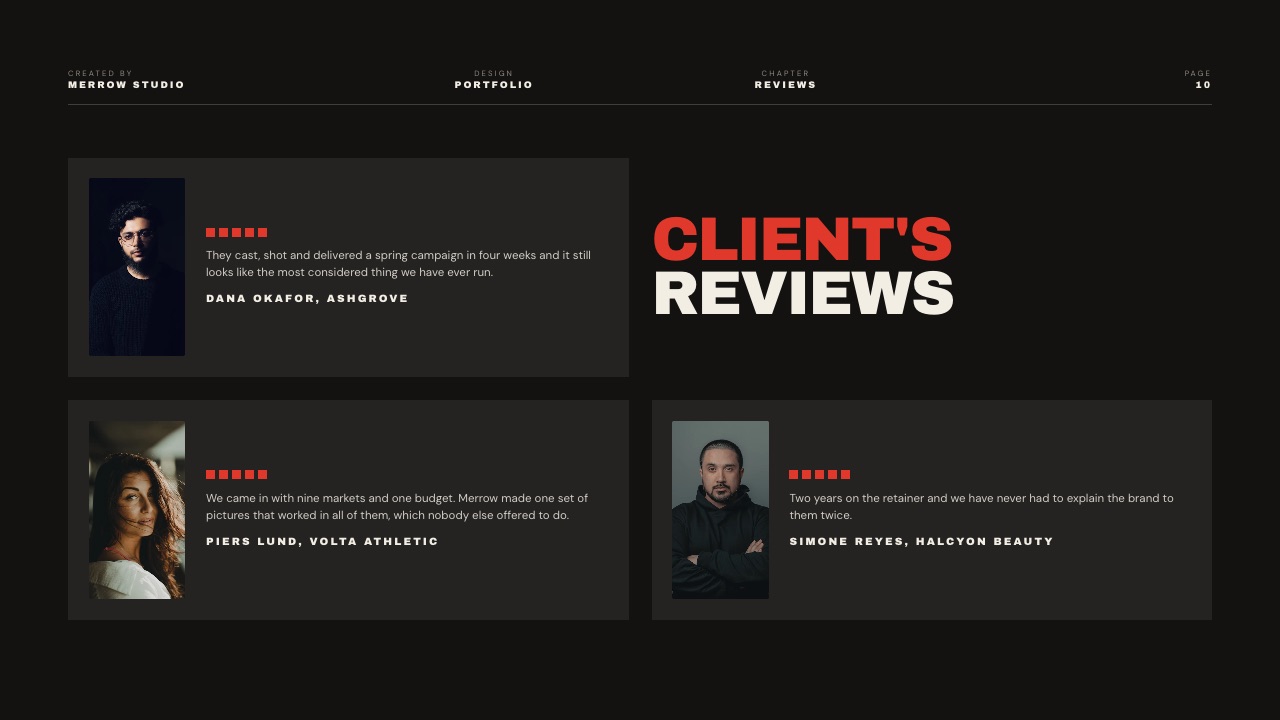
Stop building a testimonials page and start placing single quotes next to the moments where a reader hesitates, because a page of praise is read by nobody and one relevant sentence beside a price or a booking button is read by everyone who gets that far.
The page is the default, and it is the weakest of the five placements in the table below.
Match each of the four quotes to the doubt it answers. The hesitation quote goes next to your pricing, because the reader standing there is having the same hesitation.
The texture quote goes on the session-information page, where the question is what the day is actually like. The referral quote goes near the contact form, where the reader is deciding whether to type.
The concrete-detail quote goes under the relevant gallery on your portfolio, where it makes a set of images feel like a real job and not a folio.
| Placement | Which quote | The doubt it answers |
|---|---|---|
| Pricing page, beside the number | Hesitation | Is this worth what it costs |
| Session or service information | Texture | What is the day actually like |
| Under a portfolio set | Concrete detail | Were these real people, really enjoying this |
| Beside the contact form | Referral | Should I actually send this message |
| Homepage, one only | The strongest of the four | Is this photographer any good |
Framekit is an AI website builder made for photographers and filmmakers, and the reason it belongs in this guide is placement rather than collection: you can describe the block you want in words or upload a reference image, and the AI builds the quote block in your fonts and colours on the page where the doubt lives, instead of leaving you to find a testimonials widget.
Contact and booking form submissions land in the dashboard and your inbox on every plan, including Free, so the reply that arrives after a reader has read the quote is in the same place as the rest of the job.

If your site is a page of quotes today, the fastest improvement is not writing more of them.
It is cutting the page to your best three and moving the rest to the places above, which the portfolio mistakes guide covers in more detail.
Step 8. Ask for the video only when the text was good
Request a video testimonial as a follow-up to a strong written answer rather than as the opening ask, because video is a much bigger favour and asking for it first is how you get neither.
When a client has already written you four warm sentences, a 30-second phone clip is a small additional step, and the conversion is far higher than a cold request.
Keep the brief tiny: one question, 30 seconds, filmed on their phone, horizontal, no preparation. "Just say who you are and what you would tell a friend who was thinking about booking" is the entire instruction.
Anything longer than 30 seconds produces a client who rehearses, and a rehearsed client sounds like an advertisement.
Two warnings from the practical side. Video testimonials age visibly, because haircuts and children date them in a way that text does not, so treat them as an 18-month asset and not a permanent one.
And a video is not a substitute for the written quote: a reader skimming your pricing page will read a sentence and will not press play.
Framekit does not have a testimonial-collection tool, a request sequence or an automation that fires when a gallery is viewed, and pretending otherwise would be the sort of claim you should distrust in a vendor's own guide.
Here is what the market actually offers for the collection half of this workflow.

| Tool | Price read in September 2026 | What it does not do |
|---|---|---|
| Framekit | Free to start; Starter $9 a month, or $7 billed yearly | No CRM, no automated request sequence, no email sends |
| Google Business Profile | Free | Public reviews only; no control over the wording or placement |
| HoneyBook | Starter $29 a month billed yearly; Essentials $49 | Not a website builder; card payments start at 2.7% plus 10 cents |
| Dubsado | Starter $335 a year; Premier $525 a year | Automated workflows are on Premier, not Starter |
| Senja | Free for 15 video and text testimonials; Starter $29 a month | A collection layer, not a site; you still need somewhere to publish |
| Testimonial.to | Free for 2 video and 10 text testimonials; Starter $25 a month | Free tier runs out fast at 12 sessions a year |
Verdict: For 38 sessions a year, a calendar reminder and a saved email draft do the job that a $29-a-month tool would do, and the money is better spent elsewhere. Reach for HoneyBook or Dubsado when the testimonial request is one step in a booking and invoicing workflow you already need, not to solve testimonials alone, and use Senja or Testimonial.to when video is genuinely central to how you sell.
What this is worth against the alternatives
In one lineCollecting testimonials properly costs about 141 minutes a year and nothing in cash, which makes it the cheapest line on a photographer's marketing list by an order of magnitude and the one the carried example had left undone for three years.
Do the arithmetic on the carried example of 38 sessions. 38 asks at 2 minutes each to send is about 76 minutes. Editing 13 replies into quotes at 5 minutes each is another 65 minutes. That is 141 minutes, call it two and a half hours across a year, spread over Tuesday mornings.
Set that against the alternatives on the same page. A month of paid social for a small photography business runs into the hundreds. A website refresh is a weekend and a subscription on top.
A studio management platform at $29 a month is $348 a year. Two and a half hours of your own time, producing thirteen dated, specific quotes placed next to the exact doubts your readers have, is not comparable to any of them on cost.
The one number you cannot fake is recency, and it is the one that decays without effort.
Three quotes from this quarter beat 12 from three years ago for the 74% of readers looking for evidence from the last three months, which means this is a maintenance task, not a project. The guide to getting clients from your website covers what the rest of that page needs to do once the quotes are in place.
What should you do this week?
Answer these in order and act on the first one that describes you, because the right next step for a photographer with no testimonials is not the right next step for one with twelve stale ones.
Do you have fewer than three testimonials on your site? Then email your last five clients today, even though the moment has passed, using the four questions. You will get two replies, which is two more than you have.
Then set the delivery-day reminder so it never happens again.
Do you have testimonials, all more than a year old? Then leave them and start collecting new ones at delivery, but add a month and year to every quote on the page so a reader can see which are current.
Undated quotes from 2023 read as evasive; the same four quotes dated read as honest.
Do you have recent quotes sitting on a testimonials page? Then move them: one to the pricing page, one under a portfolio set, one beside the contact form, and keep the best on the homepage.
This is a 30-minute job and it is the highest-return half hour in this entire guide.
Are you getting five-star Google ratings with no words? Then you are asking for the review and the quote in one message. Split them: four questions first, Google link seven days later, only to the people who replied.
Do you already run a full booking and invoicing workflow? Then put the ask into that workflow as an automated step tied to gallery delivery, which is what HoneyBook's and Dubsado's automations are for, and stop doing it by hand. The studio management comparison covers the platforms properly.
Frequently Asked Questions
When is the best time to ask a photography client for a testimonial?
Ask within 24 hours of the client first opening their gallery, because that is the only point at which they are reacting to the photographs rather than remembering them.
Send it as a separate message from the delivery email so it does not compete with the gallery link, and use the first view as your trigger if your gallery platform reports it.
Three weeks later the same request gets silence, or a five-star rating with no words in it.
What should I ask instead of "can you write me a review"?
Ask four specific questions: what made them hesitate before booking, what the day itself felt like, which photograph they sent to someone first and who, and who they would tell to book you.
A blank request asks a busy client to write copy; four questions ask them to answer, which takes about two minutes on a phone and produces the concrete detail that makes a quote believable.
Can I write the testimonial for my client to approve?
You may edit a client's own answers into a shorter quote and send it back for approval, and you should. You may not invent words the client never said and ask them to sign off, and you may not add a claim they did not make.
The Federal Trade Commission's Consumer Reviews and Testimonials Rule, in effect since 21 October 2024, covers deceptive testimonials, so keep the approval reply on file.
Can I offer a discount or a free print for a testimonial?
No. Google's prohibited content policy lists offering incentives "in exchange for posting any review" as fake engagement, and treats reviews paid for directly or in kind the same way.
The FTC rule prohibits compensation conditioned on a review expressing a particular sentiment.
A thank-you gift sent after a review with no prior offer, and no condition on what it says, is a different matter, but the safest answer for a small photography business is to offer nothing.
How long should a photography testimonial be?
Between 40 and 60 words, structured as hesitation, then what happened, then one concrete detail, then the recommendation. Longer quotes do not get read on a phone, and shorter ones carry no evidence.
Attribute each one with at least a first name, last initial and session type, add the month and year, and use a full name, company and role for commercial work.
Where should testimonials go on a photography website?
Put each of the four quotes next to the moment it answers instead of collecting them on a testimonials page nobody visits.
The hesitation quote belongs beside your prices, the texture quote on the session information page, the concrete-detail quote under the relevant portfolio set, and the referral quote next to the contact form.
Keep one strong quote on the homepage and no more.
Do old testimonials still help?
Less than photographers assume. BrightLocal's 2026 survey found 74% of consumers look for reviews written in the last three months, so a page of quotes from three years ago signals that nobody has hired you recently.
Old quotes are worth keeping if they are dated honestly, but they are not a substitute for a steady trickle of new ones collected at delivery.
Should I ask for a Google review or a website testimonial?
Both, in that order, a week apart. Ask the four questions first, because that reply becomes your website copy, then ask only the clients who replied warmly for a Google review with the direct link included.
Asking for both at once reliably produces a five-star rating with no words, which is the least useful version of either.
How do I get video testimonials from photography clients?
Ask for video only after a client has already sent a good written answer, and keep the brief to one question, 30 seconds, filmed on their phone with no preparation.
Senja's free tier collects 15 video and text testimonials and Testimonial.to's free tier allows 2 video and 10 text, so the collection layer costs nothing to trial.
Treat a video as an 18-month asset, because haircuts and children date it visibly.
Does Framekit collect testimonials automatically?
No. Framekit publishes testimonials on your website and hosts the client galleries the request follows, but it has no CRM, no automated review-request sequence and no email sending, so the ask is a message you send.
HoneyBook from $29 a month billed yearly and Dubsado from $335 a year both automate that step inside a wider booking and invoicing workflow, and either is the right tool if you want it on rails.
Final Verdict
Move the ask to the day the gallery lands, replace the request with four questions, write the quote yourself, get approval in writing, and place each quote next to the doubt it answers.
That is the whole method, it costs about two and a half hours a year for a photographer shooting 38 sessions, and it does not require a single new subscription.
Framekit is the pick for the publishing half, because the website, the galleries the request follows and the contact form the reader eventually fills in are one account and one bill, starting free and $9 a month for your own domain.
Where Framekit loseswe do not do CRM, invoicing, contracts, booking calendars or email sending, so we cannot automate the ask at all, and HoneyBook and Dubsado beat us outright on that step; Google Business Profile is where public reviews belong and we are not a substitute for it; and if video testimonials are central to how you sell, Senja and Testimonial.to are built for that and we are not.
If your booking workflow already lives in a studio management platform, put the request in there and use this guide only for the wording and the placement, which are the parts no software solves.
Related readinghow to build a photography website is the page these quotes go on, how to get photography clients is the wider question this feeds, what makes a good photography portfolio covers what the quotes sit beside, and how to create a client gallery covers the delivery moment the whole method depends on.
The ask lands inside the wider sequence in what to send a client after a photo shoot, and if you are still short of work to show, how to build a portfolio with no client work covers six project formats.