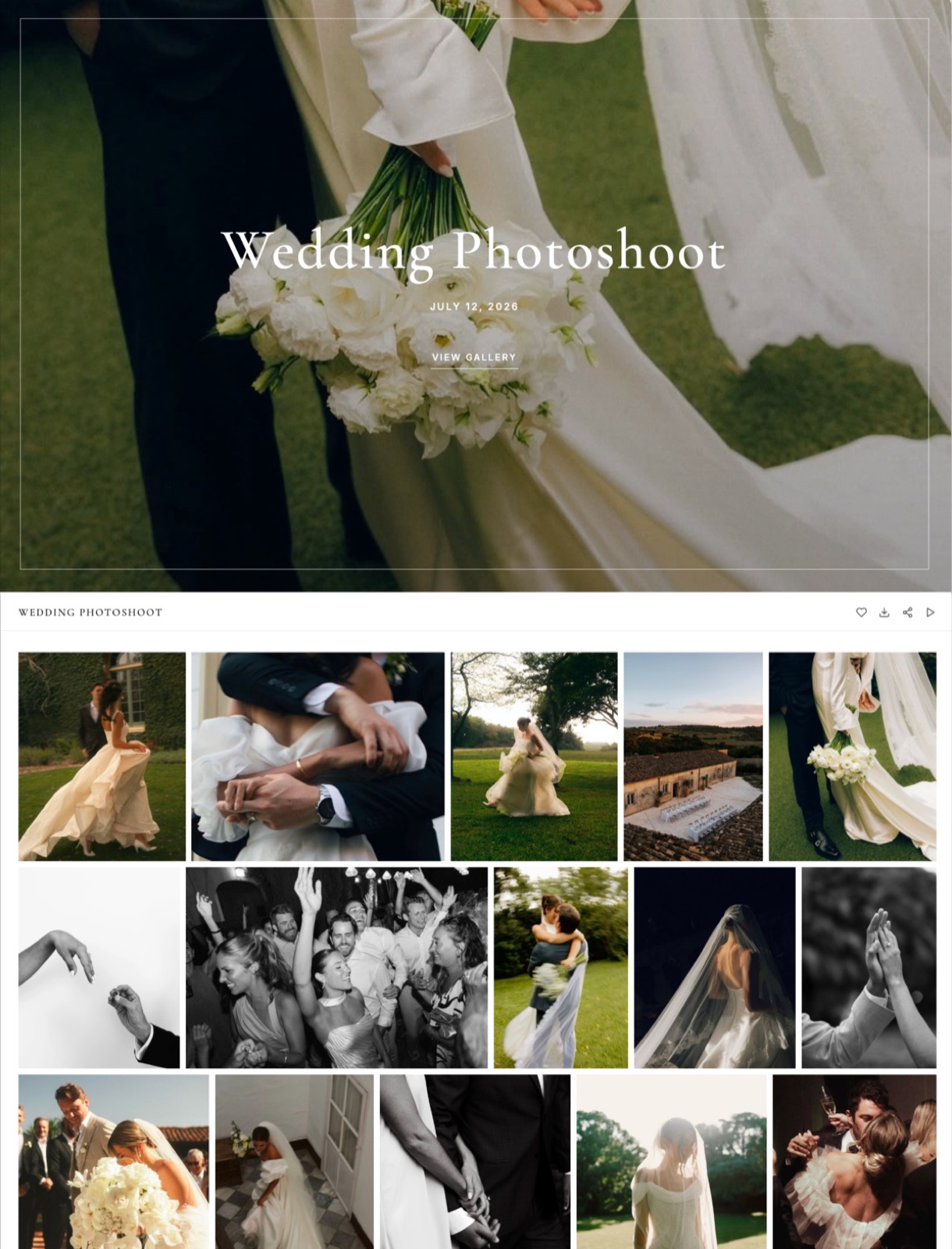
Framekit templates
Start from a designer-made template
 Use template
 Use template
 Use template
 Use template
 Use template
 Use template
 Use template
 Use template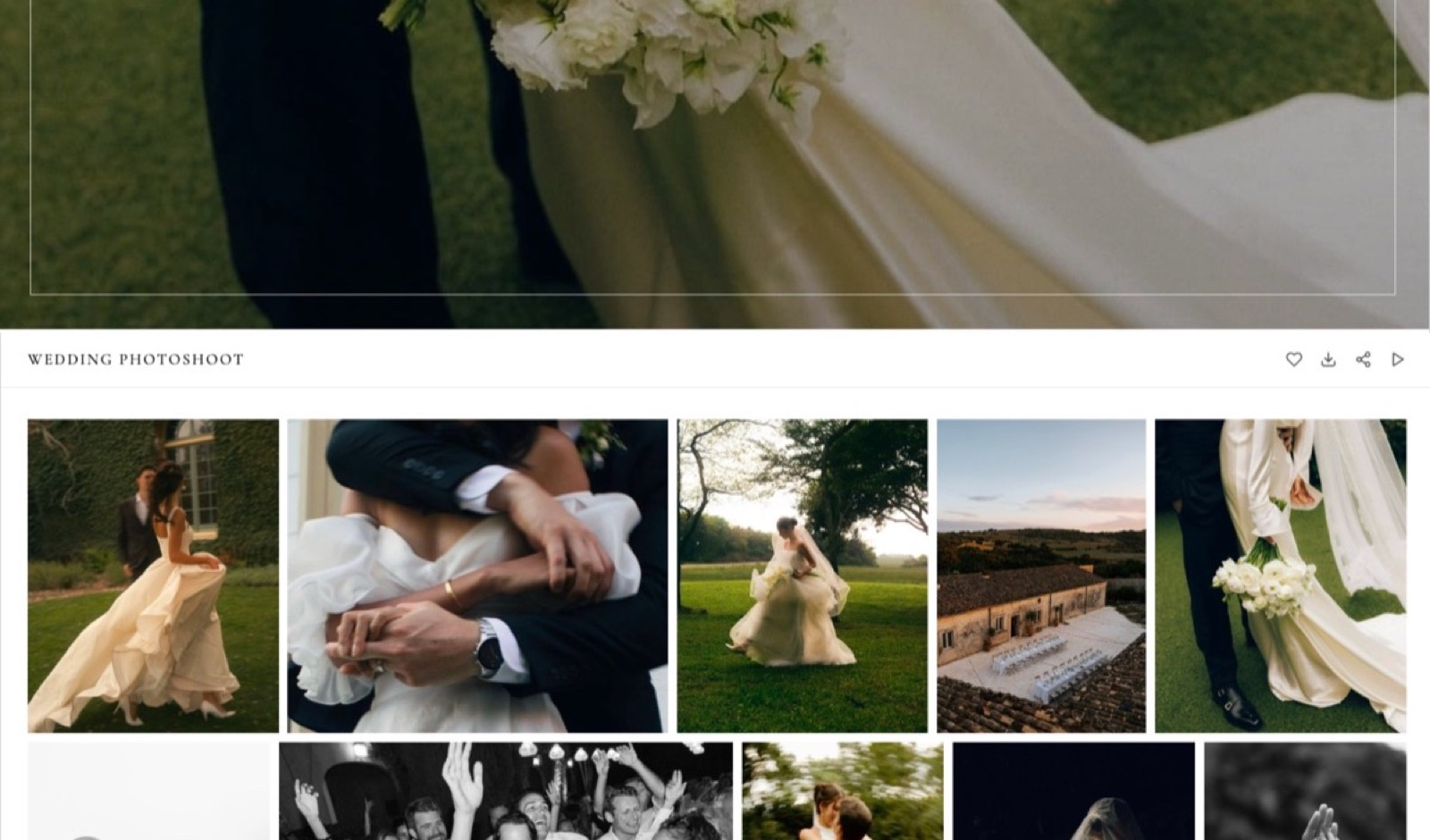
What you send a client after a photo shoot is not one email. It is four, on a clock, and the reason most of them never get sent is that only one of the four has a deadline anybody notices.
Take a $1,400 family session shot on a Saturday with 45 images promised in 14 days. The single-email version delivers the gallery on day 14 and ends there.
The four-send version costs 25 more minutes of typing in total, and it collects a social share while the client is still excited, a written testimonial while the gallery is open, and one referral asked for by name.
The gap between those two outcomes is not talent. It is three reminders in a calendar.
A post-shoot sequence is the set of messages a photographer sends between the end of a session and the point where the client has their files, has said something public about the work, and has been asked for one referral.
Each message has a deadline, and the deadlines are what make it work, because every one of these windows closes.
Send four things after a shoot: a thank-you inside 24 hours that restates the delivery date, three sneak-peek frames inside 48 hours while the client is still talking about the day, the gallery on the promised date carrying all five pieces of information it has to carry, and a testimonial plus one named referral ask 7 days after the gallery opens.
Deliver on a platform with a password, an expiry date and full-resolution downloads: Framekit Client Galleries has all three on its $0 plan alongside 10GB of pooled storage, Pixieset and Pic-Time are the better answer when you want prints sold for you, and ShootProof gives 20GB of photo and video storage on its $8.33 a month annual tier.
Full disclosure: Framekit is our own product, so read the recommendation with that in mind. Competitor prices and storage figures here were read on each vendor's own published pricing page in September 2026 and every one is linked. Framekit has no print lab and no print store at all, so on any job where print sales are the point, Pixieset, Pic-Time and ShootProof beat us outright, and we say so again in the verdict.
How This Sequence Was Put Together
This is a workflow piece rather than a product test, and it is worth being precise about which parts are checkable facts and which parts are a recommendation you should argue with.
Read at the sourceevery platform price, storage figure and plan limit was read on the vendor's own published pricing page in September 2026. Pixieset's pricing page lists a free Client Gallery tier with 3GB and paid tiers from $8 a month billed annually. Pic-Time's pricing page splits photo and video storage on every tier and notes that its free plan's 10GB is "reduced to 3GB after 3 months". ShootProof's plans page lists commission-free sales on every tier including the free one.
Written and held to a standardthe four templates below are written out in full rather than described, because a template you have to reconstruct is a template you will not send. Each one is deliberately short enough to be typed on a phone.
A judgement, not a measurementthe deadlines. The 24 hours for the thank-you and 48 for the sneak peek are choices with reasons attached, not numbers from a study, and the post says why each window is where it is so you can move it.
The carried example throughout is that $1,400 family session: shot Saturday, 45 images, gallery promised in 14 days.
The Four Sends, on a Clock
In one lineEach of the four sends does a different job and each one expires, so the value of the sequence comes from the deadlines rather than from the wording, which is why the table below leads with the clock.
| Send | Deadline | What it contains | The job it does |
|---|---|---|---|
| 1. Thank-you | Within 24 hours | Thanks, one specific memory, the delivery date restated | Confirms the date in writing while goodwill is highest |
| 2. Sneak peek | Within 48 hours | Three finished frames, permission to post, your handle | Collects the social share while the client is still talking about it |
| 3. Gallery | On the promised date | Link, password, download instructions, usage note, print note | Delivers the work and prevents the follow-up questions |
| 4. Testimonial and referral | 7 days after the gallery | One question, one named referral ask | Converts a happy client into a review and a lead |
Notice what is not on that list: a payment chase, a rebooking pitch and an upsell. Those belong in their own messages on their own clocks. Loading them onto the gallery email is the fastest way to make a delivery feel like a sales call.
- 4 sends against the one that usually happens, at a total writing cost of 25 minutes.
- 24 hours for the thank-you, because the client is still telling people about the session.
- 3 frames in the sneak peek, not 15, because 3 is a share and 15 is the gallery you are being paid to deliver on day 14.
- 14 days is the promise on the carried example, and the gallery goes out on day 14 whether or not you had a better idea on day 13.
- 7 days after the gallery for the testimonial ask, when the files have been downloaded and shown to family but the job is still recent.
- $0 is what all four sends cost, on any platform, including a free one, against $84 a year for the cheapest paid gallery plan in the table below.
Step 1. Send the Thank-You Within 24 Hours
The first message goes out the day after the shoot, it is four sentences long, and its real job is to put the delivery date in writing at the moment the client is most inclined to agree with you.
Write it yourself and make one detail specific. "Thank you for a lovely session" is a form letter. "The bit where your youngest refused to look at the camera until the dog turned up is going to be my favourite frame" is a message from a person who was there.
Then restate the date. Not "in a couple of weeks". A date. If you promised 14 days, name the day of the month, because a named date is the thing that stops the "any idea when?" email on day 9.
Template 1: the thank-you
SubjectThank you from Saturday
Hi [name], thank you for having me on Saturday, I really enjoyed it. [One specific, true detail from the session.] Your full gallery will be ready on [named date], and I will send the link and a password to this address.
If anything changes on my end I will tell you before that date, not after it.
The thing that goes wrongyou hold this message until you have looked at the files, which takes three days, and by Tuesday the client has told six people about the shoot and heard nothing from you. The thank-you is about the day, not the pictures, so it does not need a single frame to be ready.
Concrete exampleon the carried example this went out Sunday morning with the date "Saturday 27th" written in it. The client forwarded it to a grandparent, which is the first time anyone outside the session hears your name.
Step 2. Send Three Frames Within 48 Hours
The sneak peek is three finished images sent inside two days, and it exists to catch the social share in the window where the client still wants to post about the day.
Three, not 15. Three frames is something a person posts. Fifteen is a gallery, and a gallery given away early makes the real delivery an anticlimax and kills the reason to open the link you send on day 14.
Grade them properly. A sneak peek is your work in public before the client has seen anything else, so it sets the expectation for everything that follows.
Template 2: the sneak peek
SubjectThree from Saturday
Hi [name], I could not wait, here are three from the session. You are very welcome to post any of them; a credit or a tag would be kind but is not required. The rest are on track for [named date]. [Attach or link three images.]
Say the permission out loud. Clients who are not told they may post their own photographs frequently do not, and the one sentence that removes the doubt costs you nothing: a credit line under a well-graded frame is the only marketing in these four messages.
The thing that goes wrongsending low-resolution exports with a watermark stamped across the middle. A watermarked sneak peek does not get posted, which defeats the purpose. Watermarking belongs on a proofing gallery of unpurchased work, not on three gift frames.
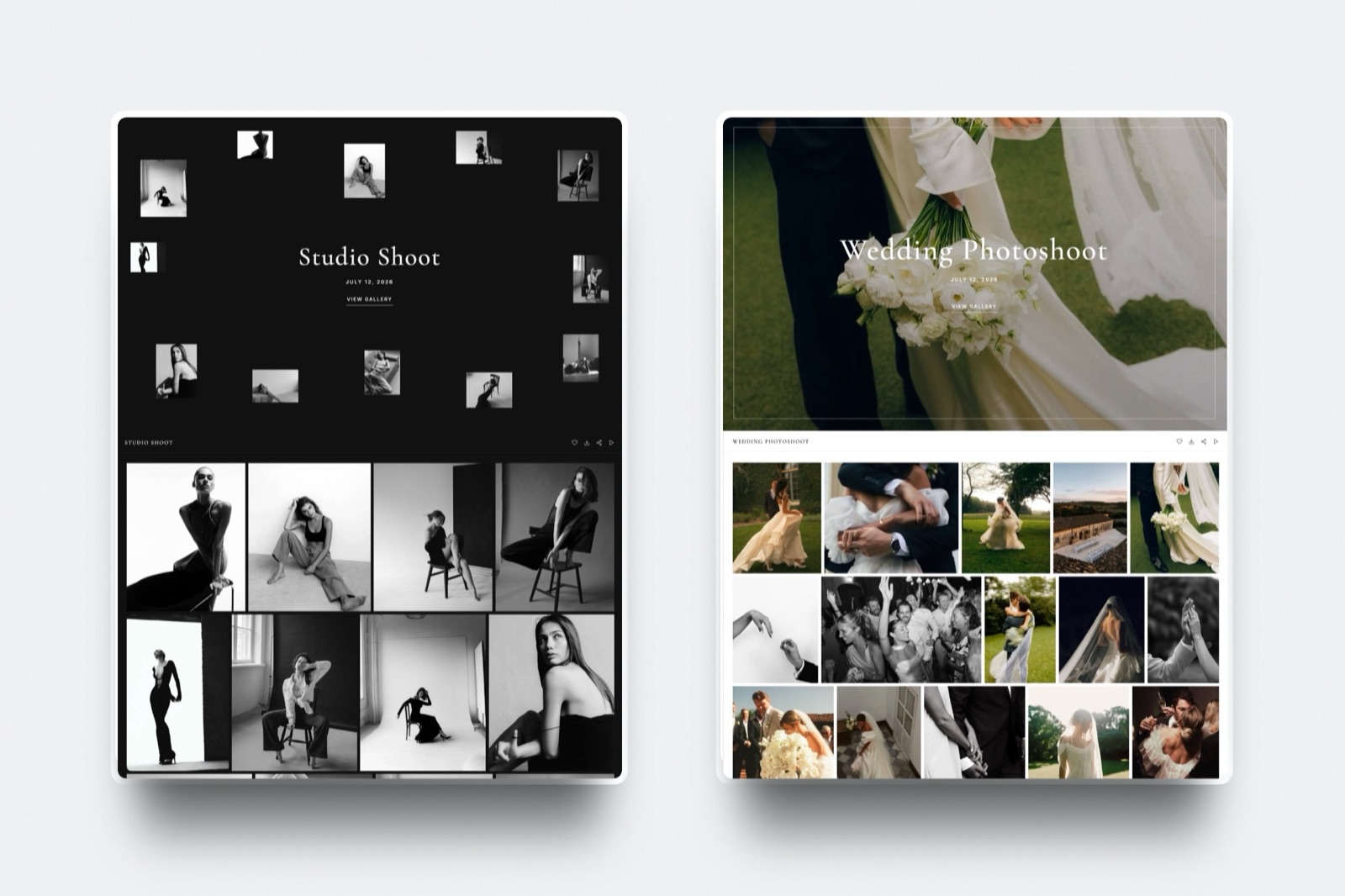
If you want the sneak peek to live somewhere rather than sit in an inbox, a small unlisted gallery works; our guide to creating a client gallery covers the settings, and how many photos to deliver covers the count for the full set.
Step 3. Build the Gallery Before You Announce It
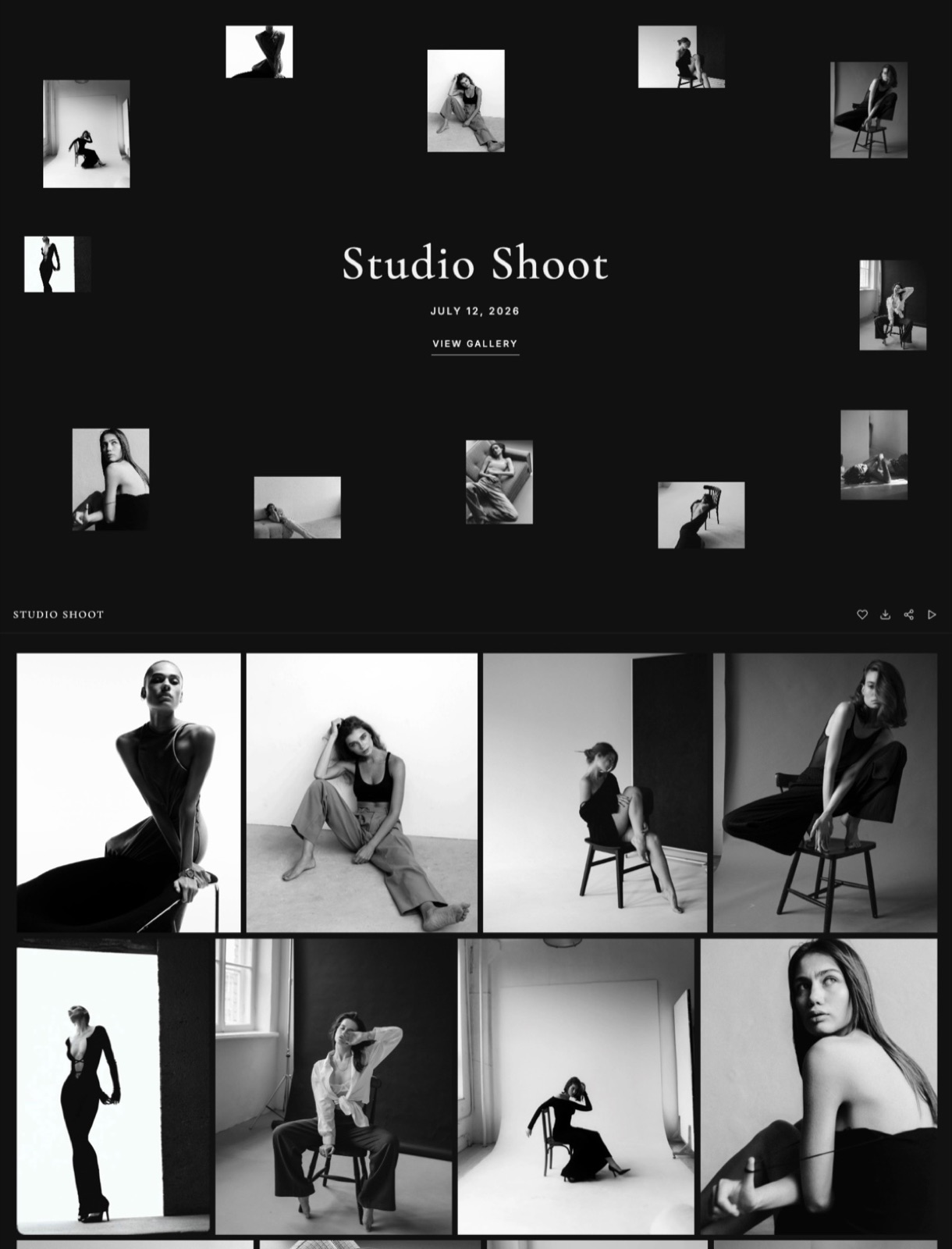
Build the gallery, set every option, open it on your own phone as if you were the client, and only then write the delivery email, because the most common delivery failure is a link that arrives before the settings do.
There are five settings to get right and all five are worth 30 seconds each: the cover image, whether downloads are on and at what size, whether there is a password, whether there is a separate download PIN, and when the gallery expires.
Check it on a phone. The first opening of a gallery happens on a phone far more often than on a laptop, and a cover crop that works at 1600px wide can cut a head off in portrait.
Test the download yourself. Download the ZIP from a logged-out browser before you send the link. A gallery where the ZIP fails silently produces three emails and a phone call, which costs more than the entire sequence saved you.
Framekit Client Galleries puts all five of those settings on every plan including the $0 one: unlimited galleries, a gallery password, a separate download PIN, client favourites, slideshows, full-resolution and ZIP downloads, email sharing and auto expiry.
Paid plans from $9 a month, or $84 for a year, add your own domain and remove the Framekit badge.
Nothing in the delivery sequence above is behind a paywall, which is the specific reason it is the pick for a photographer whose revenue is the session fee.
| Platform | Entry paid price | Free tier | Sells prints for you | Notable limit |
|---|---|---|---|---|
| Framekit Client Galleries | $9 a month, or $7 billed yearly | Yes, 10GB pooled, unlimited galleries | No, and this is a real gap | Storage is one pool shared with your site and video review |
| Pixieset | $8 a month billed annually | Yes, 3GB | Yes | Free tier is 3GB, and video upload needs a paid plan |
| Pic-Time | $7 a month billed annually | Yes, 10GB dropping to 3GB after 3 months | Yes | Photo and video storage are separate allowances |
| ShootProof | $8.33 a month billed annually | Yes, 3GB, photos only | Yes, commission-free on every plan | Free plan takes no video at all |

Which one we would useif you deliver digital files and sell nothing physical, Framekit, because all eight delivery controls are on the $0 plan and the same $84 a year that carries the galleries also carries the portfolio site they link back to, where Pixieset's Basic gallery plan is $96 a year on its own pricing page.
If prints are a real share of your revenue, ignore that recommendation: Pixieset, Pic-Time and ShootProof sell prints and Framekit sells none, and no argument in this post changes it.
Already on Pixieset and only using it for delivery?
Our Pixieset alternatives comparison prices the difference, and how to sell prints from a client gallery covers the platforms that actually do it.
Step 4. Send the Gallery With the Five Things It Has to Carry
The delivery email is the one message in this sequence that people get wrong by writing too little, because every question it fails to answer comes back as a separate email two days later.
Five things: the link, the password, how to download at full size, what the client may do with the images, and how long the gallery stays up. Leave any one out and you will answer it individually.
Template 3: the gallery delivery
SubjectYour gallery is ready
Hi [name], your gallery is ready: [link]. The password is [password]. To download everything, use the download button at the top right and choose the full-size option; it arrives as a ZIP.
If you only want your favourites, heart the ones you want first and then download favourites only.
These are yours to print, post and share as much as you like; please do not crop out or edit over the frames if you are posting them publicly. The gallery stays online until [date], and I will remind you a week before it closes.
Any trouble at all, reply to this email.
Why the download instruction is therethe support message you will get is a client who downloaded phone-sized previews, printed them at 10 by 8, and now thinks your work is soft. One sentence naming the full-size option prevents the whole exchange.
The thing that goes wrongthe password goes in a separate message "for security". Now two emails have to survive instead of one, and the one that gets lost is always the password.
Put both in the same message and add the separate download PIN if you want a second layer, which is a distinct control on every Framekit plan including the free one.
Step 5. Put the Usage and Print Note in the Same Email
The usage note is two sentences in the delivery email that tell the client what they may do with the files, and it belongs there rather than in a contract nobody reopens.
A portrait or family client who paid $1,400 for a session will assume they own the photographs outright. In the United States that is not the default position.
The US Copyright Office states that "Your work is under copyright protection the moment it is created and fixed in a tangible form that it is perceptible either directly or with the aid of a machine or device", and on the question of who holds it, that "Copyright is the right of the author of the work or the author's heirs or assignees, not of the one who only owns or possesses the physical work itself".
This post is not legal advice, and the rules differ by country, so treat it as a prompt to write your own line rather than as a template to copy.
What to writeOne sentence granting exactly what you intend to grant, in plain words. "These are yours to print, post and share personally" covers the family client in nine words.
A commercial client needs a different sentence naming the channels and the term, and that one belongs in the contract as well as the email, because Framekit will not write it for you: there are no contracts and no e-signatures in the product at all.
The print note is separate. If you do not sell prints, say where to get good ones, because the alternative is a client printing your work at a supermarket kiosk and blaming the photographer for the colour.
Name one lab you trust and link it. If you do sell prints, you are on a platform that sells them for you and the note is a link to your own store.
The thing that goes wrongsilence. A client who does not know whether they may post the images either posts them with no credit or does not post them at all, and both are losses.
Step 6. Ask for the Testimonial Seven Days After the Gallery Opens
Send the testimonial request 7 days after the gallery goes live, when the client has downloaded the files and shown them to people, and ask one question rather than requesting a review.
A week is the window. Ask on delivery day and the client has not lived with the pictures yet. Ask after a month and the job has stopped being a topic. Seven days is the point where they have shown the gallery to a parent and got a reaction.
Ask a question, not for a favour. "Could you leave a review?" is homework. "What did you end up doing with them?" is a conversation, and the answer comes back as a testimonial in the client's own words, which you then ask permission to quote.
Template 4: the testimonial and referral ask
SubjectDid the gallery work out?
Hi [name], I hope the gallery worked. Quick question, and no obligation at all: what did you end up doing with the pictures? If you are happy with them, two small things would help me enormously.
First, may I quote what you just wrote on my website? Second, if anyone you know is looking for [type of session] this year, [specific name if you have one] mentioned they might be, I would love an introduction.
If not, no problem at all, and thank you again for the day.
Why the two asks travel togethera client who has just typed a compliment is in the right frame of mind to give you a name. Split across two emails, the second is the one that never gets written.
The thing that goes wrongasking for a referral in the abstract. "If you know anyone" produces nothing. A specific job type, and ideally a specific name the client mentioned on the day, produces an introduction.
Our guide to using client galleries to get referrals covers the gallery-side settings that make sharing easy, and how to get photography clients covers what to do with the introduction once you have it.
Step 7. Set the Expiry and Tell the Client About It
Every gallery should have an end date set on the day you create it, and the client should be told that date twice: once in the delivery email and once a week before it arrives.
An expiry date is not a punishment, it is what turns "I will download them eventually" into "I will download them tonight". It also caps your storage: one undeleted 45 image set is roughly 900MB at 20MB a frame, so 11 of them fill the 10GB free pool.
A reasonable default90 days for a portrait session, 365 for a wedding, and a quiet extension whenever a client asks, because the extension is a small piece of service that costs nothing. Auto expiry is available on every Framekit plan including the free one.
The thing that goes wrongan expiry with no warning email. A client who loses access without notice does not blame themselves. Send the reminder a week out, and say the extension is free if they need it.
Concrete exampleon the carried example the gallery expired 90 days after delivery. The reminder on day 83 produced the download that had not happened in the preceding 12 weeks. That is normal, not unusual, and it is the whole argument for the reminder.
For the longer discussion of retention windows, see how long client galleries should stay online.
Step 8. Archive the Job and Close It Properly
When the gallery expires, move the originals to your own archive, record where they went, and mark the job closed, because a delivery platform is not a backup and treating it as one is how a year of work disappears.
Three things in the archive: the delivered files, the unedited originals if you keep them, and the emails. The emails matter more than photographers expect, because the usage sentence you wrote in step five is the record of what you granted.
What to write downthe client name, the date, where the archive lives, and the expiry date of the online gallery. Four fields per job. A spreadsheet row is enough, and it is the difference between finding a file in two minutes and losing an afternoon.
The thing that goes wrongthe gallery platform is the only copy. All four platforms in the table are subscriptions: stop paying $84 or $96 a year for one month and the delivery copy goes with the plan, which is an expensive way to learn that delivery and backup are two different products.
On RAW filesclients occasionally ask for them at this stage. Our post on whether to give clients RAW files covers the answer and the wording, and it is a decision to make once rather than per client.
What the Sequence Costs You and What It Is Worth
In one lineThe four sends take 25 minutes of typing spread across three weeks, which is the cheapest marketing a photographer has access to, and the only honest way to value it is to measure your own referral rate rather than to accept a number from a blog post.
| Send | Time to write | Time to send | Running total |
|---|---|---|---|
| Thank-you | 4 min | 1 min | 5 min |
| Sneak peek | 3 min | 4 min, including export | 12 min |
| Gallery delivery | 5 min, once, then reused | 3 min | 20 min |
| Testimonial and referral | 4 min | 1 min | 25 min |
Three of those four are templates you write once and edit per client, so the recurring cost after the first job is 10 minutes, or 40% of the first run.
Run this on your own numbersopen your last 20 invoices and mark each client as found through a search engine, found through social, or introduced by a previous client. The third column is your referral rate.
Multiply it by your average session fee and you have the value of one introduction, which is the thing step six is buying.
On the carried $1,400 session, a referral rate of one in five makes each completed sequence worth $280 of expected revenue for 25 minutes of typing, which is $672 an hour.
No industry conversion figure appears here, because the ones that circulate are unsourced, and your last 20 invoices are both available and true.
If you want more template wording than the four here, Pixieset publishes a set of photographer email templates on its blog that covers the enquiry and booking stages this post does not.
Where Framekit Fits in This, and Where It Does Not
In one lineFramekit covers the gallery step and the website the gallery links back to, it does not cover prints, invoicing or booking, and on a job where prints are the revenue it is straightforwardly the wrong choice.
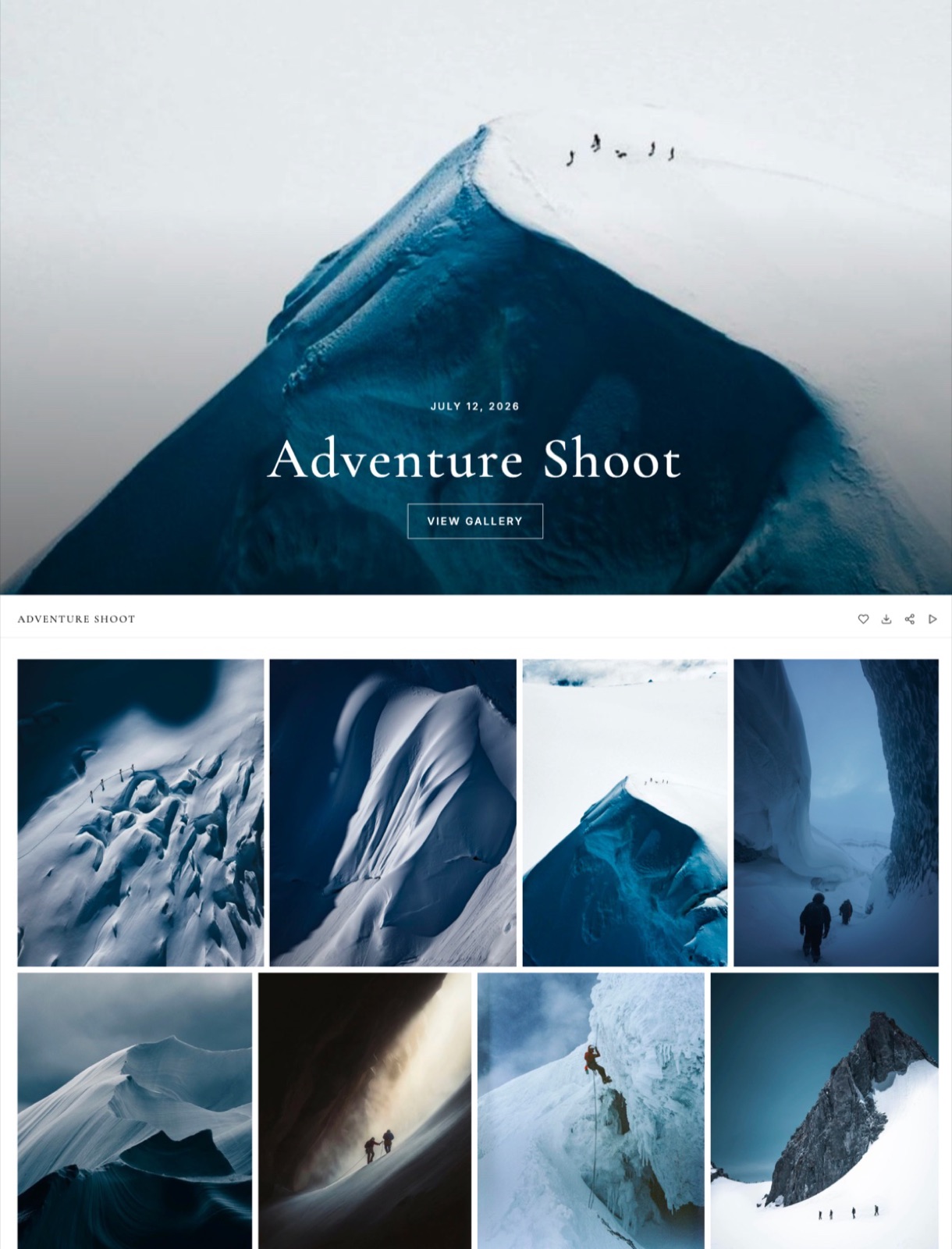
Framekit is an AI website builder for photographers and filmmakers that also runs the client gallery the delivery email points at, on the same account and the same bill as the portfolio site, plus video review for the sessions that come back as film.
That arrangement is worth the number of subscriptions it removes from your card: one bill at $84 a year instead of two or three renewing on different dates.
What it does for this sequence: unlimited galleries on every plan including the free one, a gallery password and a separate download PIN, client favourites so the download-favourites-only instruction in template three works, full-resolution and ZIP downloads, email sharing, email registration if you want to collect an address before viewing, auto expiry, and watermarking if you are sending proofs rather than finished work.
Paid plans put galleries on your own domain and remove the Framekit badge.
What it does not do, plainly: there is no print lab, no print store and no print fulfilment, so it cannot sell a single print for you.
There is no booking calendar, no invoicing and no CRM, so the payment chase and the rebooking that sit either side of this sequence live somewhere else entirely.
There is no face recognition, which matters for event photographers delivering to hundreds of people.
Storage is one pool shared across the website, the galleries and video review: 10GB free, 50GB on Starter at $9 a month, 300GB on Pro at $19, 2TB on Business at $39. Do the arithmetic before you choose.
A 45 image set exported at 20MB a frame is about 900MB, so the free 10GB holds 11 of those sessions live at once, Starter holds 55 and Pro holds 333.
A wedding photographer keeping 600 frame sets online hits the ceiling roughly 13 times sooner, which is the case for expiry dates as much as for a bigger plan.
Decide in Four Questions
In one lineWork down these four questions in order and stop at the first answer that changes what you do, because the right amount of process here is set by what you sell rather than by how many clients you have.
Question one: do you sell prints, albums or any physical product? If yes, choose your platform from Pixieset, Pic-Time or ShootProof and ignore our recommendation entirely, because Framekit does not sell physical goods. If no, carry on.
Question two: do you deliver video from the same session? If yes, you need a gallery that holds both and you need to check the per-file video cap, not just the total storage. If no, any of the four platforms in the table above will deliver photographs.
Question three: is the client a business or a family? If a business, the usage sentence in step five needs to name the channels and the term, and it belongs in the contract as well as the email. If a family, one plain sentence granting personal use is enough.
Question four: do you already pay for a website? If yes, check whether it includes galleries before you add a second subscription. If no, the case for a platform that does both is the strongest it gets, and that is the case Framekit is built for.
Frequently Asked Questions
What should you send a client immediately after a photo shoot?
Send a short thank-you within 24 hours that names one specific detail from the session and restates the delivery date as an actual date rather than a rough number of weeks. It should not contain photographs.
Its job is to confirm the timeline in writing while goodwill is at its highest, which prevents the "any news?" email a week later and gives you a written record of what you promised.
How soon should a photographer send sneak peek photos?
Within 48 hours, while the client is still talking about the session, and three finished frames is the right number.
Three is something a person posts to social media; 15 is a gallery, and giving a gallery away on day 2 makes the day 14 delivery an anticlimax.
Grade all three properly and say in writing that the client is welcome to post them, because a client who is not told assumes they are not allowed.
What should the gallery delivery email include?
Five things: the link, the password, a sentence explaining how to download at full size, a sentence on what the client may do with the images, and the date the gallery closes.
Every one of those that you leave out comes back as a separate email. Put the link and the password in the same message rather than splitting them, and use a separate download PIN if you want a second layer of protection.
Should you watermark photos you send to clients?
Watermark proofs of unpurchased work, not finished deliveries and not sneak peeks. A watermarked sneak peek does not get posted, which removes the only reason to send one.
Framekit offers watermarking on every plan including the free one, so it is available when you need it for a proofing gallery, but on a paid family or wedding delivery it makes the work look unfinished and the client less likely to share it.
How long should a client gallery stay online?
Ninety days is a reasonable default for a portrait session and 365 for a wedding, with a free extension whenever the client asks.
The length matters less than the reminder: send an email 7 days before the gallery closes, because the downloads cluster in the last few days of the window.
Auto expiry is available on every Framekit plan, and on Pixieset, Pic-Time and ShootProof as well.
When should you ask a photography client for a testimonial?
About 7 days after the gallery goes live, when the client has downloaded the files and shown them to family but the job is still recent.
Ask a question rather than requesting a review: "what did you end up doing with the pictures?" produces an answer in the client's own words, which you then ask permission to quote.
A direct request for a review reads as homework and gets postponed indefinitely.
Is a free client gallery plan good enough for delivering a paid shoot?
For a photographer delivering 45 images a session, yes, as long as you watch the ceiling.
Framekit's free plan carries unlimited galleries, passwords, download PINs, favourites, full-resolution downloads and expiry on 10GB of pooled storage, which is about 11 sets of 45 frames at 20MB each.
Pixieset's free tier is 3GB and ShootProof's is 3GB and photos only, so both hold about 3 of those sets, and Pic-Time's 10GB drops to 3GB after 3 months.
The free tiers differ by a factor of 3 in storage and barely at all in delivery features.
Do clients own the photos from a shoot they paid for?
Not by default, and this is the misunderstanding that produces the most awkward email in the whole delivery sequence.
The US Copyright Office states that a work is protected from the moment it is created and fixed in tangible form, and that copyright is the right of the author or the author's heirs or assignees rather than of whoever owns or possesses the physical work.
What the client gets is the licence you grant them. Write that licence in one plain sentence in the delivery email, and take proper advice for commercial work and for other jurisdictions.
What do you send when a client has not downloaded their gallery?
Send the expiry reminder a week before the gallery closes, with the link and password repeated in the message and an offer to extend for free.
On the carried example that one email produced the download that 12 weeks of the gallery sitting open had not.
If the gallery has no expiry date there is nothing to remind them about, which is the practical argument for setting one on the day you build the gallery.
Should you ask for a referral in the same email as the testimonial?
Yes, and it is the reason the testimonial ask works. A client who has just typed a compliment is in exactly the right frame of mind to give a name, and splitting them into two emails means the second does not get sent.
Name a specific type of session, and a specific person if the client mentioned one during the shoot, because "if you know anyone" produces nothing.
What should a photographer never send after a shoot?
Do not attach an invoice chase, an upsell or a rebooking pitch to the gallery delivery email.
Each of those is a legitimate message with its own timing, and stapling them to the delivery turns the best moment in the relationship into a sales call.
Deliver the work cleanly, then send anything commercial as its own message a few days later.
Final Verdict
Send four things, on a clock: the thank-you inside 24 hours, three frames inside 48, the gallery on the promised date with all five pieces of information in it, and the testimonial plus one named referral ask 7 days later.
Write the templates once. The whole sequence costs 10 minutes per client after the first job.
For the gallery itself, if you deliver digital files and sell nothing physical, Framekit Client Galleries is the pick: unlimited galleries, passwords, download PINs, favourites, full-resolution and ZIP downloads and expiry are all on the free plan, and paid plans start at $9 a month with your own domain and no badge.
Where Framekit loseswe do not sell prints. There is no print lab, no print store and no fulfilment, so if album and print revenue is a meaningful part of your business, Pixieset, Pic-Time and ShootProof are the better fit and it is not a close call.
Framekit also does not do invoicing, contracts, booking calendars or CRM, so the payment and rebooking steps either side of this sequence need a dedicated tool.
And there is no face recognition, which is a real gap for event photographers delivering to a crowd.
Framekit is not for the studio whose margin comes from wall art. It is for the photographer whose revenue is the session fee and who would rather run the website and the galleries on one bill.
Related readinghow to deliver photos to clients, how to write a photo delivery email, what to include in a client gallery, and how to price photography.
The first send in that sequence gets its own guide in how to send a sneak peek gallery, and the last one is covered by how to get testimonials from photography clients.