Framekit templates
Start from a designer-made template
 Use template
 Use template
 Use template
 Use template
 Use template
 Use template
 Use template
 Use template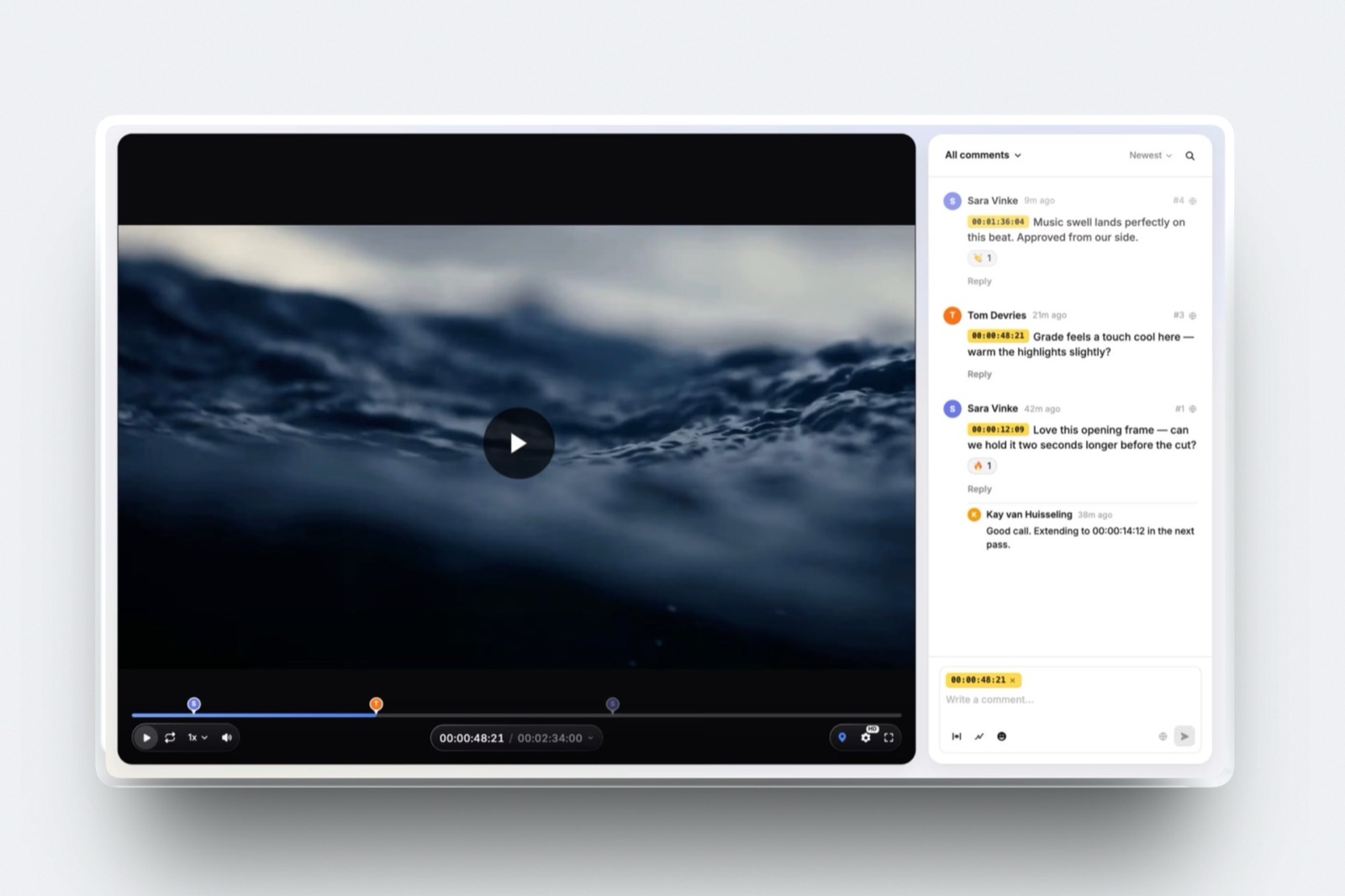
Nobody loses money on the work. They lose it on round four.
A revision round is the cycle of sending work for feedback, receiving notes, and acting on them, and it is the single most common place a profitable creative job turns into an unprofitable one.
Not because clients are unreasonable, but because almost nobody defines what a round is before the first one starts.
Framekit is an AI website builder with video review and client galleries on the same account, so the sending half of that cycle sits beside the delivery.
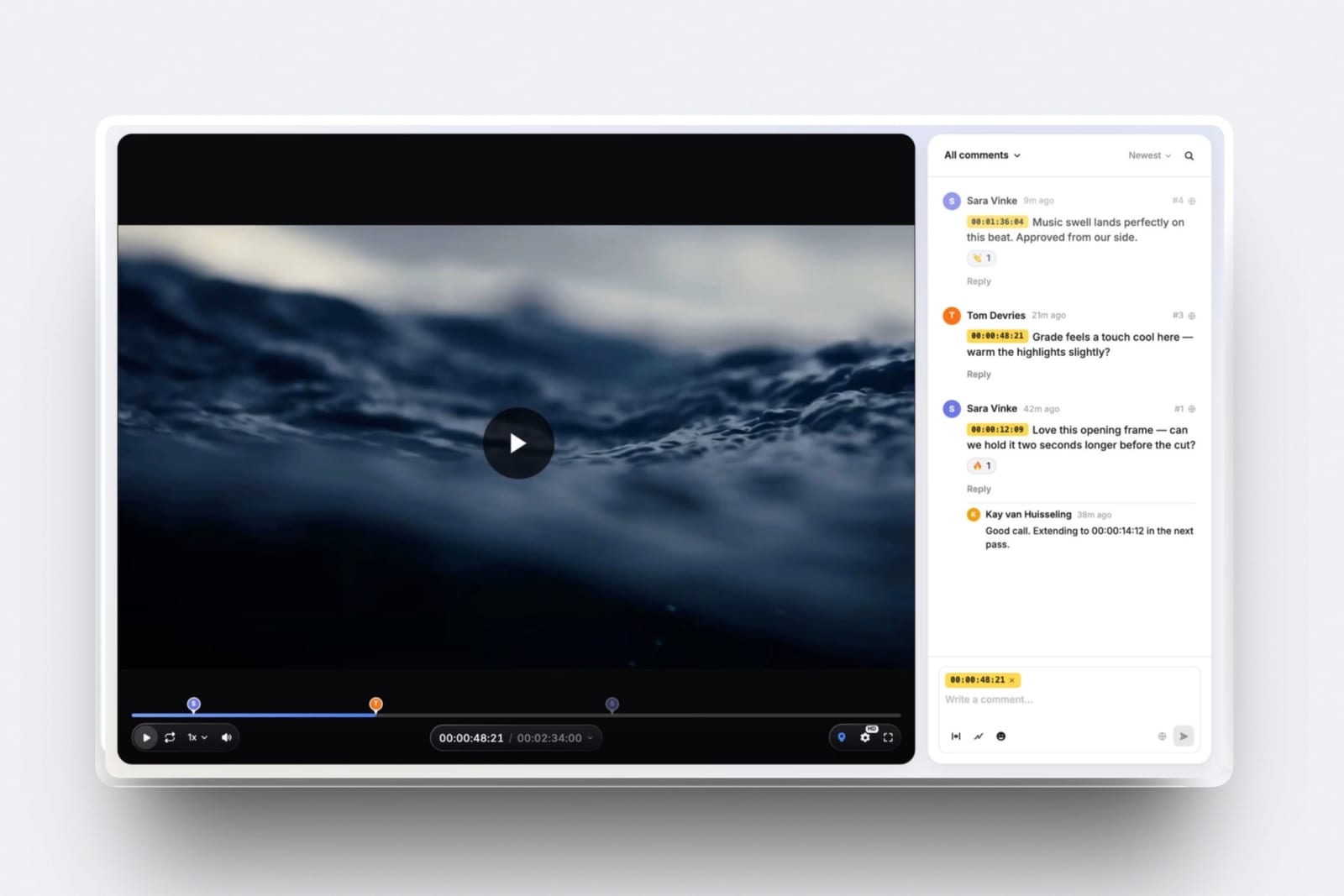
Framekit gives you the sending half free: a review link with timecoded comments on files up to 500MB, or galleries with favourites for stills, with no account needed by the client.
The process is what saves the money though, and it is five rules: define what a round is in the quote, name one person to consolidate notes, say what stage the work is at before they look, collect feedback in one place attached to the work, and confirm in writing when a round closes.
Do those and most projects need two rounds instead of four.
Full disclosure: Framekit is our own product, and the rules below cost nothing and work on any platform. The section on where our file limits rule us out names what to use instead.
Define What a Round Actually Is
The reason revision rounds spiral is almost never the client being difficult. It is that "two rounds of revisions" appears in a quote without anyone agreeing what a round contains, so every subsequent disagreement is about definitions rather than work.
A usable definition has three parts:
- A round is one consolidated set of notes, delivered by an agreed date, from one named person. Professional bodies such as the AIGA publish standard agreements that define this the same way.
- Notes arriving after that date, or from someone else, start a new round.
- A round covers changes within the agreed direction. A new direction is new work, not a revision.
That third line is the one that protects you. "Can we see it warmer" is a revision. "Can we see it as a completely different edit" is a project.
In one linethe number of rounds matters far less than the definition of one.
Name One Person to Consolidate
Feedback from four people through three channels is the most expensive thing that can happen to a creative project, and it is entirely preventable with one sentence at the start.
Ask for a single decision-maker who gathers internal notes and sends them as one set.
This is not a bureaucratic preference: contradictory notes from a client team put you in the position of adjudicating their internal disagreement, which is unpaid work you are also unqualified to do.
When notes do arrive contradicting each other, do not choose. Send them back: "These two notes conflict, which would you like?" That takes ninety seconds and saves a round.
In one lineyou are not the referee for a client's internal disagreement, and acting like one costs you the job's margin.
Say What Stage the Work Is At
Roughly half of all useless feedback is caused by something entirely within your control: the client does not know what they are supposed to be looking at, so they comment on everything they can see rather than the thing you need judged.
Send the stage with the work, in one line, every time:
- "This is a structure check. Grade and sound are not final."
- "This is a colour pass. Please ignore the temporary music."
- "This is the final check before delivery. Typos and technical issues only."
Without that line you get colour notes on an offline edit and structural notes on a locked cut, and both cost a round to unwind.
In one linea client who does not know what stage the work is at will comment on everything, and it is your fault rather than theirs.
Collect Feedback Attached to the Work
Notes in an email body are prose about a thing, and notes attached to the thing itself are instructions. That distinction sounds pedantic until you count how many rounds are spent translating one into the other, which is work you do for free on every project.
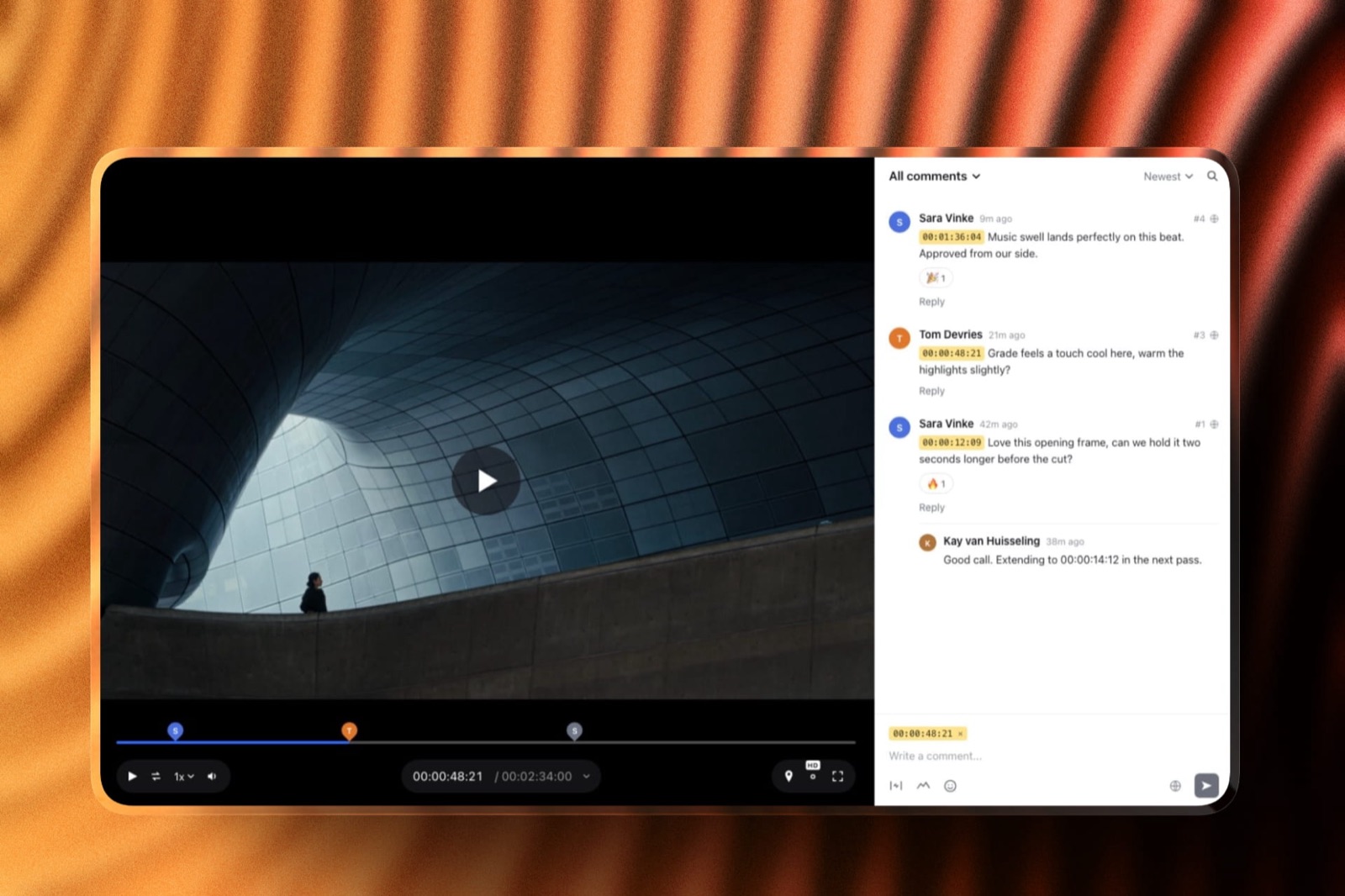
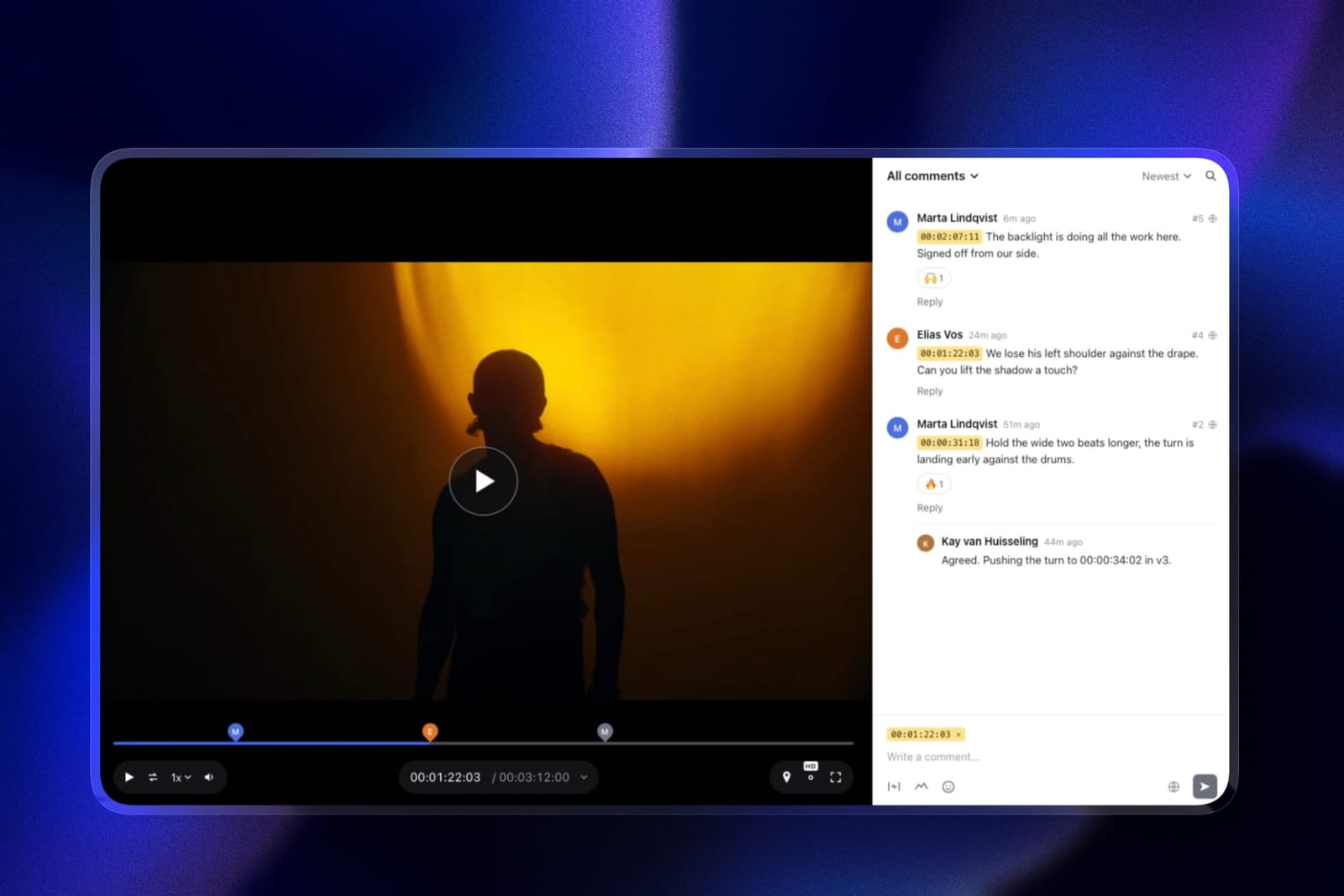
For video, that means timecoded comments pinned to the frame they refer to, so "around the 40 second mark" stops existing. On Framekit a client leaves those without creating an account, which matters because every login wall is a place feedback goes quiet for two days.
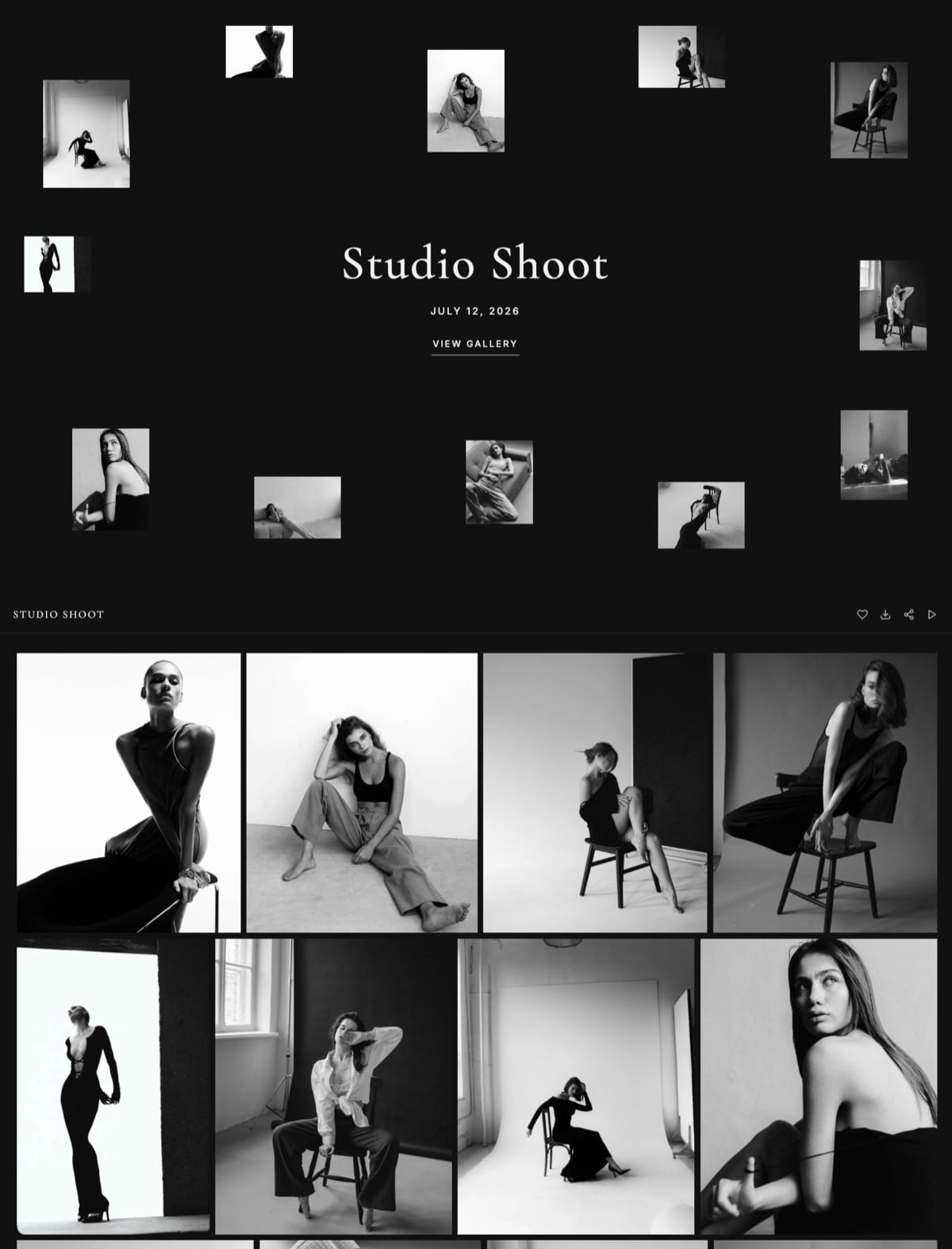
For stills, that means favourites and comments inside the gallery rather than a list of filenames in an email.
For documents and design, it means comments on the page rather than a paragraph describing a page.
The real numbermoving from prose notes to attached notes typically removes one full round per project. On a job quoted with three rounds, that is the difference between the margin you planned and the one you get.
Close Each Round in Writing
A round that is never formally closed does not end, because there is no agreed moment after which fresh notes are obviously a new round rather than a continuation of the old one. Closing it is a single sentence and it is the cheapest protection a freelancer has.
When you have addressed a set of notes, reply on the same thread: "All eleven addressed, two I want to discuss, this closes round one of two." That sentence does three things at once: it confirms the work, it flags the disagreements rather than silently ignoring them, and it puts the round count in front of the client without a confrontation.
In one linethe phrase "this closes round one of two" is the cheapest protection available to a freelancer.
What to Do When It Goes Wrong Anyway
Sometimes a project spirals regardless of how carefully you set it up, and there are two specific moves worth having ready before you need them rather than improvising under pressure. Both work better when they arrive early and without accusation.
When a new direction arrives as a revisionname it without accusation. "That is a different approach rather than a change to this one, so it sits outside the two rounds. I can price it, or we can carry on with the current direction." Most clients accept this immediately, because they genuinely did not notice.
When rounds are being used up on indecisionoffer a call. Twenty minutes of conversation frequently resolves what four written rounds cannot, because the real problem is usually that the client cannot articulate what is wrong in writing.
In one linealmost every runaway revision process is a communication problem wearing a scope-creep costume.
The Tools, and Where Each One Stops
Everything above works on any platform, which is why it came first and why most of this article is about process rather than software. What follows is narrowly about which surface you send the work on, and the deciding factor is usually file size.
| Work type | What you need | Framekit |
|---|---|---|
| Short video cuts | Timecoded comments, no client login | Free plan, files to 500MB |
| Brand films, highlights | Same, larger files | Starter to Business, 1GB to 3GB |
| Full ceremony films, features | Long-form handling | No, use Frame.io |
| Stills selection | Favourites inside the gallery | Every plan, unlimited galleries |
| Large professional selects | Fast unbranded proofing | Workable, PicDrop is faster |
| Decks and documents | Comments on the page | Not supported |
In one linecheck your usual file size first, because that rules tools in or out before any feature does.
Frequently Asked Questions
How many revision rounds should I include?
Two is the common standard across commercial, wedding and design work, with further rounds billed hourly or at a fixed per-round rate.
The number matters less than the definition: a round should be one consolidated set of notes from one named person by an agreed date, covering changes within the agreed direction.
Without that definition, two rounds and five rounds cost you the same.
What counts as a revision versus new work?
A revision is a change within the direction already agreed. New work is a change of direction. "Warmer grade", "trim the opening", "swap these two images" are revisions.
"Try it as a different edit", "use the other location", "make it feel completely different" are new projects wearing a revision's clothes.
Writing that distinction into the quote is what lets you name it later without it becoming a confrontation.
How do I stop clients giving vague feedback?
Three things, in order of effect. Use a tool where comments attach to the work, so notes are timecoded or pinned rather than described. Name one person to consolidate.
And state the stage in one line before they look, because "this is a structure check, grade is not final" prevents a page of colour notes you cannot act on yet.
Vague feedback is nearly always a briefing failure rather than a client failure.
Do clients need an account to leave feedback?
On Framekit, no: reviewers open a link and leave timecoded comments without signing up.
That matters more than it sounds, because every account wall is a place where feedback stalls for a day or two, and on a deadline those days come out of your edit time rather than theirs.
Frame.io also makes reviewers free, and it is worth checking on any tool you consider.
What do I do when two people send contradicting notes?
Do not choose between them, and do not average them.
Send both back with a single question: "These two notes conflict, which would you like?" Adjudicating a client's internal disagreement is unpaid work that you are also badly positioned to do, and guessing produces a version that satisfies neither person and costs a round to correct.
Should I charge for extra revision rounds?
Yes, and the time to establish it is in the quote rather than in the moment. A per-round rate or an hourly rate stated up front makes the third round a straightforward conversation instead of an awkward one.
What makes it work is closing each round explicitly in writing, so there is an agreed record of which round you are on before the question of payment arises.
How do I run a revision round on a large video file?
Check your per-file ceiling before you commit to a tool, because this is what rules platforms in or out.
Framekit caps review files at 500MB on the free plan, 1GB on Starter, 2GB on Pro and 3GB on Business, which covers social cuts, commercials and most highlight films.
Full ceremony films and feature assemblies exceed every tier, and Frame.io handles those properly.
Is email good enough for collecting feedback?
It works and it costs you a round. Notes in an email are prose about the work rather than instructions attached to it, so someone has to translate "the bit with the car" into a timecode, and that someone is you.
Email is also where notes from four people arrive in three threads, which is the other main cause of revision spiral.
How long should a client have to send notes?
Set a date and say it with the link, typically three to five working days for a commercial cut and up to a week for a longer piece.
What matters is that the date exists, because an open-ended review slot means the notes arrive when the client remembers, which is frequently after you have moved on to another project and have to reload the whole job.
Can I use one tool for video review and photo delivery?
Yes, and consolidating usually costs less than people expect. Framekit carries video review, client galleries, a portfolio site and a store on one plan at $84 to $180 a year, drawing on a single storage pool.
The limit to confirm first is the per-file video ceiling of 3GB at the top tier, and for large professional selects a dedicated proofing tool like PicDrop remains faster than a gallery.
Final Verdict
Revision rounds are a process problem that people keep trying to solve with software.
Define what a round is in the quote, name one person, state the stage before they look, collect notes attached to the work, and close each round in writing. Those five rules cost nothing and remove more rounds than any tool will.
Where Framekit does not help. Cuts over 3GB, which exceed our ceiling at every tier. Comments on documents and decks, which we do not support at all. Large professional selects, where PicDrop is faster.
Internal notes hidden from the client, which we do not offer and Frame.io does on its Team plan.
Where it does. Short-form video review and stills delivery on the same account as your portfolio, free up to 500MB per file and $84 a year for your own domain. The process rules above are the part that saves the money, and they work whether you use us or not.
Related readinghow to send a video to a client for review, the best video review tools, and the best client approval software.
Framekit review ceilings and gallery features read from the shipped plan configuration in September 2026.