Framekit templates
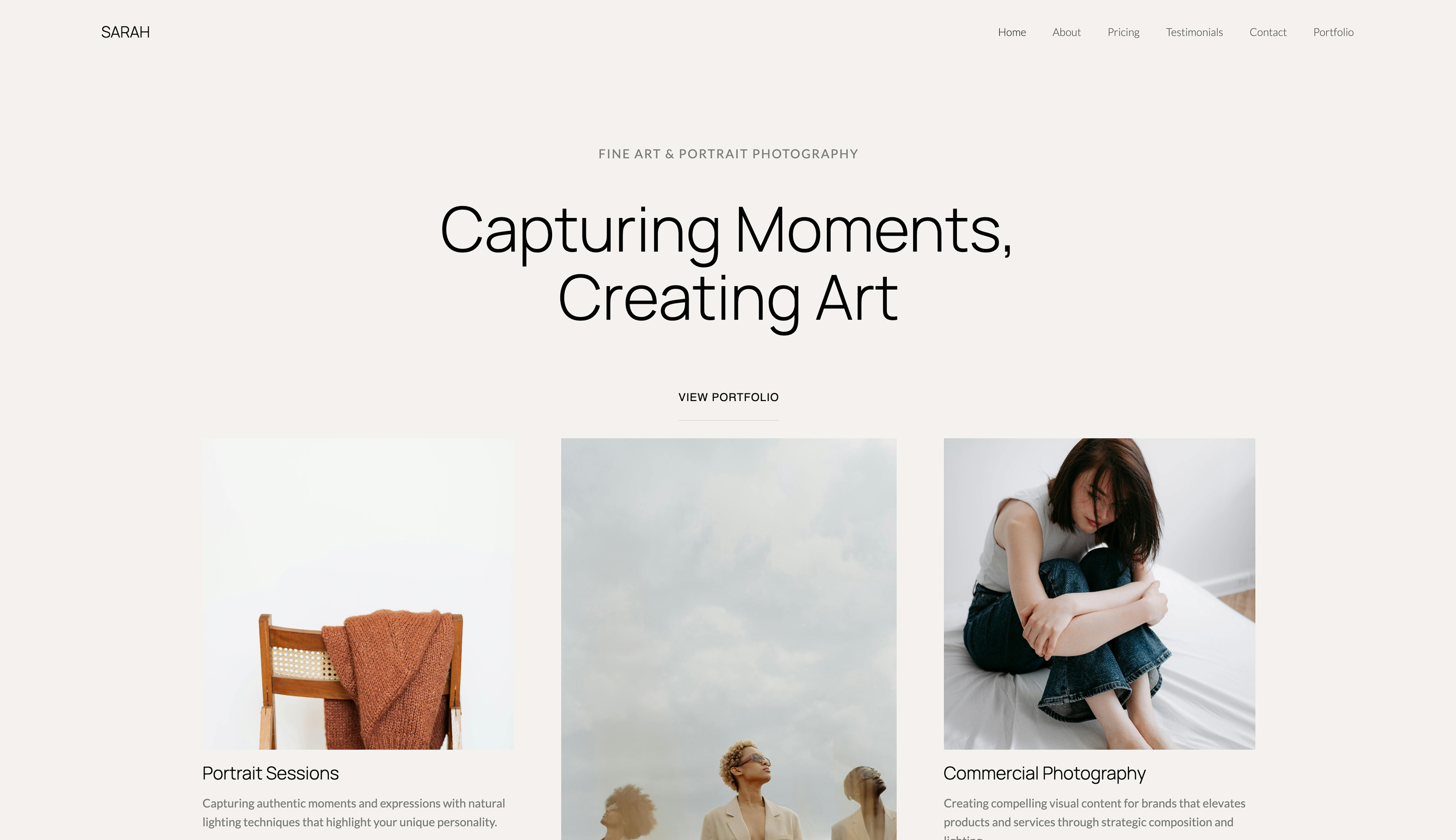
Start from a designer-made template
 Use template
 Use template
 Use template
 Use template
 Use template
 Use template
 Use template
 Use template

The advert said $2.99 a month. You paid for four years up front, which nobody mentioned until the checkout, and in year five the plan renewed at $10.99 a month.
Meanwhile you were paying a gallery service to deliver client work, a review tool for cuts, and a store that kept 10 percent of every preset you sold, none of which the cheap website did. The website was cheap.
Running a creative business on it was not.
That is the trap in most lists of the cheapest website builders for creatives: they compare the sticker on the website and stop.
A creative's site sits inside a small stack of paid tools, and the honest comparison is what that stack costs in year one and by year three, at renewal prices, on the plan you will actually be on in month six.
This guide runs that sum for ten builders, including the ones that beat us on price.
A cheap website builder for creatives is one whose total cost over the years you keep the site, at renewal prices and including the tools the site needs beside it, is lowest for the work you actually do; the monthly sticker price is only the first line of that sum.
The cheapest website builder for working creatives in 2026 is Framekit, because its free plan is permanent and Starter at $84 a year billed yearly adds your own domain plus client galleries, video review, Slides and a download store that cost roughly $150 to $600 a year bought separately.
On the site alone, Carrd is cheaper at $19 a year for one page, WordPress.com Personal at $99 for three years prepaid, and Hostinger at $143.52 for four years prepaid before it renews at $10.99 a month.
Full disclosure: Framekit is our product and it ranks first, so treat that as a claim to check. It ranks first only because this guide counts what a creative pays beside the site; on the website alone it is fourth-cheapest over three years, behind Carrd, WordPress.com and Hostinger, and every one of those figures was read on the vendor's own page in October 2026.
Recently updated on 12 October 2026: every price was re-read at the source with renewal terms, Framekit's costs now use its yearly price of $84 rather than 36 months at $9, the claim that its renewal price could never rise was replaced with what it actually publishes, WordPress.com, Framer and Cargo were added, the galleries, review and store a creative would otherwise buy separately are now priced in, Format's Pro prices are split into the first-year offer and the regular rate, and card processing is now counted where sales are compared, on the Gumroad routes too, since Gumroad's fee article charges it on top of its 10% plus 50 cents.
How the Costs in This Guide Were Built
Every figure here comes from the vendor's own pricing page or help centre in October 2026, and every total is arithmetic you can redo, because cost comparisons go wrong when an introductory price is quoted as if it were permanent or when the tools beside the site are left out of the sum.
Read at the source. Plan prices, term lengths, renewal rates, storage, domain terms and store fees were read on each vendor's page in October 2026 and linked inline where the page answered our request.
Where a page listed euro prices, they are given in euros rather than converted.
Calculated. Each builder is priced for year one and over three years on its cheapest plan that connects your own domain without the platform's ads, using the renewal rate wherever an introductory term ends inside that window.
A second calculation adds what an illustrator, a portrait photographer and a freelance editor each pay for galleries, review or a store beside the site.
Not claimed. There are no speed scores, design ratings or hands-on build timings on this page. Price is the subject, and price is checkable, so that is all this ranking rests on.
The Ten Cheapest Builders at a Glance
This table compresses the ranking into one screen, and the two columns that reorder it are the renewal note and what the plan includes for creative work, because a low sticker with a step-up renewal or a missing gallery is not a low cost.
| Rank | Builder and plan | Year one | Over three years | Renewal note | Creative tools included |
|---|---|---|---|---|---|
| 1 | Framekit Starter | $84 | $252 | No introductory rate published | Galleries, video review, Slides, store |
| 2 | Carrd Pro Standard | $19 | $57 | No introductory rate published | One page per site; payment forms on Pro Plus |
| 3 | WordPress.com Personal, 3-year term | $99 upfront | $99 | Domain free in year one only | Blog with plugins; payments from Premium |
| 4 | Hostinger Premium, 48-month term | $143.52 upfront | $143.52 | Renews at $10.99 a month after month 48 | None |
| 5 | Framer Basic | $120 | $360 | Domain free in year one | None listed |
| 6 | Format Basic | $120 | $360 | Domain registration $30 a year, free in year one on Pro | Client galleries, capped |
| 7 | Cargo | $168 | $504 | One custom domain included | Commerce add-on, $66 a year |
| 8 | Webflow Basic | $180 | $540 | No CMS on this plan | None |
| 9 | Wix Light | $204 | $612 | Domain free in year one | Bookings and apps, no payments on Light |
| 10 | Squarespace Basic | $228 | $684 | Domain free in year one | Physical commerce at a 2% fee |
In one lineon the website alone Carrd, WordPress.com and Hostinger are cheaper than Framekit, and the order flips the moment a creative needs to deliver a gallery, collect notes on a cut or sell a download, because those are the line items that cost more than the site.
The Weights Behind This Ranking, and Who Wins Without Them
The rubric is published so you can reweight it: three-year cost of the complete creative setup, the site plus the delivery, review and selling tools a working creative uses (45 percent), three-year cost of the site alone at renewal prices (35 percent), and what the cheapest usable plan includes, such as pages, storage, your domain and no ads (20 percent).
| Criterion | Weight | Cheapest | Framekit's place |
|---|---|---|---|
| Three-year cost of the complete creative setup | 45% | Framekit for all three examples once card processing is counted on every route | 1st |
| Three-year cost of the site alone, at renewal | 35% | Carrd for one page; WordPress.com for multi-page | 4th, behind Carrd, WordPress.com and Hostinger |
| What the cheapest usable plan includes | 20% | Framekit: 30 pages, 50GB, galleries, review, store | 1st |
The site-alone row is where the house pick loses, and it is the row most cheap-builder lists use on its own. Carrd is $57 over three years, WordPress.com Personal $99 on a three-year term, and Hostinger Premium $143.52 for four years, against Framekit Starter's $252.
The complete-setup row carries 45 percent because it is what a creative actually pays: a gallery service, a review tool or a store's cut costs more each year than any site in this table.
Under the old weights, where only the site's own price counted, Carrd would rank first, WordPress.com second, Hostinger third and Framekit fourth, and for a creative who needs nothing but a portfolio that is the right order to read.
1. Framekit: Cheapest Complete Setup for Working Creatives

Framekit is an AI website builder that also includes client galleries, Frame.io-style video review, Slides for decks and a digital-download store in the same plan, so for a creative who delivers work or sells files, the cheapest plan here is also the only one where those tools cost nothing extra.
What working in it feels like. Describe your practice, or upload a screenshot of a site you admire, and the AI drafts the sections, writes the copy and applies one theme; every block stays editable by hand.
Then the same account opens a gallery for a client, sends a cut for notes, drafts a pricing guide in Slides, or puts a preset pack on sale with a buy link, without a second login or a second bill.

The number that matters$84 a year on Starter, or $9 billed monthly, connects your own domain, removes the website badge, opens the full template library and holds 30 pages and 50GB of storage pooled across site, galleries and review; gallery pages keep a small Made with Framekit footer line on every plan.
The free plan is permanent with 10 pages, 10GB and every gallery, review, Slides and store feature, at a 5 percent store fee. Pro is $180 a year billed yearly with 300GB and a 3 percent fee; Business is $372 with 2TB and 0 percent.
The detail nobody writesFramekit publishes no introductory rate, so the price you see is the price that renews; there is no four-year prepay to unlock it and no first-year discount to expire.
That does not promise prices can never change, which no vendor can, but it means the three-year sum above is the listed price times three rather than a promotion followed by a jump.
The gotcha that costs moneythe domain is not included.
Squarespace, Wix, Framer and WordPress.com bundle a domain for the first year on yearly plans; on Framekit you register your own, about $11 a year for a .com at a registrar such as Porkbun, which adds roughly $33 over three years.
The store fee is also real: 5 percent on Free and Starter is kept on refunds, Stripe's processing comes on top, and checkout is hosted on framekit.ai rather than your own domain. And a second website is a second plan.
Skip it ifyou need only a one-page site, which Carrd does for $19 a year, a blog with RSS, which WordPress.com Personal does for $99 over three years, or a shop that ships physical products, which Framekit's digital-only store cannot do.
Verdict: the cheapest website builder for creatives who deliver, review or sell, because the tools that usually cost more than the site are in the plan, so a portrait photographer with 40GB of galleries pays $252 over three years where WordPress.com plus Pixieset costs $675. For a creative who needs only pages, it is fourth on price and the decision tree below says which builder is cheaper.
2. Carrd: Cheapest Site of All, for One Page
Carrd is the cheapest builder in this guide by a distance for anyone whose site is genuinely one page, because its Pro plans page, read in October 2026, lists Pro Standard at $19 a year for 10 sites with custom domains, forms, embeds and video uploads, after a free tier for up to 3 sites with Carrd branding and no custom domain.
Pro Lite at $9 a year covers 3 sites without custom domains, and Pro Plus at $49 a year adds payment forms that charge through your own Stripe account with no Carrd fee, which makes it a cheap way to sell one product if you deliver the file yourself.
The real number$57 over three years for a page on your own domain, which nothing else here approaches.
The gotchasections can imitate pages but there is no second page with its own address, and there are no galleries, review or file delivery, so a working creative adds those elsewhere.
Verdict: the cheapest honest answer for a link page or a one-page portfolio, and the one to outgrow the day each project needs its own URL. Framekit vs Carrd maps that upgrade.
3. WordPress.com: Cheapest Multi-Page Site on a Three-Year Term

WordPress.com is the cheapest multi-page builder here if you are willing to prepay, because its pricing page, read in October 2026, lists Personal at $9 a month billed monthly, $4 on a yearly term, $3.25 on a two-year term and $2.75 on a three-year term, which is $99 for three years, with 6GB of storage, no ads and a custom domain free for the first year.
It also publishes RSS by default and runs a real blog, which a writer or an illustrator with a journal will value.
Payment collection with PayPal and Stripe starts on Premium at $8 a month billed yearly, hosting your own videos also starts on Premium, and the comparison table lists transaction fees from 10 percent on Free down to 0 percent on Commerce.
The real number6GB on Personal fills fast with high-resolution portfolio images, and a gallery-delivering photographer would need a separate service from day one.
The gotchathe domain is free only in year one, and the three-year price is a prepay; on yearly billing Personal is $48 a year, $144 over three years.
Verdict: the cheapest real multi-page site with a blog, and a thin creative toolkit unless you add plugins and services. Framekit vs WordPress compares the creative setup on both.
4. Hostinger: Cheapest Four-Year Prepay, With a Renewal Jump
Hostinger's builder has the lowest monthly sticker in the category, and its website builder page, read in October 2026, lists Premium at $2.99 a month on a 48-month term paid upfront as $143.52, renewing at $10.99 a month, with up to 3 websites and 5 one-time AI credits, and Unlimited at $3.99 a month on the same term, $191.52, renewing at $16.99.
Over the first four years that is genuinely cheap, and three sites on one plan suit someone running a portfolio and a side project. The renewal is the catch: after month 48, Premium costs $131.88 a year, more than Framekit Starter's $84.
The gotchathe price depends on prepaying four years, the AI credits are one-time, and there are no galleries, review or store tools, so a creative pays for those separately.
Verdict: cheap if you are certain you want the same site for four years and will price year five at the renewal rate. Our guide to website builder renewal prices shows how common this step-up is.
5. Framer: Cheapest Designer Canvas
Framer is the cheapest route here to a design canvas with real motion control, and its pricing page, read on 12 October 2026, lists Basic at $10 a month billed yearly, $120 a year, with 30 pages, 2 CMS collections, 1,000 AI credits a month and a domain free in year one, and Pro at $30 with 150 pages, redirects and staging.
Extra editors are $20 a month each.
The cost catch for creatives is everything around the site: no galleries, review or store are listed, so selling a template pack means Gumroad at 10 percent plus $0.50 a sale. Verdict: a fair price for a designer's showpiece and a costly base for a creative business; Framekit vs Framer prices both over three years.
6. Format: Cheapest Photographer Portfolio With Galleries
Format is the cheapest platform here that includes client galleries alongside a photographer's portfolio, and its pricing page, read in October 2026, lists Basic at $10 a month billed annually ($14 monthly) with 70 images and no store, Pro at $17 billed annually ($24 monthly) with 1,500 images, 100GB, 15 minutes of video and 50 galleries, and Pro Plus at $26 billed annually ($36 monthly) with unlimited images, 1TB, 120 minutes of video and 250 galleries.
A first-year offer ending 31 October 2026 cuts annual Pro to $12 and Pro Plus to $15 a month for year one only.
A free custom domain for the first year comes only on Pro and Pro Plus annual plans, and domain registration through Format is $30 a year after that. Verdict: good value for a stills photographer on annual billing, especially in an offer year, and dearer month to month, where Pro Plus is $36; Framekit vs Format compares them in full.
7. Cargo: Flat Price for Artists Who Sell a Few Pieces
Cargo charges one flat price, and its rates page, read in October 2026, lists the plan at $14 a month billed yearly ($168 a year) or $19 monthly, with one custom domain connection included, extra domains at $2 a month, and a Commerce add-on at $5.50 a month billed yearly with no per-transaction fee.
For an artist selling a few editions or prints, a flat $66 a year beats any percentage once sales pass a few hundred dollars.
It lists no galleries, review or AI drafting. Verdict: a fair, predictable price for an artist's editorial site, and $504 over three years before any delivery tools.
8. Webflow: Cheap Entry, Expensive Once You Need the CMS
Webflow's entry plan looks cheap, but its pricing page, read on 12 October 2026, lists Basic at $15 a month billed yearly without a CMS, so a portfolio with project collections or a journal starts on Premium at $25, $300 a year, and a second person needs a workspace seat at $39 a month for a full seat or $15 for a limited one.
The spend buys development-grade control that the cheaper builders here do not offer. Verdict: good value for a studio with a developer, and the most expensive learning curve in the list for a solo creative; Framekit vs Webflow for agencies runs the per-seat sums.
9. Wix: Mid-Price, Small Storage on the Cheap Plan
On 12 October 2026 the Wix plans page priced Light at $17 a month on yearly billing with 2GB of storage, Core at $29 with 50GB and eCommerce, and Business at $39 with 100GB, above a free tier with 500MB, Wix branding and no payments.
The cheap plan's 2GB is the cost trap for creatives: a high-resolution portfolio fills it, and selling anything starts on Core at $348 a year.
Wix earns its price with bookings and more than 800 apps. Verdict: fair value for a booking-led practice, and poor value for a portfolio that needs storage; the best Wix alternatives lists cheaper homes for creative work.
10. Squarespace: Dearest Entry Plan Here, Strongest Commerce

Squarespace has the most expensive entry plan in this guide and earns part of it back with commerce, because its pricing page and Help Center, as read on 12 October 2026, put Basic at $19 a month on yearly billing or $25 monthly and Core at $29, with a 14-day trial, no free plan, a 2 percent store fee on Basic, 0 percent from Core, shipping tools on Core and a domain free in year one.
For a creative who ships prints or merchandise, Core's 0 percent fee and native shipping can be cheaper than bolting a store onto anything else.
For a creative who delivers galleries or sends cuts for review, it is the base of the most expensive stack in this guide. Verdict: worth its price for physical commerce, and the dearest way to run a digital creative business; the best Squarespace alternatives for creatives covers the cheaper exits.
Year One vs Year Three: Where Renewals Change the Order
Most cheap-builder rankings quote year one, and the order changes by year three or five once introductory terms and free first-year domains run out, so this table sets out exactly what steps up, on which plan, and when, from each vendor's own page in October 2026.
| Builder | What looks cheap | What changes later | Source note |
|---|---|---|---|
| Hostinger Premium | $2.99 a month on a 48-month prepay | $10.99 a month from month 49 | Website builder page |
| WordPress.com Personal | $2.75 a month on a 3-year prepay | $4 a month yearly, $9 monthly; domain free in year one only | Pricing page |
| 10Web AI Starter | $10 a month in year one, billed yearly | Regular 12-month price shown as $240 | Pricing page |
| Webador Pro | €5 a month for the first 12 months | €10 a month after, plus €20 a year for the domain | Pricing page, euro prices, excluding VAT |
| Format Pro and Pro Plus | $12 and $15 a month yearly under a first-year offer ending 31 October 2026, plus a free custom domain in year one | $17 and $26 a month yearly from year two, and $30 a year for domain registration through Format | Pricing page and FAQ |
| Squarespace, Wix, Framer | Free domain in year one on yearly plans | Domain renews at the vendor's rate | Pricing pages |
| Framekit | No introductory rate | Listed price renews; domain registered separately from year one | framekit.ai pricing |
| Carrd | $19 a year | No introductory rate published | Pro plans page |
In one lineHostinger and WordPress.com are cheapest only if you prepay and stay, Webador's first-year price doubles, and the free domain on the big builders is a year-one gift, which is why a three-year figure is the minimum honest comparison.
Run the test yourself: take the plan you would need by month six, find its renewal price on the vendor's page, multiply by 36, add a domain if it is not bundled after year one, then add every tool you pay for beside the site. That figure is the real price.
What Galleries, Review and a Store Cost Beside a Cheap Site
For a working creative the website is often the cheapest tool in the stack, because client galleries, video review and a way to sell downloads each come from a separate company on every builder except Framekit, and each renews every year whether the site changed or not.
| Job | Inside a Framekit plan | Bought separately | Separate cost for a year |
|---|---|---|---|
| Client galleries for photos and video | Unlimited galleries on every plan, Free included | Pixieset Client Gallery Plus, 100GB | $192 billed yearly |
| Frame-accurate video review | Every review feature on every plan | Frame.io Pro, one member | About $156 billed yearly |
| Private delivery of finished films | Galleries take video up to 3GB a file | Vimeo Starter, 2TB | $144 billed yearly |
| Selling presets, templates or brushes | 5% fee on Free and Starter, 3% on Pro, 0% on Business | Gumroad on direct sales | 10% plus $0.50 a sale |
| Decks, proposals and pricing guides | Unlimited Slides decks with PDF export on every plan | Gamma Plus, without its badge | $108 billed yearly |
Outside prices come from Pixieset's pricing page, Frame.io's and Vimeo's pricing pages, Gumroad's pricing page and Gamma's pricing page, each read in October 2026.
The honest offsets: Gumroad acts as merchant of record and handles sales tax, which Framekit's store does not; Frame.io adds editing-suite integrations and per-member uploads; and Vimeo's 2TB is more video per dollar than any Framekit plan.
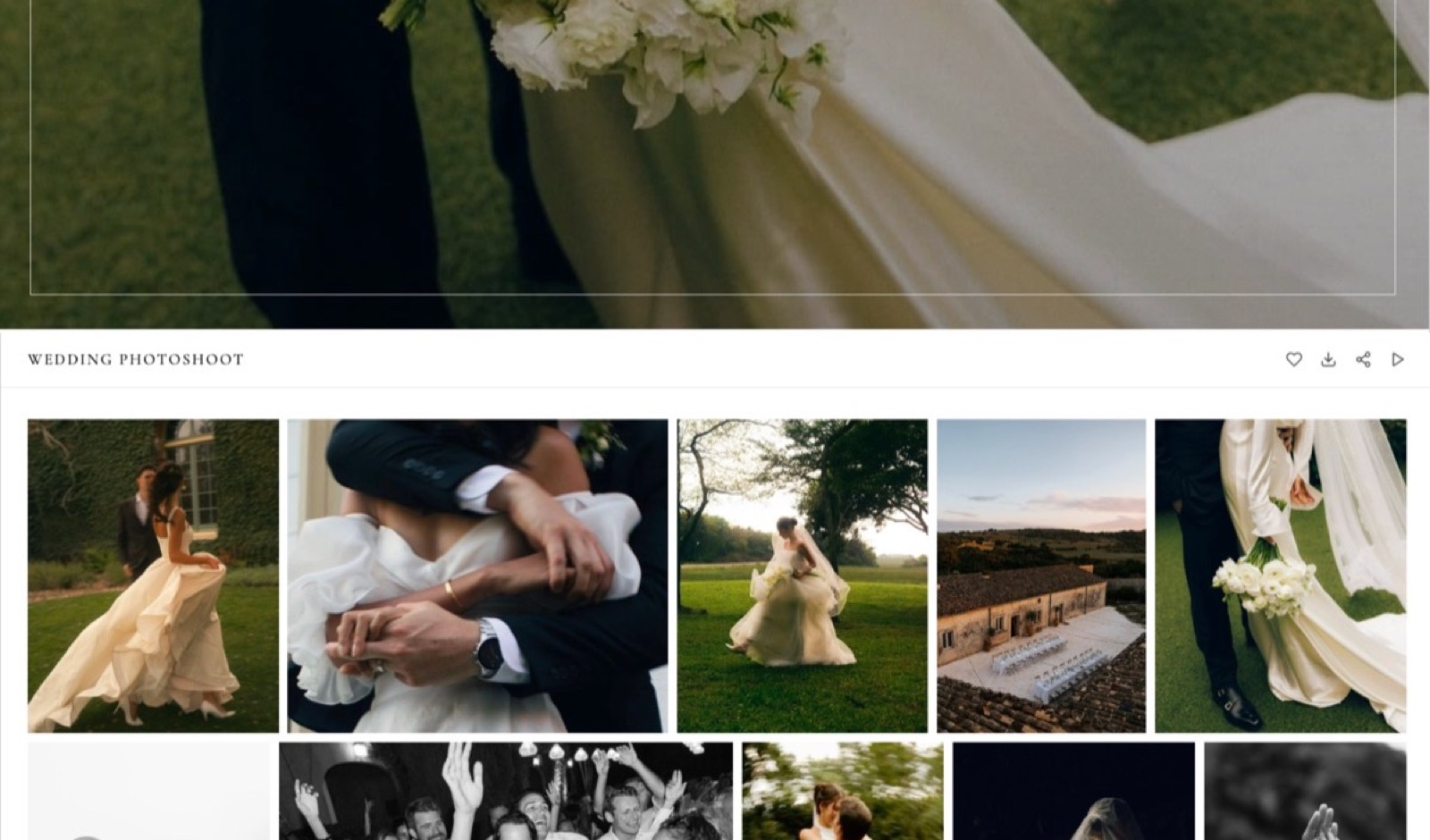
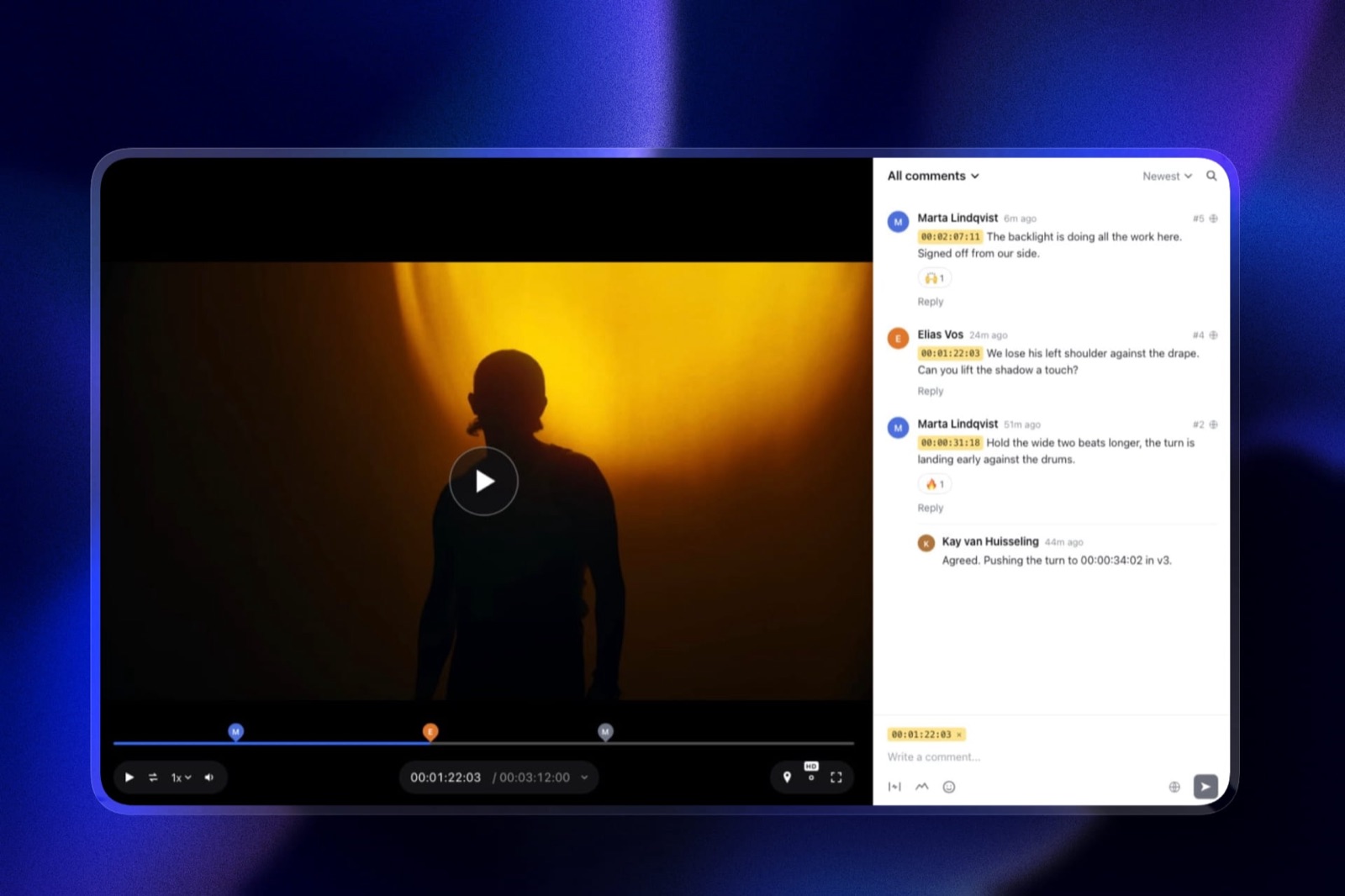
A Framekit gallery holds photos and video together, up to 5,000 photos each, with favourites, a download PIN and full-resolution downloads on every plan; review links take frame-accurate notes from clients who never make an account, with versions stacked and each round marked approved or needing changes.
Slides covers the paperwork that sells the work, such as pricing guides, proposals and portfolio decks, and its AI drafts a whole deck from a brief after you approve an outline, drawing on the same monthly AI allowance as the site.
Decks are unlimited on every plan, up to 40 slides each, with PDF export, which is why no deck tool appears in the cost rows below.
Three Creatives' Real Three-Year Bills
Framekit is the cheapest complete setup for the photographer and the editor below, by more than $400 over three years even against the two cheapest multi-page sites in this guide, and for the illustrator it is about $135 cheaper in year one and about $208 cheaper over three years once card processing is counted on every route, because the tools beside those sites cost more than the sites themselves.
Assumptions: US prices read in October 2026; prepaid terms counted in year one; yearly billing elsewhere, held flat; card processing left out of the cells and worked in the note under the table; domains excluded except where bundled, so add about $11 a year to Framekit's rows.
Each cell shows year one, then the three-year total.
| Creative | Framekit | WordPress.com Personal route | Hostinger Premium route | Squarespace Basic route |
|---|---|---|---|---|
| Illustrator, 60 brush packs at $30 ($1,800) | Starter plus 5% fee: $174 / $522 | $99 term plus Gumroad ($210 a year): $309 / $729 | $143.52 term plus Gumroad: $354 / $774 | $228 plus 2% fee ($36): $264 / $792 |
| Portrait photographer, 40GB of client galleries | Starter: $84 / $252 | $99 term plus Pixieset Plus ($192 a year): $291 / $675 | $143.52 term plus Pixieset Plus: $336 / $720 | $228 plus Pixieset Plus: $420 / $1,260 |
| Freelance editor, weekly client review, delivers finals | Pro: $180 / $540 | $99 term plus Frame.io ($156) plus Vimeo ($144): $399 / $999 | $143.52 term plus Frame.io plus Vimeo: $444 / $1,044 | $228 plus Frame.io plus Vimeo: $528 / $1,584 |
Card processing matters only in the illustrator's row.
On the Framekit and Squarespace routes, Stripe's standard 2.9% plus 30 cents a sale adds about $70 a year on 60 sales of $30, which takes Framekit to $244 in year one and $732 over three years.
Gumroad's 10% plus 50 cents does not include it either: Gumroad's fee help article charges 2.9% plus 30 cents on top, the same $70 a year, which takes the WordPress.com route to $379 and $940 and the Hostinger route to $424 and $985, so Framekit is about $135 cheaper in year one and about $208 cheaper over three years.
WordPress.com Personal cannot take payments, so the illustrator's row uses Gumroad beside it; on Premium at $8 a month billed yearly, WordPress.com's own payments carry the transaction fee its comparison table lists.
The editor is on Framekit Pro rather than Starter because delivering finals needs Pro's 150GB of video and 2GB files.
In one lineif you need only pages, WordPress.com and Hostinger are cheaper than Framekit; if you deliver galleries or send cuts for review, Framekit is the cheapest stack in this guide by a margin that grows every year, and if you only sell files, it still beats a Gumroad route by about $208 over three years once Gumroad's card processing is counted.
What Each Free Plan Actually Gives You
The cheapest site of all is a free plan, and the free plans here differ more than their prices suggest, because each one withholds something different, from your domain to payments to the second page, so this table lists what each publishes at $0 as read in October 2026.
| Free plan | Pages or sites | Storage | Ads or branding | Your own domain | Selling |
|---|---|---|---|---|---|
| Framekit Free | 10 pages | 10GB pooled | Small Framekit badge | No | Store at a 5% fee |
| Carrd Free | Up to 3 one-page sites | Not stated | Carrd branding | No | No |
| WordPress.com Free | Blog and pages | 1GB | Ads shown to visitors | No | 10% fee listed |
| Wix Free | Full site | 500MB | Wix branding | No | No payments |
| Framer Free | Framer subdomain, 500 AI credits once | 5MB uploads | Not checked | No | No store listed |
| Webflow Free | 2 pages on webflow.io | Not checked | Not checked | No | No |
| Hostinger, Squarespace, Format | No free plan | Not applicable | Not applicable | Not applicable | Not applicable |
Framekit's free plan also includes every gallery, review and Slides feature, which is why a creative can deliver real client work before paying anything. Free portfolio websites without a subscription goes deeper on the $0 options.
Store Fees: When a Higher Plan Becomes the Cheaper One
A percentage fee is the cost line that grows fastest for a creative who sells, and on Framekit the cheapest plan stops being the cheapest once monthly sales cross a published break-even, so this section works out where each step pays for itself.
On monthly billing, Framekit Pro's 3 percent beats Starter's 5 percent above about $500 a month in sales, Business's 0 percent beats Pro above about $667 a month, or $533 on yearly billing, and Business beats the free plan's 5 percent above $780 a month.
The fee is charged on the post-discount amount and kept on refunds, with Stripe's processing on top; discount codes open on Pro.
Against a marketplace-style store, the arithmetic is simple: on $1,800 a year of $30 sales, Gumroad keeps $210 and Framekit Starter $90 plus its $84 plan, with about $70 of card processing on each side, since Gumroad charges it on top of its fee; Gumroad, as merchant of record, also handles the sales tax that Framekit leaves to you.
Carrd Pro Plus at $49 a year takes no cut on Stripe payment forms, which beats both if you are happy to send each file yourself. Cargo's $66-a-year Commerce add-on takes no per-transaction fee either.
What Happens When the Cheap Plan Runs Out
These are the moments when a cheap plan stops being cheap, answered from what each vendor publishes, so the edges are visible before a renewal email or a full storage bar finds them for you.
The introductory term ends. Hostinger Premium steps from $2.99 to $10.99 a month after 48 months, Webador's first-year price doubles, Format's first-year Pro and Pro Plus offer gives way to $17 and $26 a month yearly, and WordPress.com's three-year rate applies only to that term.
Framekit publishes no introductory rate.
Storage fills. Wix Light stops at 2GB and WordPress.com Personal at 6GB; Framekit Starter's 50GB is pooled, so archiving an old gallery frees room, and the next step is Pro's 300GB.
The free domain year ends. Squarespace, Wix, Framer, WordPress.com and Format bundle a domain only for year one; budget its renewal from year two, or about $11 a year for a .com registered yourself.
You need a second site. Carrd covers 10 sites on Pro Standard and Hostinger 3 on Premium; Framekit's website plans attach to one site, so a second site is a second plan, though galleries, review, Slides and the store stay on the one account.
You stop paying. Framekit falls back to its permanent free plan on a framekit.ai address with a badge, 10 pages and 10GB. Wix, Carrd and WordPress.com also keep a free tier; Hostinger, Squarespace and Format have none, so a lapsed site goes offline.
Choosing the Cheapest Builder: A Decision Tree
Work down these questions in order and stop at the first yes, because the cheapest builder depends far more on what the site has to do than on any sticker price, and the first question that applies to you rules out most of the list.
1. Is the whole site one page? If yes, Carrd at $19 a year; nothing here is cheaper. If no, go to question 2.
2. Do you deliver galleries, send cuts for review or sell digital downloads? If yes, Framekit, because those tools are in the plan and cost roughly $150 to $600 a year elsewhere. If no, go to question 3.
3. Do you ship physical products? If yes, Squarespace Core for 0 percent fees and shipping, or Cargo's flat Commerce add-on for a few editions. If no, go to question 4.
4. Are you a writer or blogger who needs RSS and plugins? If yes, WordPress.com Personal at $99 for three years prepaid. If no, go to question 5.
5. Will you prepay four years and keep the same simple site? If yes, Hostinger Premium at $143.52, priced at $131.88 a year from year five. If no, go to question 6.
6. Is the site itself a design showpiece? If yes, Framer Basic at $120 a year. If no, Framekit's free plan is the cheapest place to start, and Starter at $84 a year adds your domain.
Frequently Asked Questions
What is the cheapest website builder for creatives in 2026?
Framekit is the cheapest website builder for working creatives in 2026 once galleries, review or a store are counted, because its free plan is permanent and Starter at $84 a year includes your own domain plus client galleries, video review, Slides and a download store.
On the site alone, Carrd is cheaper at $19 a year for one page and WordPress.com Personal at $99 for three years prepaid.
Framekit vs WordPress.com: which is cheaper for a creative?
WordPress.com is cheaper for a site alone: Personal is $99 for three years on a prepaid term, or $48 a year on yearly billing, against Framekit Starter at $84 a year.
Framekit is cheaper once you deliver galleries or sell files, because a portrait photographer with 40GB of galleries pays $252 over three years on Framekit against $675 for WordPress.com plus Pixieset.
Why is the cheapest monthly price not the real cheapest?
Because many low stickers depend on a long prepaid term and renew higher, and because the plan with the low price often leaves out what a creative needs.
Hostinger's $2.99 a month requires a 48-month prepay and renews at $10.99, and a cheap site without galleries or a store sends you to services that cost more than the site each year.
Is Hostinger's website builder really $2.99 a month?
Only on a 48-month term paid upfront as $143.52, according to its website builder page in October 2026, after which Premium renews at $10.99 a month, or $131.88 a year.
It includes up to 3 websites and 5 one-time AI credits, but no galleries, review or store, so compare it at the renewal rate and with the tools you would add.
Does Framekit's price go up at renewal?
Framekit publishes no introductory rate, so the listed price is the renewal price: Starter is $84 a year billed yearly or $9 monthly, Pro $180 or $19, and Business $372 or $39.
No vendor can promise prices never change, but there is no first-term discount on Framekit that expires and jumps in year two.
Do I need to buy a domain separately for Framekit?
Yes. Framekit connects a domain you register at any registrar from Starter upward, and a .com costs about $11 a year at a registrar such as Porkbun.
Squarespace, Wix, Framer, WordPress.com and Format's Pro plans include a domain free for the first year only, after which you pay that vendor's renewal rate.
What is the cheapest way to run a website with client galleries?
Framekit's free plan is the cheapest, with unlimited client galleries, favourites, watermarks and PIN-protected downloads on 10GB of pooled storage at $0, and Starter adds your own domain and 50GB for $84 a year.
Format Pro includes 50 galleries at $144 for year one under its offer ending 31 October 2026 and $204 a year after, and Pixieset's free gallery plan has 3GB with a 15 percent store commission.
What is the cheapest way for a creative to sell digital products?
For occasional sales, Framekit's free plan sells downloads at a 5 percent fee plus Stripe's card processing with no monthly cost, against Gumroad's 10 percent plus $0.50 a sale.
Carrd Pro Plus at $49 a year takes no cut on Stripe payment forms if you deliver the file yourself, and Framekit Business at $372 a year takes 0 percent, which beats the free plan above $780 a month in sales.
Is Framekit's free plan really free forever?
Framekit's free plan is permanent and needs no card, with 10 pages, 10GB of pooled storage, every gallery and review feature, unlimited decks and a store at a 5 percent fee.
It publishes on a framekit.ai address with a small badge, includes a monthly AI allowance that is smaller than on paid plans, and offers a starter set of templates rather than the full library.
Which cheap website builder is best for a photographer?
Framekit is the cheapest for a photographer who delivers client galleries, because galleries are unlimited on every plan and Starter's 50GB costs $84 a year.
Format Pro Plus, $180 in year one under its first-year offer and $312 a year after, is good value for a stills photographer who wants 1TB and hosted video minutes, and Pixieset is the right choice if prints are a real share of income.
Is a $19-a-year Carrd site enough for a creative professional?
A $19-a-year Carrd site is enough when your whole site is one page, a bio, a few projects and a contact form, and many creatives start there.
It stops being enough when each project needs its own address for search, when clients need private galleries or review links, or when you want a store that delivers files automatically.
Can I avoid store fees on a cheap website builder?
Partly. Carrd Pro Plus charges no Carrd fee on Stripe payment forms, Cargo's Commerce add-on charges no per-transaction fee, and Framekit Business charges 0 percent, while Framekit Free and Starter charge 5 percent.
Card processing from Stripe or PayPal applies on every platform, and only marketplace-style services such as Gumroad handle sales tax for you.
What happens to my site if I stop paying?
On Framekit the site falls back to the permanent free plan on a framekit.ai address with a badge, 10 pages and 10GB, so archive large galleries first.
Wix, Carrd and WordPress.com also keep a free tier with tighter limits, while Hostinger, Squarespace and Format have no free plan, so a lapsed site there goes offline.
The Cheapest Website Builders for Creatives in 2026: Final Verdict
Framekit is the cheapest website builder for working creatives in 2026, because the galleries, review, decks and store that cost more than a website elsewhere are inside an $84-a-year plan, so a portrait photographer pays $252 over three years where WordPress.com plus Pixieset costs $675, and a freelance editor pays $540 where Hostinger plus Frame.io and Vimeo costs $1,044.
Where Framekit loses is the site on its own.
Over three years Carrd is cheaper for one page, WordPress.com Personal for a prepaid multi-page blog, and Hostinger for a four-year prepay, Framekit does not bundle a domain, and its 5 percent store fee on Starter is real money at volume.
A creative who needs only a portfolio is a better fit for one of those three, a seller of physical work is a better fit for Squarespace Core or Cargo, and a designer's showpiece is a better fit for Framer.
The cheapest test costs nothing: build on Framekit's free plan, deliver one real gallery or sell one real file from it, and only then decide whether you need to pay anyone.
Related readingwebsite builder renewal prices, the best free website builders, affordable website builder options for freelancers, how much it costs to sell digital products online and the best free website builders for photographers.