Framekit templates
Start from a designer-made template
 Use template
 Use template
 Use template
 Use template
 Use template
 Use template
 Use template
 Use template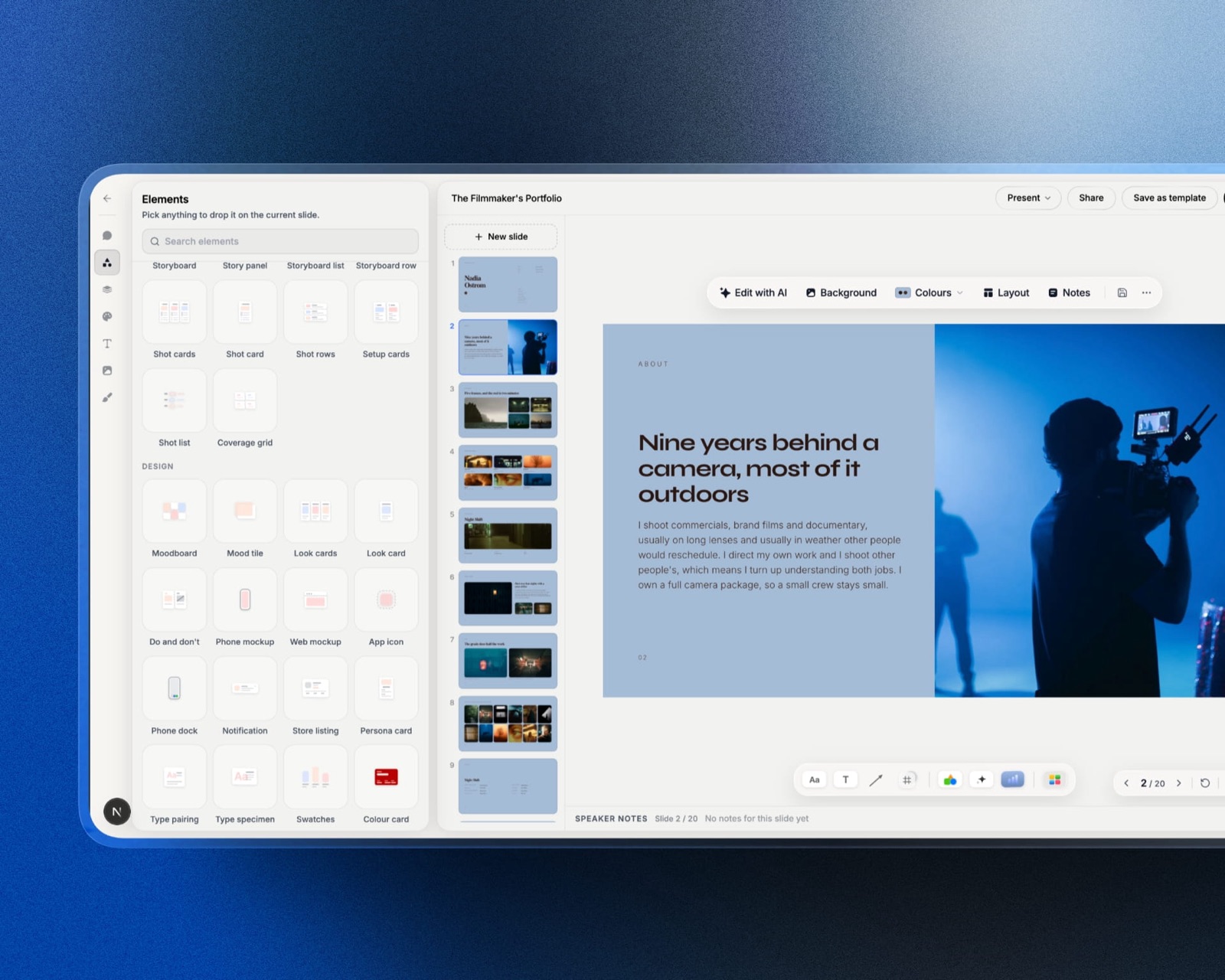
Anyone weighing Framekit vs Gamma is usually two prompts into a Gamma trial with a deck that looks about eighty percent right, wondering whether the last twenty percent is a settings problem or a tool problem.
It is neither. It is a pricing-model problem, and it shows up in month two.
Gamma meters AI by the credit and bills by the seat. Framekit meters neither and bills by the account.
That single difference decides more of this comparison than any feature, because it changes what happens when you make a second draft, add a second person, or have a bad week where nothing lands until the fifth attempt.
Framekit is an AI website builder for photographers, filmmakers, designers and creators, with decks, client galleries, video review and a store on the same account.
An AI deck tool is software that drafts a presentation from a prompt and then lets you edit the result, which is where both of these start and where they stop being alike.
Framekit is the better tool if you make creative documents rather than business presentations, if more than one person needs access, or if the deck belongs beside a portfolio site and client delivery.
Gamma is the better tool if you need per-viewer analytics, a password on a shared deck, or a fully editable export, all of which Framekit lacks.
The money difference is structural: Gamma charges per seat and per AI credit, so a three-person studio on Plus pays $324 a year for three separate credit balances, where Framekit Pro is $180 a year in total with three members and no credits at all.
Full disclosure: Framekit is our own product. Gamma is a genuinely good tool and the section below on where it beats us is not a courtesy, it is three specific capabilities we do not have at any price. We verified Gamma's numbers against its published pricing page and help centre in September 2026 and our own against the shipped plan configuration.
How We Compared Them
We drafted the same two documents in both tools: a twelve-page director's treatment with reference images, and a studio capabilities deck.
Then we did the thing that actually reveals a pricing model, which is redraft each one three times, because nobody gets a deck right on the first prompt.
The honesty split:
- Measured hands-on: the drafting, the redrafts, the export paths, and what each tool does when you bring in a second person.
- Verified from primary sources: Gamma's plan prices and credit allowances from Gamma's pricing page and its help centre, read September 2026. Framekit's from the shipped plan configuration.
- Not tested: Gamma's website and social-post formats, which we did not build, and its API.
No load times or performance scores appear for either tool.
Framekit vs Gamma at a Glance
The weighting to read this with: the first three rows are the ones that change the decision for a working creative, and the credit row is the one people discover late. Feature counts below that rarely decide anything.
| Framekit | Gamma | |
|---|---|---|
| AI usage model | No credits, unlimited decks on every plan | Credits per AI action |
| Free plan | Unlimited decks, AI writer, PDF export | 400 credits once at sign-up, never refilled |
| Billing | Per account | Per seat |
| Three-person studio, a year | $180 total on Pro | $324 on Plus, three separate credit balances |
| Entry paid plan | $9 a month, $84 a year | $9 a seat a month, $108 a year |
| Password on a shared deck | No | Yes, on Pro |
| Per-viewer analytics | No, total view count only | Yes, on Pro |
| Editable PowerPoint export | Picture-based, Pro and up | Yes |
| Google Slides export | No | Yes |
| Templates built for treatments and lookbooks | Yes | No, general business formats |
| Portfolio site, galleries, review, store | Yes, same account | No |
In one lineGamma is a better deck-sharing product and Framekit is a better creative-document product attached to the rest of your business.
Where Gamma Wins, Specifically
Gamma has three capabilities Framekit does not offer on any plan, at any price, and none of them are on a roadmap we can point you to. If one of them is load-bearing in how you send work out, stop reading here and pay Gamma.
A password on a shared deck. Gamma Pro lets you put a password on a shared document. A Framekit deck link has no password and no expiry.
For a treatment a brand's legal team treats as confidential, that is a real difference, and our honest workaround is to export the PDF and send it to named people rather than posting a link.
Per-viewer analytics. Gamma Pro reports who opened the deck and how far they read. Framekit reports a total view count and nothing else. If you follow up based on who actually read the proposal, that is a workflow we cannot support.
Genuinely editable exports. Gamma exports to PowerPoint and Google Slides in a form the recipient can edit.
Framekit's .pptx export, available from Pro, renders each slide as a full-bleed picture with your speaker notes preserved as real notes, up to 60 slides. Presentable on any machine, not rewritable.
If an agency producer needs to lift two of your slides into their master, Gamma is the correct choice.
Add a fourth that is not a feature: Gamma covers documents, websites and social posts as well as decks. We make one kind of document.

Where Framekit Wins, Specifically
Framekit wins on three points too, and the first one compounds rather than sitting still, because it changes how you behave rather than what you can do. The other two get more valuable with every person you add to the account.
No credits. Every Framekit plan makes unlimited decks, and redrafting costs nothing. Gamma's free plan gives 400 credits at sign-up that never refill, and every AI action spends from that balance.
The practical effect is not that Gamma is expensive; it is that it makes you ration. Our third redraft of the treatment was the one that worked, and on a credit model the third redraft is a decision rather than a reflex.
Seats included rather than sold. Gamma prices per seat and does not pool credits on Plus, Pro or Ultra, so three people means three subscriptions and three separate balances.
Framekit Pro includes three team members at $19 a month for the account. For a small studio that is the difference between $324 and $180 a year.
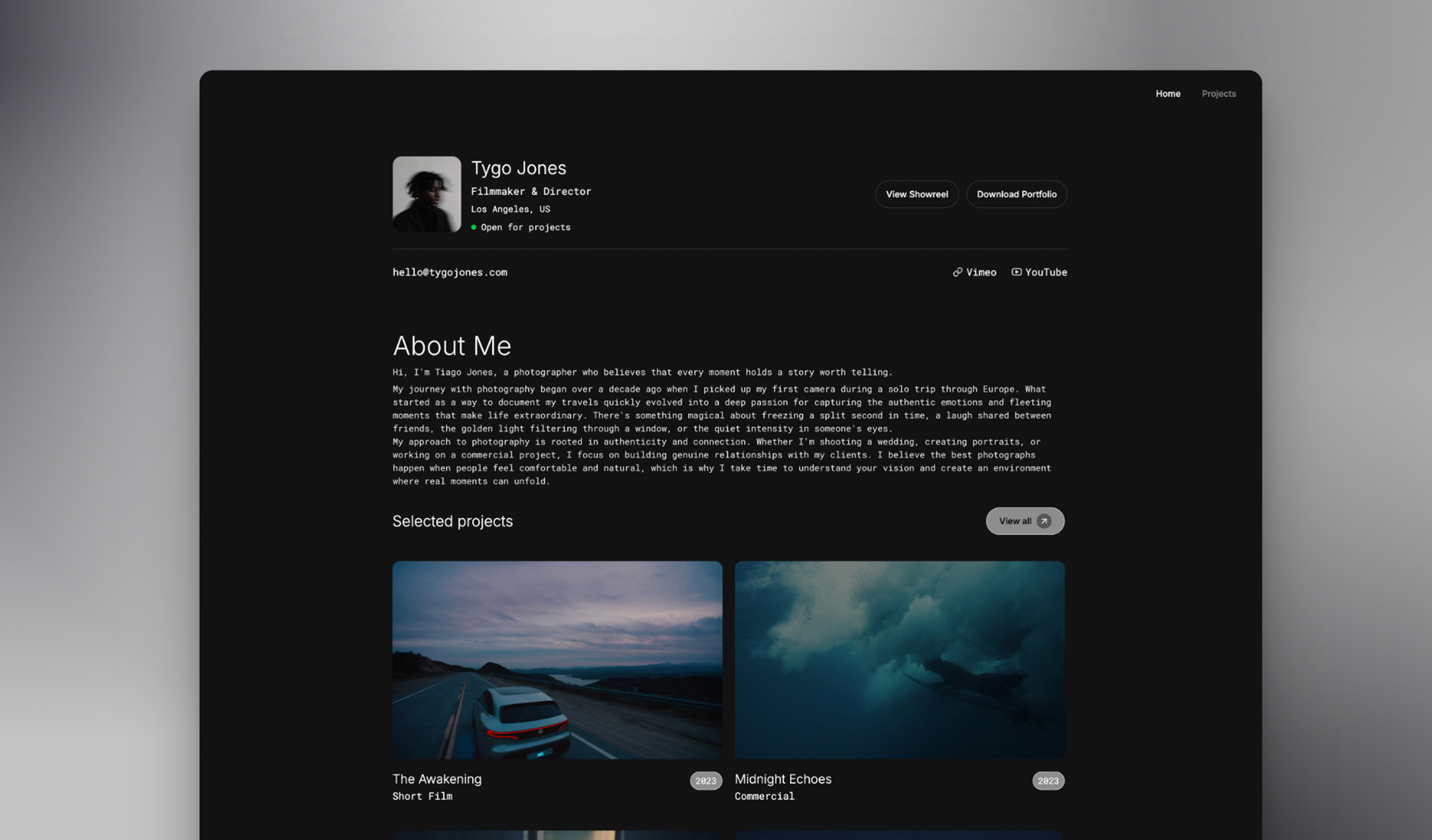
Templates that are the document. Framekit's library is built narrowly for creative work: director's treatments, lookbooks, photography portfolio books, rate cards, production proposals, call sheets.
Gamma's are general business formats you adapt. Ours is much smaller and only wins inside that range, which is the honest way to put it.
In one lineGamma is priced like a software seat and Framekit like a studio account, which is why the gap widens with every person and every redraft.
The Money, Worked Three Ways
Gamma Plus is $9 a seat a month, or $108 a year. Pro is $18 a seat a month, or $216 a year. Framekit Starter is $9 a month, or $84 on yearly billing, and Pro is $19 a month, or $180 yearly.
One person, occasional decks. Gamma Free gives 400 credits once and never refills them, so it runs out and stays out.
Framekit Free makes unlimited decks with the AI writer and PDF export, with a small Made with Framekit credit on each slide. For genuinely occasional use, Framekit Free is the cheaper answer, because it does not end.
One person, decks are the job. Gamma Plus at $108 a year against Framekit Starter at $84. Close enough that the decision should be made on output and on whether you need a password on the link, which only Gamma offers. If you do, pay Gamma.
Three people. Gamma Plus at three seats is $324 a year with three unpooled credit balances. Framekit Pro is $180 a year with three members included and no credits. That is the clearest financial gap in this comparison, and it grows with headcount.
In one linebelow one seat the two are within $24 of each other, and above one seat the model, not the price, decides it.
The Part Nobody Compares: What Sits Around the Deck
This is where the two products stop being in the same category, and it is worth stating plainly rather than smuggling in as a feature row.
A deck is rarely the whole job for a creative. A director sends a treatment, then delivers cuts for review. A photographer sends a portfolio book, then delivers a gallery. A designer sends a proposal, then sells a template.
Gamma makes the first item in each of those pairs and nothing else, so the rest of the workflow lives in other subscriptions.
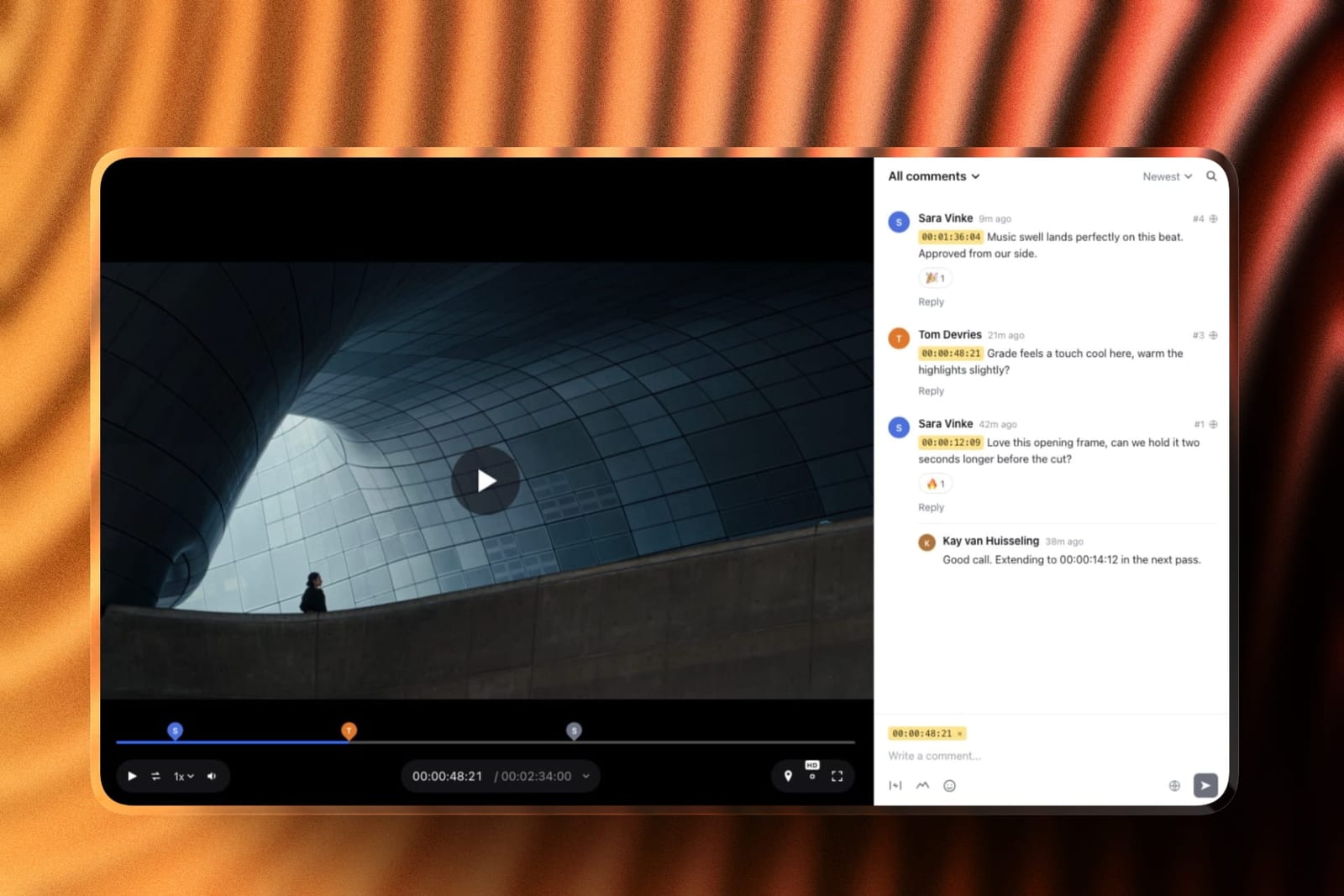
Framekit puts the deck on the same account as a portfolio site on your own domain, client galleries with password and download PIN, video review with timecoded comments, and a store that sells digital files. One plan at $9 to $39 a month covers all of it.
That is not an argument that our deck tool is better than Gamma's. It is an argument that comparing only the deck tools is the wrong comparison for most people reading this.
Switching From Gamma to Framekit, Honestly
There is no importer. A Gamma deck does not come across, so moving means regenerating from a prompt and pasting your copy, which for a twelve-page treatment is under an hour. That is the same answer in the other direction, and in this category generally.
What does not survive the move, and you should know before you start: any password protection you were relying on, your per-viewer analytics history, and any workflow where a recipient edits the file. If those are load-bearing, do not move.
What improves: redrafting stops costing anything, a second person stops costing a full subscription, and the deck lands on the same account as the site and the delivery.
How to Choose: A Decision Guide
Work down this list and stop at the first question you answer yes to. Each one is disqualifying for the other tool rather than merely a preference, which is why the order matters more than any feature table above.
- Does a deck link need a password, or do you need to know who opened it? Yes: Gamma Pro. We do not offer either at any tier.
- Does the recipient need to edit the file? Yes: Gamma. Our export is picture-based.
- Is the document a treatment, lookbook, portfolio book, rate card or production proposal? Yes: Framekit, for templates built for exactly those.
- Will more than one person need access? Yes: Framekit, because seats are included rather than sold and credits are not per-person.
- Do you also need a portfolio site, client galleries, review links or a store? Yes: Framekit, since Gamma does none of them.
- Still unsure? Both free plans cost nothing. Draft the same deck twice in each and compare the third redraft, not the first.
Frequently Asked Questions
Is Framekit a good Gamma alternative?
For creative documents, yes, and for two structural reasons rather than a feature list: Framekit makes unlimited decks with no credit system, and it includes team members in the plan rather than charging per seat.
It is a poor Gamma alternative if you rely on password-protected share links, per-viewer analytics or editable exports, because Gamma has all three and Framekit has none of them.
Does Framekit use credits like Gamma?
No. Every Framekit plan, including the free one, makes unlimited decks, and redrafting a deck costs nothing. Gamma charges credits for each AI action and its free plan issues 400 credits once at sign-up that never refill.
The practical difference is behavioural: on a credit model you ration redrafts, and the third redraft is usually the one that works.
Framekit vs Gamma for a film treatment: which should a director use?
Framekit, unless the treatment must be password-protected.
Its templates are built for treatments rather than adapted from business decks, reference videos embed and play inside the deck, and your own uploaded fonts apply across every slide from the Starter plan.
The disqualifying exception is confidentiality: Gamma Pro can password-protect a shared document and Framekit cannot, so a treatment under a strict NDA should either go out as a PDF to named people or be sent from Gamma.
Which is cheaper, Framekit or Gamma?
For one person they are close: Gamma Plus is $108 a year and Framekit Starter is $84 on yearly billing. For teams it is not close, because Gamma prices per seat and does not pool credits on its individual plans.
Three people on Gamma Plus is $324 a year with three separate credit balances, where Framekit Pro is $180 a year in total with three members included.
Can Gamma build a portfolio website?
Gamma makes web pages, and for a simple single-page profile that is enough.
It does not produce a multi-page portfolio with project pages, client galleries, a review workflow or a store on your own domain, which is the whole of what Framekit is built around.
If a site is the actual deliverable rather than a page, these are different categories of product.
Does Framekit tell me who opened my deck?
No. A Framekit share link reports a total view count and nothing per recipient.
Gamma Pro reports per-viewer analytics, including how far each person read, and if you follow up based on who engaged then that is a genuine reason to choose Gamma.
Our honest position is that we do not have this and are not going to claim a view counter is equivalent.
Can I export a Framekit deck to PowerPoint?
Yes, from the Pro plan, but not in an editable form.
Each slide exports as a full-bleed picture with your speaker notes kept as real notes, up to 60 slides, so the design survives intact on a client's Windows machine while the text cannot be retyped.
Gamma exports genuinely editable PowerPoint and Google Slides files. If the recipient must edit, that difference decides it.
How many people can share a Framekit account?
One on Free and Starter, three on Pro at $19 a month, and unlimited on Business at $39, all included in the plan price rather than billed per head.
This is the inverse of Gamma's model, where every individual plan is per seat and credits are not pooled between members, so the cost of a second person is a second full subscription.
Is Gamma's free plan better than Framekit's?
They fail in different directions, and which is better depends on how often you use it. Gamma's free plan has more formats and a fuller feature set, but its 400 credits arrive once and never refill, so it is effectively a long trial.
Framekit's free plan makes unlimited decks forever with a small credit on each slide. For occasional use Framekit's does not run out; for one intensive week Gamma's does more.
Should I use both?
Some people should, and it is a reasonable answer rather than a fudge.
Gamma for decks that need a password or per-viewer tracking and for formats we do not cover, Framekit for creative documents and for everything that lives at a URL you own.
Both have free plans, so running both costs nothing until one of them becomes the tool you reach for by default.
Does moving from Gamma to Framekit import my decks?
No. There is no importer in either direction, so a move means regenerating the deck from a prompt and pasting your copy across, which for a twelve-page document took us under an hour.
Nothing else in this category imports each other's files either, so factor the rebuild in once rather than treating it as a reason to stay.
Final Verdict
Gamma and Framekit both draft a deck from a prompt, and after that they diverge on almost everything that matters.
Gamma is the better product for sharing a deck: a password on the link, per-viewer analytics, and exports a recipient can edit.
Framekit is the better product for making a creative document and for the rest of the work that surrounds it, with no credits, seats in the plan, and a portfolio site, galleries, review and store on the same account.
Who should not use Framekit. Anyone who needs a password on a deck link or needs to know who opened it, because we have neither at any price. Anyone whose recipients edit the file.
Anyone who needs documents, websites and social posts from one AI tool, which Gamma does and we do not.
And anyone whose deck library already lives in Gamma and works, because there is no importer and a rebuild for its own sake is not worth your afternoon.
Who should. Creatives whose documents are treatments, lookbooks, portfolio books and proposals rather than business presentations, studios where more than one person touches the deck, and anyone who is also paying for a portfolio site and a delivery tool and had not noticed those could be the same subscription.
Related readingGamma's full pricing, credits included, Framekit's pricing, and the best AI presentation makers compared.
Gamma pricing read from its published pricing page and help centre in September 2026. Our own plan limits and deck export behaviour were read from the shipped configuration in the same month.