Framekit templates
Start from a designer-made template
 Use template
 Use template
 Use template
 Use template
 Use template
 Use template
 Use template
 Use template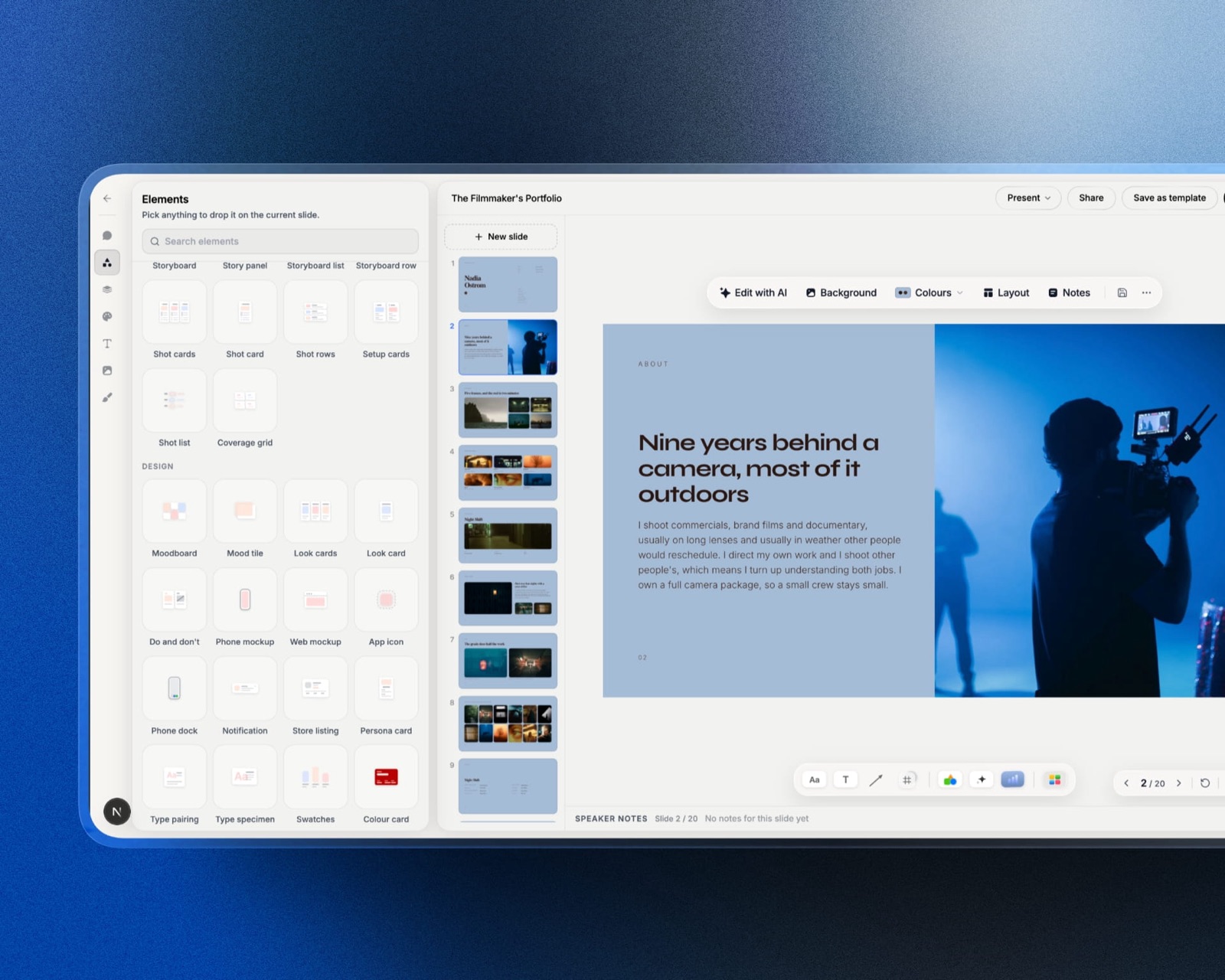
Framekit vs Pitch comes down to a question most deck comparisons skip: do you need to know who opened it?
Pitch is built around that answer being yes. We are built around it being no.
Pitch is a sales tool wearing a design tool's clothes, and it is good at both. Its tracked links, per-viewer analytics and team template controls exist because a sales team needs to know which prospect read to slide nine.
If your decks are treatments and portfolios rather than pipeline, you are paying per seat in euros for telemetry you will never look at.
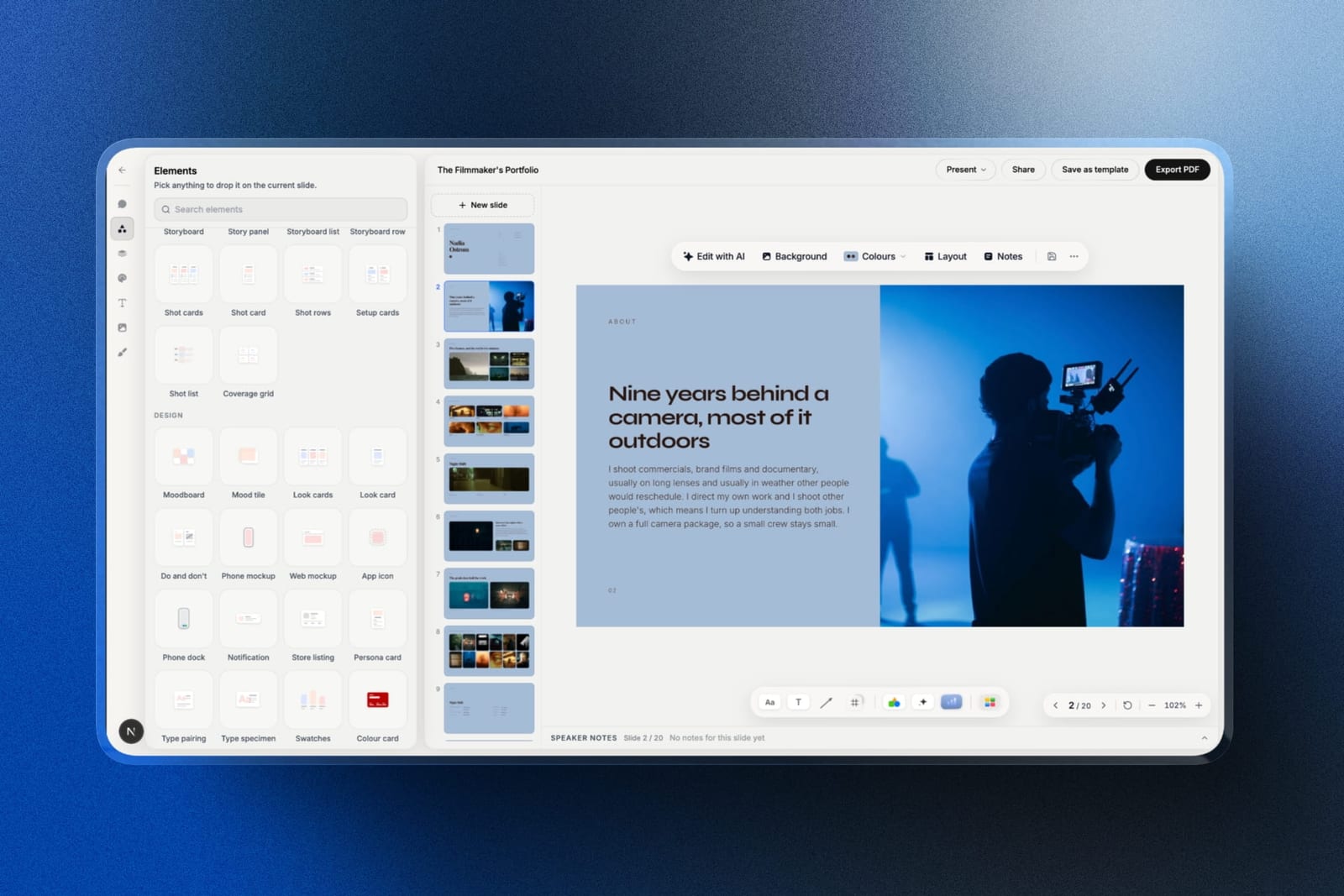
Framekit is an AI website builder with a deck tool, client galleries, video review and a store on one account.
A collaborative deck platform is software where a team drafts, brands and shares presentations together, with analytics on what recipients do next.
Framekit is the better choice for creative documents made by one person or a small studio, because decks are unlimited on every plan, seats are included rather than sold, and the same account carries a portfolio site, client galleries and review links.
Pitch is the better choice for a team that needs per-viewer analytics, advanced link controls and locked brand templates, none of which Framekit offers at any tier.
The cost difference is structural: Pitch Team is priced per seat in euros, at roughly EUR 720 a year for up to five seats, where Framekit Pro is $180 a year with three members included.
Full disclosure: Framekit is our own product. Pitch does three things we cannot do at all, and they are the first section. Figures were verified against each vendor's published pricing in September 2026.
How We Compared Them
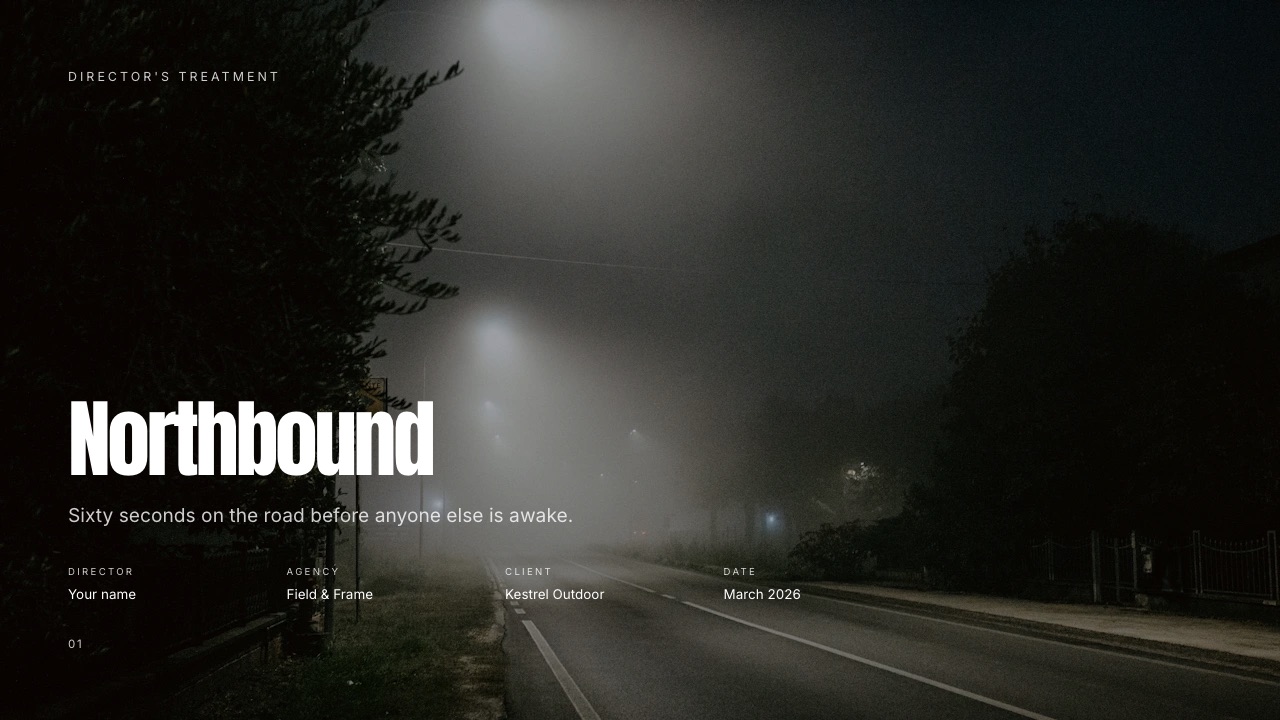
We built the same two documents in both: a twelve-page director's treatment with reference images, and a studio capabilities deck. Then we shared each one and looked at what the sender could learn afterwards, which is where the products diverge.
The honesty split:
- Measured hands-on: both builds, the sharing flow, the export paths and what each tool reports back after a recipient opens a link.
- Verified from primary sources: Pitch's plan structure and per-seat pricing from Pitch's pricing, read September 2026. Framekit's from the shipped plan configuration.
- Not tested: Pitch's CRM integrations and its sales-specific workflows.
Neither tool is described here in terms of speed, because we do not publish those numbers.
Framekit vs Pitch at a Glance
The weighting to read this with: the analytics and link-control rows decide it for a sales team, and the billing and template rows decide it for a creative studio. There is very little middle ground.
| Framekit | Pitch | |
|---|---|---|
| Per-viewer analytics | No, total view count only | Yes |
| Password or expiry on a share link | No | Yes, advanced link controls |
| Billing model | Per account | Per seat, in euros |
| Cost for a small team, a year | $180 on Pro, three members | About EUR 720 on Team |
| Live multi-cursor co-editing | No | Yes |
| Locked brand templates | No | Yes |
| Templates for treatments and lookbooks | Yes | No, business formats |
| Custom fonts across every slide | Yes, from Starter | Yes |
| Editable PowerPoint export | Picture-based, Pro and up | Yes |
| Portfolio site, galleries, review, store | Yes, same account | No |
| Free plan | Unlimited decks, AI writer, PDF export | Limited |
In one linePitch tells you what happened after you sent the deck, and Framekit puts the deck on the same account as everything else you send.
Where Pitch Wins
Pitch beats us in three areas and each one is absolute rather than a matter of degree, because we do not offer any of them at any price. For a sales-led business, any single one is enough to settle the comparison.
Per-viewer analytics. Pitch reports who opened the deck, which slides they read and how long they stayed. Framekit reports a total view count and nothing else.
If you follow up based on engagement, that is a workflow we cannot support and a view counter is not a substitute.
Advanced link controls. Passwords, expiry dates and access rules on a shared deck. A Framekit deck link has none of these, which matters for anything a client's legal team treats as confidential.
Our honest workaround is to export the PDF and send it to named people.
Real-time collaboration and brand locking. Multi-cursor co-editing so two people work the same slide at once, plus locked brand templates a non-designer cannot break. Framekit has neither, so a deck written by two people gets passed back and forth.
Where Framekit Wins
Framekit wins on three points, and all three assume your decks are creative documents rather than sales collateral. Inside that assumption the differences are large.
Seats are included, not sold. Pitch prices per seat in euros, so a five-person studio pays five times over and adds a currency spread of roughly 1 to 3 percent for non-euro cards.
Framekit Pro is $180 a year with three team members included, and Business at $39 a month has no seat limit at all.
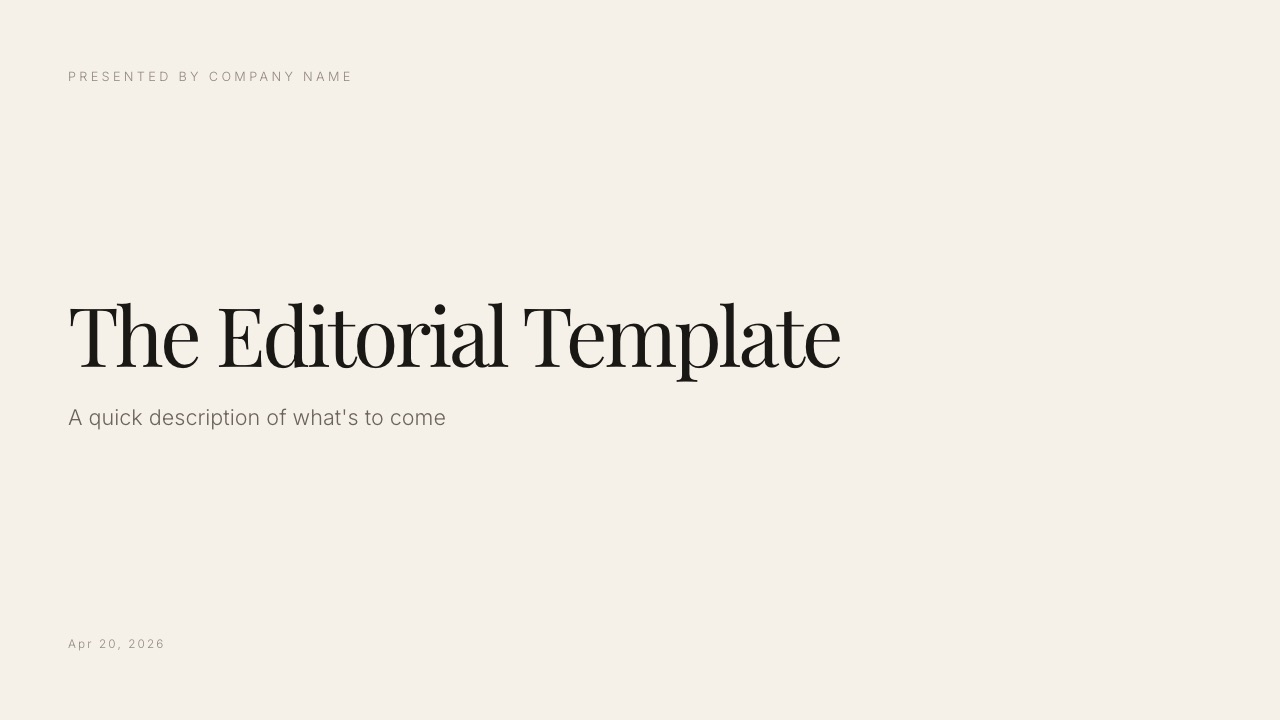
Templates that are the document. Director's treatments, lookbooks, photography portfolio books, rate cards, production proposals and call sheets, built for those specific documents rather than adapted from a business deck.
Pitch's library is excellent and aimed at pipeline, not at a commercial bid.
Everything around the deck. A portfolio site on your own domain, client galleries with a password and download PIN, timecoded video review, and a store for digital files.
A director sends a treatment and then delivers cuts; Pitch does the first half and nothing else.
In one linePitch is priced like sales software because it is sales software, and a studio pays that premium for telemetry it does not read.
The Cost Comparison for a Small Studio
Per-seat pricing in a foreign currency is the reason most people arrive at this comparison in the first place, so here is the same team costed on both platforms at annual rates. The gap widens with every person you add rather than staying fixed.
| Team size | Pitch Team | Framekit |
|---|---|---|
| 1 person | Per seat, in euros | $84 a year on Starter |
| 3 people | Per seat, in euros | $180 a year on Pro, three included |
| 5 people | About EUR 720 a year | $372 a year on Business, unlimited seats |
Card FX adds roughly 1 to 3 percent for teams paying a euro invoice on a dollar card, which is small and worth knowing.
The honest caveat on that table: Pitch's price buys analytics and link controls that our plans do not include at any tier. If those are why you are looking at Pitch, the comparison is not a price one.
In one linefor a five-person creative studio the gap is several hundred dollars a year, and the question is whether the telemetry is worth it.
When Pitch Is Genuinely the Right Tool
There is a clear case for Pitch and it is worth stating properly rather than gesturing at, because a lot of teams are on it for exactly the right reasons.
If your decks are pipeline, Pitch is correct. A sales team sending proposals wants to know which prospect read to the pricing slide, wants the link to expire, and wants a template a junior rep cannot restyle.
Those three requirements describe a business we are not built for, and buying us instead would cost you the follow-up.
In one linedecks that generate a follow-up call belong on Pitch, and decks that represent your work belong here.
How to Choose: A Decision Guide
Work through these in order and act on the first yes you reach, since the first two are capabilities we do not have rather than preferences we differ on.
- Do you need to know who opened the deck and how far they read? Yes: Pitch. We report a total view count only.
- Does a deck link need a password or an expiry? Yes: Pitch. Ours has neither.
- Do two people need to edit the same slide at once? Yes: Pitch. We have no co-editing.
- Is the document a treatment, lookbook, portfolio book or rate card? Yes: Framekit, for templates built for those.
- Is the team more than two people paying per seat? Yes: Framekit, where seats are in the plan.
- Do you also need a portfolio site, client galleries or review links? Yes: Framekit, which carries all three.
Frequently Asked Questions
Does Framekit tell me who opened my deck?
No. A Framekit share link reports a total view count and nothing per recipient, so there is no way to see which client opened it or how far they read.
Pitch reports per-viewer analytics including slide-level engagement, and if your follow-up depends on that information then Pitch is the correct tool. We would rather state this plainly than imply a view counter is equivalent.
Can I password-protect a Framekit deck?
No, and there is no expiry either. A deck link is a link, which is fine for a portfolio book or a rate card and a genuine limitation for anything confidential.
The practical workaround most directors use is to export the PDF and send it to named people on the bid list rather than posting a link into a group thread. Pitch offers advanced link controls including passwords on its paid tiers.
Is Framekit cheaper than Pitch?
For a team, yes, and the reason is structural rather than a discount. Pitch prices per seat in euros, so a five-person studio pays roughly EUR 720 a year on its Team tier.
Framekit Pro is $180 a year with three members included and Business at $39 a month has no seat limit. For one person the gap narrows considerably, and Pitch's price includes analytics we do not offer.
Can two people edit a Framekit deck at once?
No. There is no live multi-cursor co-editing, so a deck written by two people is passed back and forth rather than edited simultaneously. Pitch does this properly and for a team that genuinely drafts together it is a daily difference.
What Framekit does include is team members in the plan: three on Pro at $19 a month and unlimited on Business at $39, rather than a charge per head.
Which is better for a director's treatment?
Framekit, unless the treatment must be password-protected.
Its templates are built for treatments rather than adapted from business decks, reference videos embed and play inside the deck, and your own uploaded fonts apply across every slide from Starter.
The disqualifying exception is confidentiality, since a brand's legal team may require access controls that only Pitch offers between these two.
Does Framekit export editable PowerPoint?
From the Pro plan, yes, but not editable: each slide exports as a full-bleed picture with your speaker notes preserved as real notes, up to 60 slides. A recipient can present it anywhere and cannot retype a headline.
Pitch exports a genuinely editable file. If an agency producer needs to lift two of your slides into their master deck, that difference decides it.
Is Pitch's free plan usable?
It is limited rather than generous, and most teams that adopt Pitch end up on a paid tier fairly quickly because the features they came for, particularly analytics and advanced link controls, sit above the free tier.
Framekit's free plan makes unlimited decks with the AI slide writer, presenting and PDF export, with a small Made with Framekit credit on each slide, and does not expire.
Can I move my Pitch decks to Framekit?
Not automatically. There is no importer in either direction, so moving means regenerating the deck from a prompt and pasting your copy, which for a twelve-page document took us under an hour.
What does not survive the move is anything depending on analytics history or link controls, so if those are load-bearing in how you work then a migration will cost you capability rather than save you money.
What does Framekit include that Pitch does not?
A portfolio site on your own domain, client galleries with a password and a separate download PIN, timecoded video review, and a store for digital products.
None of those exist on Pitch, which is a deck platform rather than a business platform. For a studio currently paying for a deck tool, a website and a gallery platform separately, that consolidation is the reason to look at us.
Should a creative agency use Pitch or Framekit?
It depends on whether the agency sells with decks or delivers with them. An agency whose new business runs on tracked proposals should use Pitch, because knowing who read the pricing slide is worth the per-seat cost.
An agency whose decks are credentials, treatments and case studies, and who also delivers work to clients, gets more from Framekit and pays less for the seats.
Final Verdict
Pitch is sales software and a good design tool, and it is priced accordingly.
Per-viewer analytics, advanced link controls, real-time co-editing and locked brand templates are all real, all useful, and all absent from Framekit at every tier.
If your decks exist to generate a follow-up call, buy Pitch and do not think about it again.
Who should not use Framekit. Anyone who needs to know who opened a deck. Anyone who needs a password or an expiry on a share link. Any team that drafts decks together in real time. Anyone whose brand templates must be locked against junior editing.
Who should. Studios and solo creatives whose decks are treatments, lookbooks, portfolio books and proposals, where seats are included rather than sold and the same account carries the portfolio, the client galleries and the review links.
The telemetry is the premium, and most creative studios never open it.
Related readingthe best Pitch alternatives, Framekit vs Gamma, and the best presentation tools for creative agencies.
Pitch plan structure and per-seat pricing read from its published pricing in September 2026. Our deck limits and export behaviour come from the shipped plan configuration, checked the same month.